Blog

  • Organic Coconut Sugar for Organic Bakeries

    Organic Coconut Sugar for Organic Bakeries

    Quick answer: Organic bakeries need certified organic ingredients to keep their own organic status. Organic coconut sugar can replace white or brown sugar 1:1 by weight in most recipes. Choose mesh 50 for doughs and batters and mesh 14 for toppings, store it separately from non-organic ingredients and keep certificates and invoices ready for audits.

    Key takeaways – Organic bakeries must use certified ingredients. – Swap 1:1 by weight for white or brown sugar. – Separate storage and records are essential. – Keep supplier documents for audits.

    Why organic coconut sugar suits organic bakeries

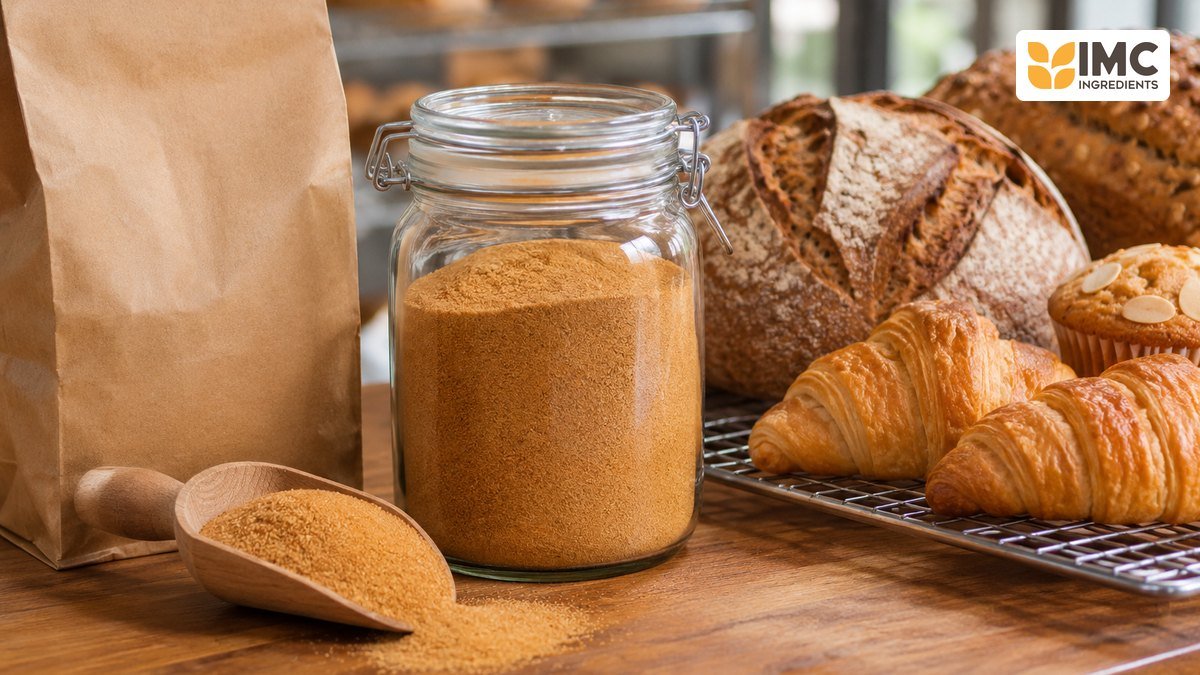
    Many organic bakeries want a sweetener with a natural, less refined image and a distinct flavour. Organic coconut sugar adds caramel notes and a warm colour, which suits whole-grain breads, cookies, cakes and granola.

    Grade choice

    Use Grade
    Doughs, batters, creams Mesh 50
    Toppings, crumbles, crusts Mesh 14
    Glazes Mesh 50 dissolved or milled

    Recipe tips

    1. Replace sugar 1:1 by weight.
    2. Expect darker colour and caramel flavour.
    3. Lower oven temperature slightly if products brown too fast.
    4. Add a little liquid when replacing honey or syrup.
    5. Test new recipes in small batches.

    Storage and separation

    Store organic coconut sugar in a clearly labelled area, away from non-organic sugars. Use dedicated scoops or clean them between uses. Keep the bag sealed to prevent moisture uptake.

    Documents for audits

    Organic bakeries are inspected by their control body. Inspectors check that ingredients are certified. Keep:

    • The supplier’s organic certificate.
    • Invoices and delivery notes showing “organic”.
    • Lot codes linked to production records.

    Labelling finished goods

    If the bakery’s products are certified organic, labels must follow the market rules. Coconut sugar should appear as organic in the ingredient list only when it is certified.

    Talking to customers

    Customers may ask why coconut sugar is used. Answer with facts about flavour and origin. Avoid health claims.

    Planning purchases

    Organic ingredients can have longer lead times than conventional ones. Plan orders ahead, keep a safety stock and rotate it so older stock is used first. Talk with your supplier or distributor about seasonal demand, such as holiday baking peaks.

    Training bakery staff

    Make sure bakery staff know which ingredients are organic and why separation matters. A short briefing and clear shelf labels prevent mistakes, such as using a non-organic sugar in an organic recipe during a busy shift.

    Where does IMC fit?

    PT Integral Mulia Cipta (IMC Group) has produced coconut sugar in Central Java, Indonesia, since 2012. IMC supplies organic coconut sugar in mesh 14 and mesh 50, packed in paper bags with a food-grade PE liner, for bakeries and food manufacturers.

    FAQ

    Can organic coconut sugar replace white sugar 1:1? Yes, by weight in most recipes.

    Which grade suits doughs? Mesh 50.

    What documents do inspectors check? Certificates, invoices and lot records.

    Can I make health claims? No, keep descriptions factual.


    Questions about coconut sugar for your products? PT Integral Mulia Cipta (IMC Group), a Central Java producer since 2012, is happy to help. Email info@organic-coconut-sugar.com or WhatsApp +62 821 1348 5564.
  • Organic Certificates Buyers Should Check

    Organic Certificates Buyers Should Check

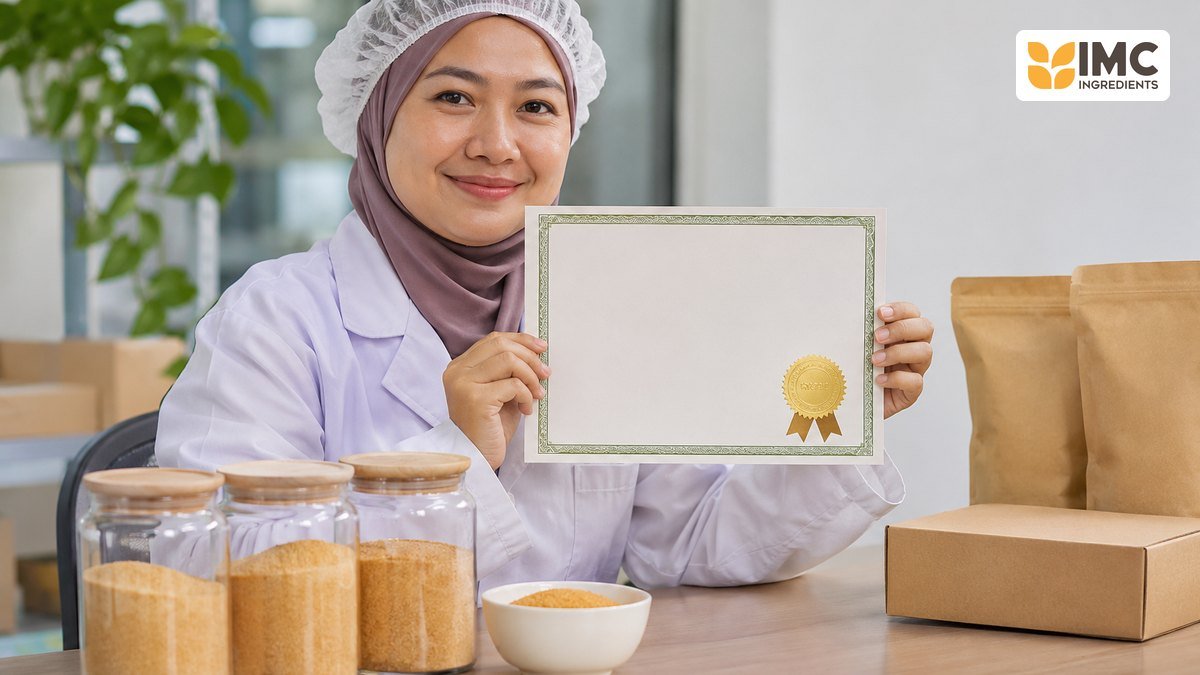
    Quick answer: Before buying organic coconut sugar, check that the supplier’s organic certificate names the right company, covers the product and activity, is valid on the purchase date and is issued under the standard of your market. Verify the certificate in the official database where possible and check that each shipment has the correct transaction or import documents.

    Key takeaways – Check holder name, scope, product and validity. – Make sure the standard matches your market. – Verify certificates in official databases. – Shipment documents are also required.

    Why checking matters

    Organic fraud and simple mistakes both happen. If a buyer uses a non-certified ingredient in an organic product, the buyer’s own certification can be at risk. A few minutes of checking can prevent big problems.

    Certificate checklist

    Item What to check
    Certificate holder Same as the seller or clearly linked
    Address Matches the production or trading site
    Standard EU, USDA or other relevant market
    Products Coconut sugar listed
    Activities Production, processing, export
    Validity Valid on purchase and shipment dates
    Control body Approved for that standard

    Verifying online

    Many standards have official databases. For example, EU certificates are available in TRACES, and the USDA has an organic integrity database. Search for the supplier name and compare details.

    Transaction and import documents

    1. EU imports need an electronic certificate of inspection.
    2. US imports need the required import certificate.
    3. Other markets have their own documents.
    4. Lot codes and weights must match the goods.

    Red flags

    • Certificate details that do not match the company.
    • Expired or suspended certificates.
    • Products not listed in the scope.
    • Reluctance to share documents.
    • Prices far below the market for organic product.

    Keeping records

    Store certificates with their dates and review them before each order. Set reminders for expiry dates. Keep shipment documents by lot.

    Working with suppliers

    Good suppliers share documents quickly and explain any changes. If something is unclear, ask questions early.

    Multiple certificates

    Some suppliers hold certificates for several standards, such as EU and USDA. Check that the certificate you rely on matches the market where your product will be sold. A certificate for one market does not automatically cover another.

    Checking certificates for traders

    If you buy through a trader or distributor, that company also needs suitable organic certification for its activity. Check the trader’s certificate as well as the producer’s. The chain of certificates should be complete from the producer to you.

    Where does IMC fit?

    PT Integral Mulia Cipta (IMC Group) has produced coconut sugar in Central Java, Indonesia, since 2012. IMC supplies organic coconut sugar in mesh 14 and mesh 50 and shares organic documents with buyers on request.

    FAQ

    Where can I verify an EU organic certificate? In the EU’s TRACES system.

    Is the certificate alone enough? No, shipment documents are also needed.

    What if the certificate has expired? Do not buy as organic until it is renewed.

    What is a red flag? Details that do not match, or unusually low prices.


    PT Integral Mulia Cipta (IMC Group) has produced organic coconut sugar in Central Java, Indonesia, since 2012. For specifications or samples, email info@organic-coconut-sugar.com or WhatsApp +62 821 1348 5564.

  • Organic Buffer Zones in Smallholder Farms

    Organic Buffer Zones in Smallholder Farms

    Quick answer: A buffer zone is a strip of land or a barrier that separates an organic plot from a neighbouring conventional field. It reduces the risk of pesticide drift and runoff. In smallholder settings, buffer zones can be hedges, grass strips or rows of other crops, and they are checked during organic inspections.

    Key takeaways – Buffer zones protect organic plots from drift. – They can be hedges, grass strips or crop rows. – Width and type depend on local risk. – Internal and external inspectors check them.

    Why buffer zones are needed

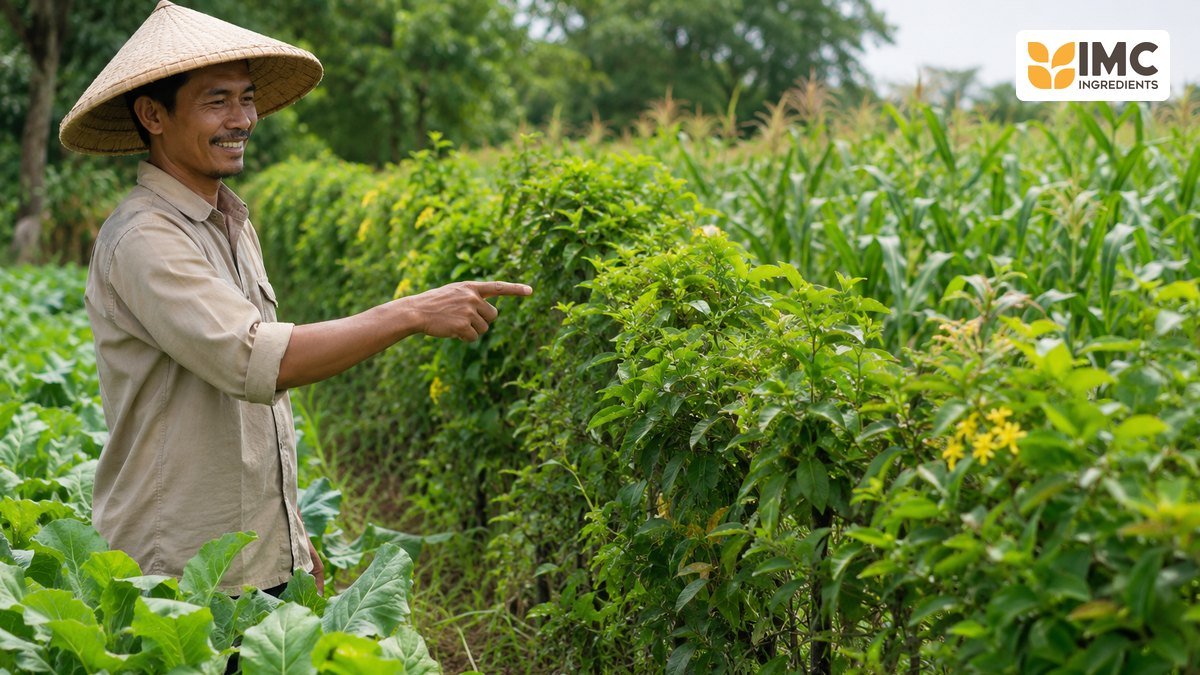
    Smallholder farms are often small and close together. An organic farmer may have a neighbour who uses pesticides or synthetic fertilisers. Wind and rain can carry these substances across field borders. A buffer zone reduces this risk.

    Types of buffers

    Buffer type Description
    Hedge Dense plants that catch drift
    Grass strip Ground cover that slows runoff
    Crop rows Crops harvested as non-organic
    Physical barrier Walls, ditches or roads
    Distance Unplanted space between fields

    Setting up a buffer

    1. Map the farm and neighbouring fields.
    2. Identify where conventional inputs are used nearby.
    3. Choose a suitable buffer type.
    4. Plant or mark the buffer.
    5. Record the buffer on the farm map.
    6. Maintain it over time.

    Harvest from buffer zones

    Crops grown in buffer zones may not be sold as organic, depending on the standard and risk. Farmers and the internal control system must keep these products separate.

    Talking with neighbours

    Good relations help. Farmer groups can talk with neighbours about spraying times and wind direction. Some neighbours agree to avoid spraying near the border.

    Inspections

    Internal inspectors check buffers during farm visits. External inspectors from the control body review maps and visit a sample of farms. Problems are recorded and corrected.

    Buffers and biodiversity

    Hedges and grass strips can also provide habitat for beneficial insects and reduce soil erosion. This is a useful side effect, but the main purpose for certification is protection from contamination.

    Updating buffers over time

    Land use around organic farms can change. A neighbour may start or stop using pesticides, or a new road may be built. Farm maps and buffer plans should be reviewed each year and updated when needed.

    Buffers in group certification

    In group certification, the internal control system keeps a map of every member’s plots and notes where buffers are needed. New members are checked before they join, so the group knows about risks early and can plan buffers from the start.

    Where does IMC fit?

    PT Integral Mulia Cipta (IMC Group) has produced coconut sugar in Central Java, Indonesia, since 2012. IMC supplies organic coconut sugar in mesh 14 and mesh 50, and its GIZ develoPPP partnership since 2025 supports organic certification work with farmer groups.

    FAQ

    What is a buffer zone? A barrier or strip separating organic and conventional land.

    How wide should it be? It depends on the standard and local risk.

    Can buffer crops be sold as organic? Often not; they are kept separate.

    Who checks buffer zones? Internal and external inspectors.


    Looking for a reliable coconut sugar partner? Contact PT Integral Mulia Cipta (IMC Group) in Central Java, Indonesia: info@organic-coconut-sugar.com or WhatsApp +62 821 1348 5564.

  • Keeping Rivers Clean Near Farms

    Keeping Rivers Clean Near Farms

    Quick answer: Rivers near farming villages provide water for households, farms and wildlife. They can be polluted by soil runoff, household waste, wastewater and agricultural chemicals. Simple steps such as ground cover, waste collection, careful handling of any chemicals and good sanitation help keep rivers clean. Organic farming, which avoids synthetic inputs, also reduces chemical runoff.

    Key takeaways – Rivers are vital to village life and farming. – Runoff and waste are the main pollution sources. – Ground cover and waste management protect water. – Organic practices reduce chemical runoff.

    Why clean rivers matter

    In many villages, rivers and streams are used for washing, irrigation and sometimes drinking water after treatment. Pollution can affect health, crops and fish. Clean water also matters for food processing, including coconut sugar making.

    Sources of pollution

    Source Example
    Soil erosion Bare soil washed into rivers by rain
    Household waste Plastic and food waste thrown in water
    Wastewater Washing water and sewage
    Agricultural inputs Fertiliser and pesticide runoff
    Processing waste Residues from small-scale processing

    Practical steps for farmers

    1. Keep soil covered with plants or mulch.
    2. Plant grass or shrubs along riverbanks.
    3. Avoid washing tools and containers directly in rivers.
    4. Collect and manage household waste.
    5. Store any farm inputs away from water.

    Steps for farmer groups and villages

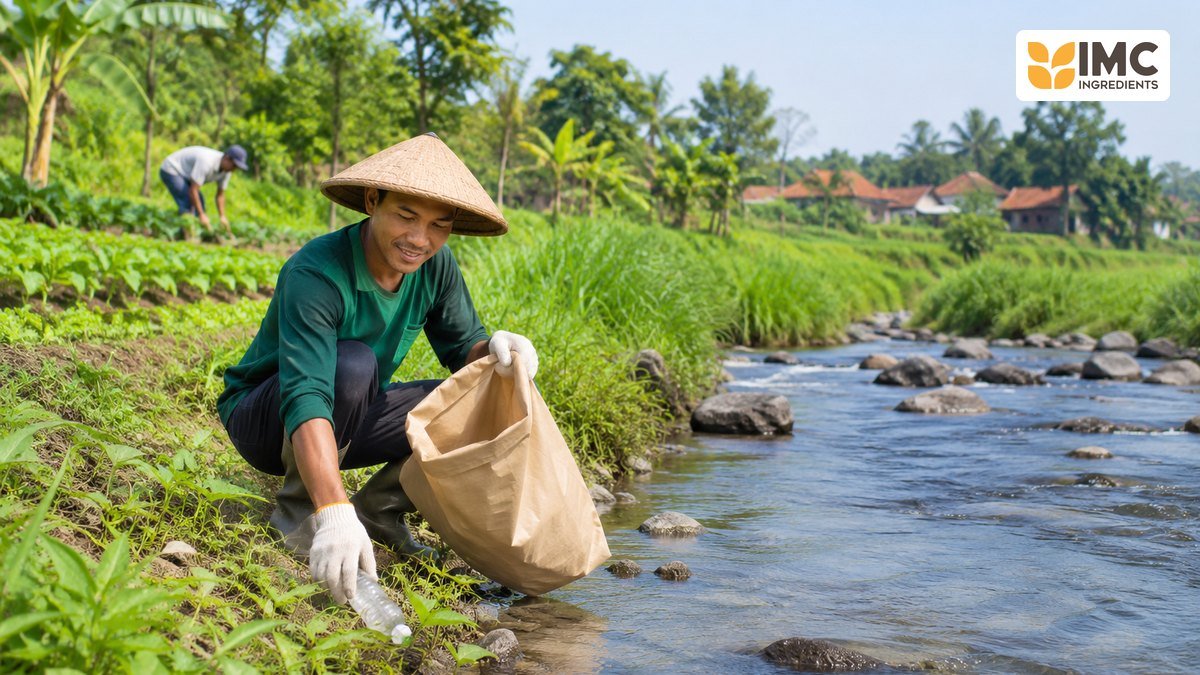
    Farmer groups can organise clean-up days, agree on waste collection points and share information about safe practices. Village leaders and local authorities can support waste collection and sanitation facilities.

    Role of organic farming

    Organic farming does not use synthetic fertilisers or pesticides, which reduces the risk of these substances entering rivers. Organic groups also learn about soil protection, which reduces erosion.

    What suppliers can do

    Suppliers can include water and waste topics in farmer training, support clean-up activities and manage their own factory wastewater responsibly. They should describe such activities accurately in CSR communication.

    Monitoring

    Simple observations, such as water clarity and visible waste, can be recorded by farmer groups. For more detailed checks, local authorities or partners may test water quality.

    Working with schools

    Schools can help spread good habits. Simple lessons about keeping rivers clean, followed by a small clean-up activity, often reach whole families through the children. Farmer groups can support these activities with time and materials.

    Where does IMC fit?

    PT Integral Mulia Cipta (IMC Group) has produced coconut sugar in Central Java, Indonesia, since 2012. IMC works with farmer communities through CSR programmes and supplies organic and conventional coconut sugar in mesh 14 and mesh 50.

    FAQ

    What pollutes rivers near farms? Soil runoff, waste, wastewater and chemical inputs.

    How does ground cover help? It reduces soil erosion into rivers.

    Does organic farming help? Yes, it avoids synthetic chemical inputs.

    What can villages do? Organise waste collection and clean-up days.


    IMC Group (PT Integral Mulia Cipta) supplies fine-granule organic coconut sugar from Central Java to food companies worldwide. Talk to our team: info@organic-coconut-sugar.com or WhatsApp +62 821 1348 5564.

  • Hygiene Zoning in a Packing Hall

    Hygiene Zoning in a Packing Hall

    Quick answer: Hygiene zoning divides a factory into areas with different hygiene rules. In a coconut sugar plant, the packing hall, where product is exposed before sealing, usually has the strictest rules. Zoning controls who enters, what they wear, which tools they use and how materials move, so contamination risk is kept low.

    Key takeaways – The packing hall is a high-hygiene zone. – Entry rules and clothing protect exposed product. – Colour-coded tools stay in their zones. – Material and people flows avoid cross-contamination.

    Why zoning matters

    Not every area of a factory carries the same risk. A raw material store holds closed bags, while a packing hall has open product. Applying the right rules to each area focuses effort where it matters most.

    Typical zones

    Zone Example areas Typical rules
    Basic Offices, outside areas General hygiene
    Low risk Raw material store, closed product warehouse Clean clothing, no food
    High hygiene Sieving and packing hall Hairnets, coats, handwashing, restricted entry

    Entry rules for the packing hall

    1. Wash and dry hands at the entrance.
    2. Wear a clean coat, hairnet and, if required, a mask.
    3. Remove jewellery and personal items.
    4. Use a footbath or dedicated shoes if required.
    5. Only trained staff and approved visitors enter.

    Tools and equipment

    Colour-coded brushes, scoops and containers stay in the zone they belong to. This prevents dirt from a low-risk area being carried into the packing hall.

    Flow of materials and people

    Product should move in one direction, from raw material to finished goods, without crossing back. Empty bags and liners enter through a controlled route and are stored covered. Waste leaves by a separate route where possible.

    Cleaning and checks

    The packing hall follows a written cleaning schedule. Supervisors check cleanliness before each shift and record the result. Dry cleaning methods are preferred to avoid moisture.

    Pest prevention

    Doors are kept closed, openings are screened and pest monitoring points are checked regularly.

    Training and signs

    Simple signs and floor markings show where zones begin. Training explains why the rules exist, which helps staff follow them every day.

    Reviewing the zoning plan

    Factories change over time as new equipment is added or rooms are reorganised. Review the zoning plan when layouts change and at least once a year. Walk the routes of people and materials to check that the plan still matches reality.

    Where does IMC fit?

    PT Integral Mulia Cipta (IMC Group) has produced coconut sugar in Central Java, Indonesia, since 2012. IMC packs organic and conventional coconut sugar in mesh 14 and mesh 50 into paper bags with a food-grade PE liner.

    FAQ

    What is hygiene zoning? Dividing a factory into areas with different hygiene rules.

    Why is the packing hall strict? Product is exposed there before sealing.

    Why use colour-coded tools? To keep tools in their own zones.

    Who can enter the packing hall? Trained staff and approved visitors.


    Looking for a reliable coconut sugar partner? Contact PT Integral Mulia Cipta (IMC Group) in Central Java, Indonesia: info@organic-coconut-sugar.com or WhatsApp +62 821 1348 5564.

  • How Many Coconut Blossoms Make a Kilo of Sugar?

    How Many Coconut Blossoms Make a Kilo of Sugar?

    Quick answer: There is no single number. The amount of sugar from one coconut blossom depends on how much sap it gives each day, how much sugar the sap contains, the season, the tree’s condition and how the sap is cooked. Because sap is mostly water, many litres of sap are needed for each kilo of sugar, and output varies from farm to farm.

    Key takeaways – Output per blossom varies widely. – Sap is mostly water, so much is evaporated. – Season, tree health and tapping skill matter. – Farmers tap several trees every day.

    How sap is collected

    A tapper climbs the coconut tree and cuts the tip of a flower stalk. Sap drips into a container over several hours. The tapper collects it, usually twice a day, and trims the stalk again to keep the flow going. One stalk can be tapped for a period of weeks before a new one is used.

    What decides the output

    Factor Effect
    Sap volume per day More sap means more sugar
    Sugar content of sap Higher content means less to evaporate
    Season and rainfall Can change both volume and content
    Tree age and health Strong trees usually yield better
    Tapping skill Good cutting keeps sap flowing
    Freshness Fermented sap gives less usable sugar

    From sap to sugar

    Fresh sap is mostly water with dissolved sugars. During cooking, the water evaporates until a thick syrup remains. The syrup is then stirred as it cools so it crystallises into granules. Because so much water is removed, the weight of sugar is much lower than the weight of sap.

    Why exact numbers are hard to give

    Studies and field reports show wide ranges, because conditions differ between regions, varieties and seasons. Any figure should be treated as an estimate for a specific place and time, not as a general rule.

    What it means for buyers

    Coconut sugar production depends on daily work by many small producers. Supply can change with the weather and season. Planning orders early and sharing forecasts helps suppliers prepare.

    Dwarf coconut and future supply

    Programmes that support planting dwarf coconut varieties aim to make tapping easier and safer, because the trees are shorter. IMC’s GIZ develoPPP partnership since 2025 includes dwarf coconut work with farmers.

    Respecting the work behind each kilo

    Every kilo of coconut sugar represents many hours of tapping, carrying and cooking. Understanding this helps buyers appreciate why quality, fair relationships and steady demand matter to producing families.

    Where does IMC fit?

    PT Integral Mulia Cipta (IMC Group) has produced coconut sugar in Central Java, Indonesia, since 2012. IMC works with farmer communities and supplies organic and conventional coconut sugar in mesh 50 and mesh 14.

    FAQ

    Is there a fixed amount of sugar per blossom? No, it varies with many factors.

    Why is so much sap needed? Sap is mostly water that must be evaporated.

    Does the season matter? Yes, it can change sap volume and sugar content.

    How often is sap collected? Usually twice a day.


    IMC Group (PT Integral Mulia Cipta) supplies fine-granule organic coconut sugar from Central Java to food companies worldwide. Talk to our team: info@organic-coconut-sugar.com or WhatsApp +62 821 1348 5564.

  • Handling Returned Goods

    Handling Returned Goods

    Quick answer: Returned goods are products sent back by a customer or brought back from a distributor. They must be kept separate, inspected and documented before any decision is made. Depending on the reason and condition, they may be reworked, reused for another purpose, or disposed of. Every return should also lead to a review to prevent repeats.

    Key takeaways – Keep returned goods separate and clearly labelled. – Inspect and record condition before deciding. – Never mix returns with normal stock without approval. – Use returns to improve processes.

    Why returns need control

    Returned goods have been outside the supplier’s control. They may have been stored in unknown conditions or damaged in transport. Without proper handling, they could re-enter the supply chain with hidden problems.

    Common reasons for returns

    Reason Example
    Damage in transit Torn bags, wet cartons
    Wrong product or grade Mesh 14 delivered instead of mesh 50
    Quality complaint Clumping, colour outside range
    Documentation error Lot codes not matching
    Order changes Customer cancels part of order

    Handling steps

    1. Agree the return in writing with the customer.
    2. Receive goods into a separate, labelled area.
    3. Record quantity, lot codes and condition.
    4. Inspect and test if needed.
    5. Decide on rework, reuse or disposal.
    6. Record the decision and approval.
    7. Update stock records.

    Organic returns

    Organic goods must keep their organic integrity. If organic status cannot be confirmed, the goods should not be sold as organic. Inform the control body if required by the standard.

    Disposal

    Disposal should be documented, including method and quantity. Products should not be disposed of in a way that allows them to re-enter food chains without control.

    Learning from returns

    Review each return with the team. Was the cause in packing, loading, transport or communication? Small changes, such as better loading checks or clearer order confirmations, can prevent future returns.

    Communication with customers

    Keep the customer informed about the inspection and decision. A clear, polite explanation protects the relationship, even when the return was caused by conditions outside the supplier’s control.

    Cost and insurance

    Returns cost money for transport, storage and handling. Check whether transport insurance covers damage, and keep photos and documents that support any claim. Clear records make claims faster and fairer.

    Where does IMC fit?

    PT Integral Mulia Cipta (IMC Group) has produced coconut sugar in Central Java, Indonesia, since 2012. IMC supplies organic and conventional coconut sugar in mesh 14 and mesh 50 with lot coding that supports investigation of any return.

    FAQ

    Can returned goods be resold? Only after inspection and approval.

    Where should returns be stored? In a separate, clearly labelled area.

    What about organic returns? Their organic status must be confirmed before resale as organic.

    Why review returns? To find causes and prevent repeats.


    Questions about coconut sugar for your products? PT Integral Mulia Cipta (IMC Group), a Central Java producer since 2012, is happy to help. Email info@organic-coconut-sugar.com or WhatsApp +62 821 1348 5564.
  • Germany’s Supply Chain Act and Small Suppliers

    Germany’s Supply Chain Act and Small Suppliers

    Quick answer: Germany’s Supply Chain Due Diligence Act applies directly to large companies based in Germany, not to small foreign suppliers. But those large companies must assess human rights and environmental risks in their supply chains, so they pass questions and requirements on to their suppliers. Small suppliers can prepare with simple policies, records and honest answers.

    Key takeaways – The law applies directly to large German companies. – Suppliers are affected through buyer requirements. – Buyers ask about labour, safety and environment. – Clear policies and records make answers easier.

    What the law requires

    The act, in force since 2023, requires large companies in Germany to set up risk management for human rights and certain environmental risks in their supply chains. They must analyse risks, take preventive measures, provide a complaints procedure and document their work. The details and reporting rules have been under political discussion, so suppliers should follow updates from their buyers.

    How it reaches small suppliers

    Buyer action What suppliers may see
    Risk analysis Questionnaires about the supplier and its sources
    Code of conduct Request to sign or accept a supplier code
    Contract clauses Commitments on labour and environment
    Audits or visits Checks on site or remotely
    Grievance access Information about complaint channels

    Topics buyers usually ask about

    1. No child labour or forced labour.
    2. Safe and healthy working conditions.
    3. Fair wages and working hours.
    4. Freedom of association.
    5. No discrimination.
    6. Environmental protection relevant to the law.

    Preparing as a small supplier

    Write short policies on the topics above. Keep records of safety training, working hours and complaints. Map where your raw materials come from. Assign one person to answer buyer questionnaires. Answer honestly, including where improvements are still in progress.

    Farmer communities

    For agricultural products, many risks sit at farm level. Buyers want to know how suppliers understand and address these risks. CSR activities, such as IMC’s GIZ develoPPP partnership since 2025 on training, safer work, organic certification and dwarf coconut, can be described as part of the answer.

    Working together

    The law encourages buyers to work with suppliers rather than simply ending relationships. Joint improvement plans are often the best outcome for both sides and for workers and farmers.

    The wider EU picture

    The European Union has also adopted a corporate sustainability due diligence directive, with timelines and scope that have been revised. Suppliers selling to several EU countries should expect similar questions from many buyers, so a single set of well-organised documents saves time.

    Where does IMC fit?

    PT Integral Mulia Cipta (IMC Group) has produced coconut sugar in Central Java, Indonesia, since 2012. IMC supplies organic and conventional coconut sugar in mesh 14 and mesh 50 and shares CSR information with buyers on request.

    FAQ

    Does the law apply to Indonesian suppliers? Not directly, but German buyers pass on requirements.

    What will buyers ask? About labour, safety, environment and sourcing risks.

    Do I need a code of conduct? Many buyers ask suppliers to accept theirs.

    Should I answer “in progress”? Yes, honest answers are better than overstatements.


    Questions about coconut sugar for your products? PT Integral Mulia Cipta (IMC Group), a Central Java producer since 2012, is happy to help. Email info@organic-coconut-sugar.com or WhatsApp +62 821 1348 5564.
  • Flood Risk in Lowland Villages

    Flood Risk in Lowland Villages

    Quick answer: Lowland villages near rivers and coasts can face floods during heavy rain. Floods damage homes, crops, roads and stored goods, and can interrupt daily work such as sap collection and sugar cooking. Preparation, including drainage, safe storage, early warning and community plans, reduces losses and helps villages recover faster.

    Key takeaways – Heavy rain and poor drainage cause floods. – Floods affect homes, farms, roads and stock. – Preparation reduces damage and recovery time. – Farmer groups and suppliers can support plans.

    Why lowland villages are at risk

    Lowland areas collect water from higher ground. When rivers overflow or drainage is blocked, water spreads into fields and homes. Changes in rainfall patterns can increase the frequency of heavy rain events in some areas.

    Effects of flooding

    Area Possible effect
    Homes Damage, displacement
    Farms Crop loss, soil damage
    Roads Blocked access to markets
    Stored goods Wet sugar, spoiled supplies
    Health Risks from dirty water

    Preparing households

    1. Store sugar and tools on raised shelves.
    2. Keep important documents in waterproof bags.
    3. Know the safe route to higher ground.
    4. Keep basic supplies ready.
    5. Follow local warnings.

    Village and group actions

    Villages can clear drainage channels regularly, keep riverbanks planted and agree on community warning systems. Farmer groups can plan how to protect stored product and how to communicate with buyers if collection is delayed.

    Impact on coconut sugar supply

    Floods can stop sap collection for days and block roads to collection points. Wet conditions also raise moisture risks for stored sugar. Suppliers should keep buyers informed and check quality of any product stored during floods.

    Recovery

    After a flood, clean and dry tools and storage areas before restarting production. Check sugar for moisture damage. Support from local authorities and partners can help families recover.

    Role of suppliers

    Suppliers can include flood preparation in farmer training, help with safe storage equipment and keep flexible schedules after events. CSR communication should describe such support factually.

    Learning after each event

    After a flood, farmer groups can meet to discuss what worked and what did not. Simple notes on water levels, damaged areas and response times help improve the plan for next time.

    Protecting stored sugar

    Sugar absorbs moisture quickly, so flood preparation should include safe storage. Keep sugar in sealed containers on raised platforms, away from walls and floors, and move stock to higher ground when warnings are issued.

    Where does IMC fit?

    PT Integral Mulia Cipta (IMC Group) has produced coconut sugar in Central Java, Indonesia, since 2012. IMC works with farmer communities and supplies organic and conventional coconut sugar in mesh 14 and mesh 50.

    FAQ

    Why do lowland villages flood? Water collects from higher ground and drainage can overflow.

    How can households prepare? Raise stored goods and plan safe routes.

    How do floods affect supply? They can stop collection and damage stored sugar.

    What should be done after a flood? Clean, dry and check tools, storage and product.


    PT Integral Mulia Cipta (IMC Group) has produced organic coconut sugar in Central Java, Indonesia, since 2012. For specifications or samples, email info@organic-coconut-sugar.com or WhatsApp +62 821 1348 5564.

  • EU Organic Rules for Imported Sweeteners

    EU Organic Rules for Imported Sweeteners

    Quick answer: To sell an imported sweetener such as coconut sugar as organic in the European Union, the producer must be certified by a control body recognised by the EU, and each shipment needs an electronic certificate of inspection issued in the EU’s TRACES system. The importer and the first consignee must also be part of the EU organic control system.

    Key takeaways – The EU organic regulation sets the rules. – Foreign producers need a recognised control body. – Each shipment needs an electronic certificate of inspection. – Importers in the EU must also be certified.

    The legal framework

    The EU organic regulation, which has applied since 2022, sets the rules for producing, labelling and importing organic products. Imported products must meet rules that are compliant with or equivalent to the EU standard, depending on how the exporting country and control body are recognised.

    Key players

    Player Role
    Producer or exporter Produces under organic rules, holds certificate
    Control body Inspects and certifies the exporter
    EU importer Registered in the EU organic system
    Member state authority Verifies the shipment at entry
    First consignee Receives the goods after release

    The certificate of inspection

    Each organic shipment into the EU needs an electronic certificate of inspection (COI) in TRACES. The exporter’s control body issues it. Without a valid COI, the goods cannot be released as organic, even if the product itself is organic.

    Steps for a typical shipment

    1. Exporter prepares the shipment and documents.
    2. Control body checks and issues the COI in TRACES.
    3. Goods are shipped with matching lot codes.
    4. EU authorities check the COI and may inspect or sample.
    5. Goods are released and the COI is endorsed.
    6. Importer records the receipt in their organic system.

    Common problems

    Delays often come from errors in documents, such as different weights or lot codes, or a COI that was not issued before the goods arrived. Missing data in TRACES can hold a shipment at the border.

    Residue testing

    Authorities and buyers may test organic imports for pesticide residues. Clean handling, good storage and reliable supplier controls reduce the risk of contamination.

    Tips for EU buyers

    Work with suppliers who understand TRACES. Agree in advance who prepares which documents. Ask for draft documents before shipment to check details.

    Labelling in the EU

    Products sold as organic in the EU carry the EU organic logo and the code of the control body. Ingredient lists show which ingredients are organic. Coconut sugar should be listed as organic only when it is certified and correctly documented.

    Where does IMC fit?

    PT Integral Mulia Cipta (IMC Group) has produced coconut sugar in Central Java, Indonesia, since 2012. IMC supplies organic coconut sugar in mesh 14 and mesh 50 and works with buyers on the documents their markets require.

    FAQ

    What is a COI? An electronic certificate of inspection for each organic shipment.

    Where is it issued? In the EU’s TRACES system.

    Does the importer need certification? Yes, the EU importer must be in the organic control system.

    Can goods be released without a COI? Not as organic.


    Questions about coconut sugar for your products? PT Integral Mulia Cipta (IMC Group), a Central Java producer since 2012, is happy to help. Email info@organic-coconut-sugar.com or WhatsApp +62 821 1348 5564.