
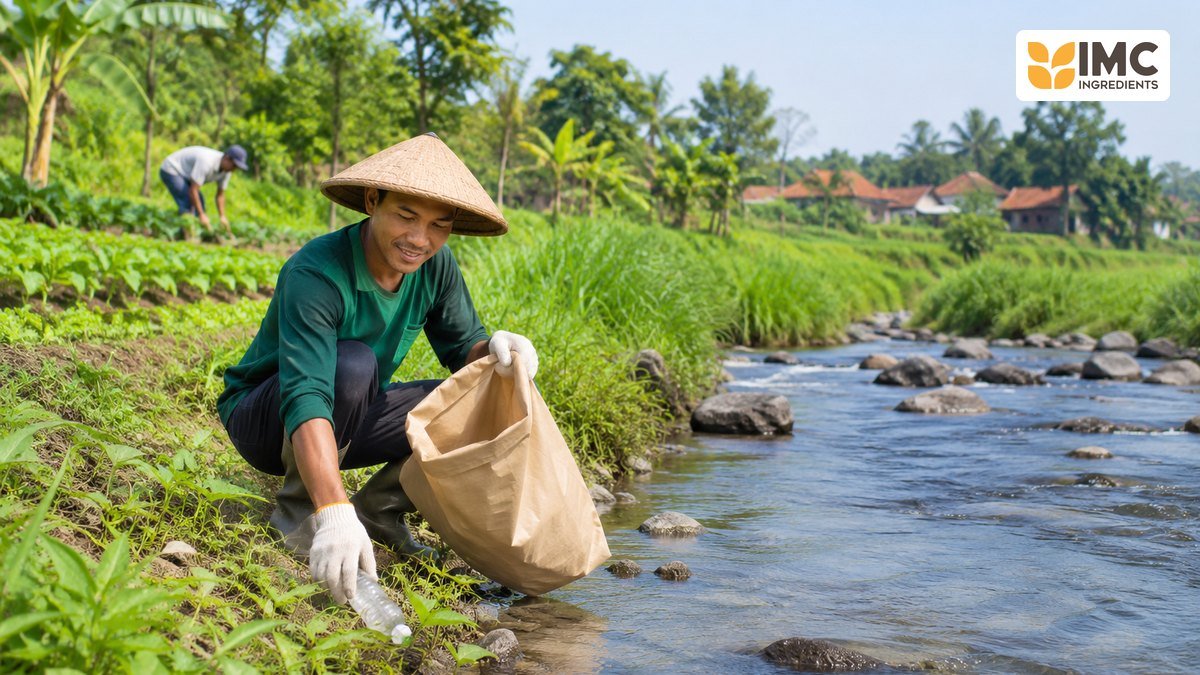
Quick answer: Rivers near farming villages provide water for households, farms and wildlife. They can be polluted by soil runoff, household waste, wastewater and agricultural chemicals. Simple steps such as ground cover, waste collection, careful handling of any chemicals and good sanitation help keep rivers clean. Organic farming, which avoids synthetic inputs, also reduces chemical runoff.
Key takeaways – Rivers are vital to village life and farming. – Runoff and waste are the main pollution sources. – Ground cover and waste management protect water. – Organic practices reduce chemical runoff.
Why clean rivers matter
In many villages, rivers and streams are used for washing, irrigation and sometimes drinking water after treatment. Pollution can affect health, crops and fish. Clean water also matters for food processing, including coconut sugar making.
Sources of pollution
| Source | Example |
|---|---|
| Soil erosion | Bare soil washed into rivers by rain |
| Household waste | Plastic and food waste thrown in water |
| Wastewater | Washing water and sewage |
| Agricultural inputs | Fertiliser and pesticide runoff |
| Processing waste | Residues from small-scale processing |
Practical steps for farmers
- Keep soil covered with plants or mulch.
- Plant grass or shrubs along riverbanks.
- Avoid washing tools and containers directly in rivers.
- Collect and manage household waste.
- Store any farm inputs away from water.
Steps for farmer groups and villages
Farmer groups can organise clean-up days, agree on waste collection points and share information about safe practices. Village leaders and local authorities can support waste collection and sanitation facilities.
Role of organic farming
Organic farming does not use synthetic fertilisers or pesticides, which reduces the risk of these substances entering rivers. Organic groups also learn about soil protection, which reduces erosion.
What suppliers can do
Suppliers can include water and waste topics in farmer training, support clean-up activities and manage their own factory wastewater responsibly. They should describe such activities accurately in CSR communication.
Monitoring
Simple observations, such as water clarity and visible waste, can be recorded by farmer groups. For more detailed checks, local authorities or partners may test water quality.
Working with schools
Schools can help spread good habits. Simple lessons about keeping rivers clean, followed by a small clean-up activity, often reach whole families through the children. Farmer groups can support these activities with time and materials.
Where does IMC fit?
PT Integral Mulia Cipta (IMC Group) has produced coconut sugar in Central Java, Indonesia, since 2012. IMC works with farmer communities through CSR programmes and supplies organic and conventional coconut sugar in mesh 14 and mesh 50.
FAQ
What pollutes rivers near farms? Soil runoff, waste, wastewater and chemical inputs.
How does ground cover help? It reduces soil erosion into rivers.
Does organic farming help? Yes, it avoids synthetic chemical inputs.
What can villages do? Organise waste collection and clean-up days.
IMC Group (PT Integral Mulia Cipta) supplies fine-granule organic coconut sugar from Central Java to food companies worldwide. Talk to our team: info@organic-coconut-sugar.com or WhatsApp +62 821 1348 5564.