Author: IMC Group

  • CSR Communication Guidelines

    CSR Communication Guidelines

    Quick answer: Good CSR communication is honest, specific and backed by evidence. Describe what was done, where, when and with whom. Avoid vague or exaggerated claims, invented stories and unconsented photos. Keep messages consistent across reports, websites and sales materials, and update them when facts change.

    Key takeaways – Be specific: activity, place, date, partners. – Back every claim with evidence. – Use photos and stories only with consent. – Avoid greenwashing and exaggeration.

    Why guidelines help

    CSR information is used by buyers, auditors, journalists and consumers. Inconsistent or exaggerated claims can damage trust and break advertising rules. Simple internal guidelines help everyone in the company communicate the same facts in the same way.

    Core principles

    Principle Example
    Accuracy State numbers that can be checked
    Specificity Name the programme, region and year
    Balance Mention challenges as well as progress
    Consent Ask before using names, photos or quotes
    Consistency Same facts in all channels

    Words to use with care

    Words like “sustainable”, “eco-friendly”, “fair” and “carbon neutral” have strong meanings. Use them only when they can be fully supported. Prefer describing the actual activity, such as “provided aluminium pans and sieves to farmers in 2023”.

    Example: describing IMC’s CSR

    • In 2023, IMC and PUR Projet renewed production tools, including aluminium pans, strainers, sieves and bamboo containers, for farmers in Banyumas, Purbalingga, Cilacap and Kebumen.
    • Since 2025, IMC’s GIZ develoPPP partnership has supported training, safer work, organic certification and dwarf coconut.

    These statements are factual and specific.

    Stories and quotes

    Do not invent anecdotes or quotes. If you share a farmer’s story, record it with consent and share it accurately.

    Review process

    1. Draft the message.
    2. Check facts against records.
    3. Confirm consent for photos and names.
    4. Review wording for exaggeration.
    5. Approve and publish.
    6. Update when programmes change.

    Responding to questions

    When buyers or the public ask about CSR, answer with facts and, where possible, documents. If you do not know, say so and follow up.

    Using the word CSR consistently

    Choose one clear term for your programmes and use it everywhere. Mixing different labels for the same activities can confuse readers. Simple, consistent language makes reports and websites easier to understand.

    One source of facts

    Keep one internal document with the approved CSR facts: programme names, partners, dates, locations and indicators. Sales, marketing and quality teams all use this document when they write to buyers or update the website. This prevents small differences from creeping in over time.

    Where does IMC fit?

    PT Integral Mulia Cipta (IMC Group) has produced coconut sugar in Central Java, Indonesia, since 2012. IMC supplies organic and conventional coconut sugar in mesh 14 and mesh 50 and communicates its CSR work with factual descriptions.

    FAQ

    What is greenwashing? Making misleading environmental or social claims.

    Can I use farmer photos? Only with consent.

    Should challenges be mentioned? Yes, balance builds trust.

    How often should CSR messages be updated? Whenever programmes or facts change.


    Questions about coconut sugar for your products? PT Integral Mulia Cipta (IMC Group), a Central Java producer since 2012, is happy to help. Email info@organic-coconut-sugar.com or WhatsApp +62 821 1348 5564.
  • Critical Control Points in Sugar Drying and Packing

    Critical Control Points in Sugar Drying and Packing

    Quick answer: A critical control point (CCP) is a step where control is essential to prevent or reduce a food safety hazard to a safe level. In coconut sugar drying and packing, the hazard analysis usually focuses on physical hazards such as foreign matter and on moisture control. Which steps become CCPs depends on each factory’s own HACCP study.

    Key takeaways – CCPs come from a site-specific HACCP study. – Foreign matter and moisture are key concerns. – Each CCP needs limits, monitoring and records. – Prerequisite programmes support CCPs.

    HACCP in brief

    HACCP stands for Hazard Analysis and Critical Control Points. A team lists hazards at each process step, decides which are significant and identifies where control is critical. Each CCP has a critical limit, monitoring, corrective action and records.

    Possible hazards in drying and packing

    Step Hazard type Example
    Drying Microbiological High moisture supporting growth
    Sieving Physical Foreign matter passing through damaged screens
    Metal detection (if used) Physical Metal fragments
    Packing Physical, microbiological Contamination from open product

    Examples of controls

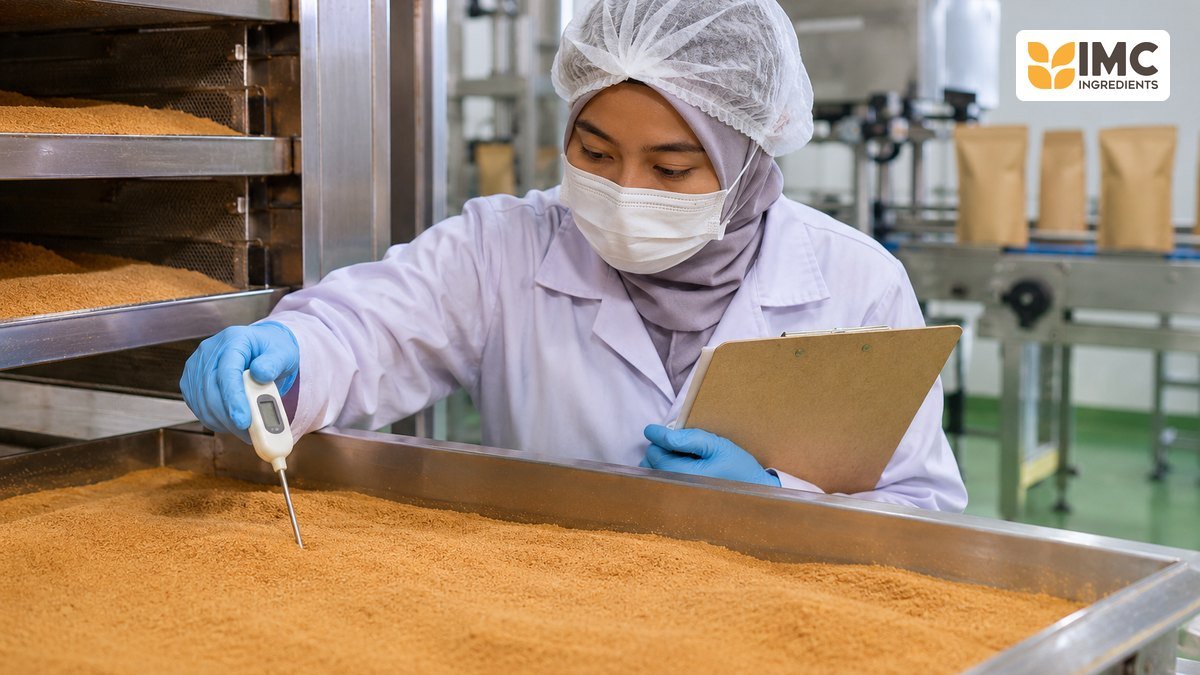
    1. Drying to a target moisture, checked by testing.
    2. Sieve screen checks before and after each shift.
    3. Metal detection with test pieces, where installed.
    4. Hygiene rules in the packing area.
    5. Sealed liners to protect product.

    Critical limits

    A critical limit is the value that separates safe from unsafe, for example an intact sieve screen or a working metal detector. Limits must be measurable and based on evidence.

    Monitoring and records

    Operators check each CCP at set intervals and record results. Supervisors review records daily. If a limit is not met, corrective action is taken and affected product is held.

    Prerequisite programmes

    Cleaning, pest control, staff hygiene and maintenance support the HACCP plan. Many risks are controlled through these programmes rather than CCPs.

    Verification

    Internal audits, record reviews and occasional testing confirm that the HACCP system works. The plan is reviewed when the process changes.

    Training the HACCP team

    The HACCP team should include people from production, quality and maintenance. Training helps them understand hazards and how to judge risks. A team that knows the process well produces a more useful plan than one written only by consultants.

    Where does IMC fit?

    PT Integral Mulia Cipta (IMC Group) has produced coconut sugar in Central Java, Indonesia, since 2012. IMC dries, sieves and packs organic and conventional coconut sugar in mesh 14 and mesh 50 in paper bags with a food-grade PE liner.

    FAQ

    What is a CCP? A step where control is essential for food safety.

    Are CCPs the same in every factory? No, they come from each site’s HACCP study.

    What happens if a limit is not met? Corrective action is taken and product is held.

    What supports CCPs? Prerequisite programmes like cleaning and pest control.


    PT Integral Mulia Cipta (IMC Group) has produced organic coconut sugar in Central Java, Indonesia, since 2012. For specifications or samples, email info@organic-coconut-sugar.com or WhatsApp +62 821 1348 5564.

  • Cover Crops Between Organic Coconut Rows

    Cover Crops Between Organic Coconut Rows

    Quick answer: Cover crops are low plants grown on the ground between trees to protect and improve the soil. In organic coconut gardens, they help reduce erosion, keep moisture, suppress weeds and, in the case of legumes, add nitrogen. They need to be chosen and managed so they do not compete too strongly with the main crop.

    Key takeaways – Cover crops protect soil between trees. – They reduce weeds and erosion. – Legumes can add nitrogen to the soil. – Management keeps competition low.

    Why cover crops suit organic gardens

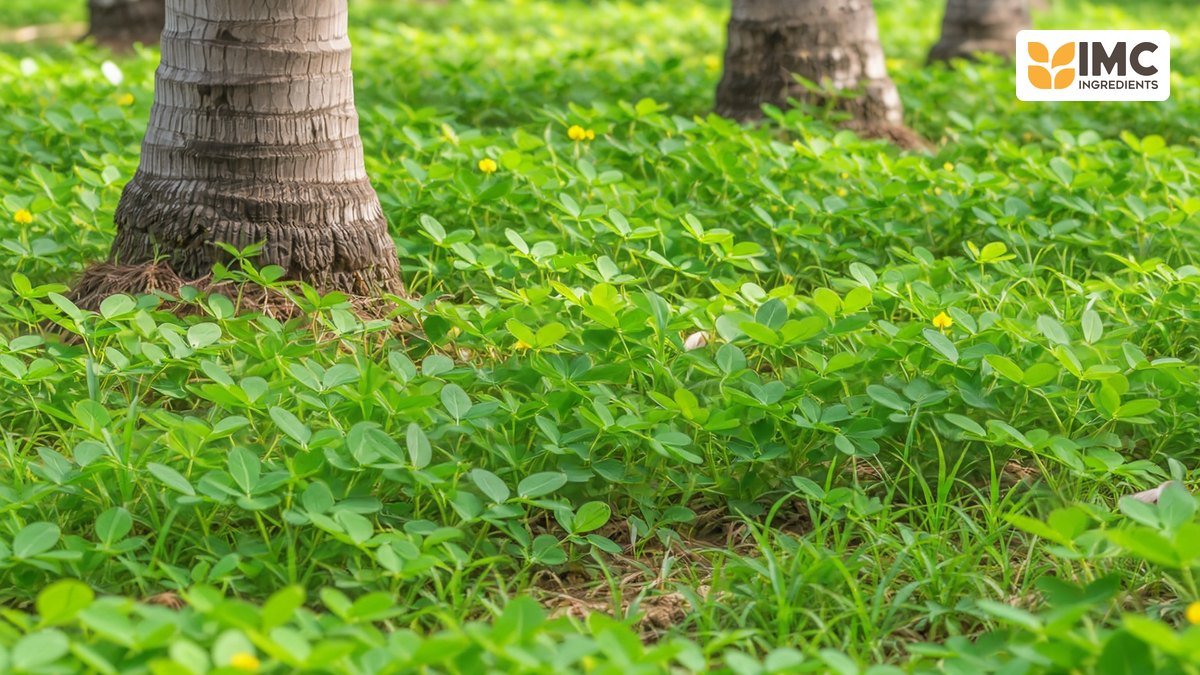
    Organic farmers cannot use herbicides or synthetic fertilisers. Cover crops offer a natural way to keep soil covered, reduce weed growth and feed the soil. In a tropical climate with heavy rain, bare soil can wash away quickly. Ground cover helps hold it in place.

    Benefits

    Benefit How it works
    Erosion control Roots and leaves protect soil from rain
    Weed suppression Ground cover shades out weeds
    Soil moisture Reduces evaporation
    Soil fertility Legumes fix nitrogen; residues add organic matter
    Soil life Supports earthworms and microbes

    Choosing cover crops

    Farmers often choose legumes because they fix nitrogen from the air. Local plants that grow low and do not climb trees are preferred. The choice depends on shade, rainfall, soil type and labour available. Local agricultural advisers can suggest suitable species.

    Managing cover crops

    1. Prepare the ground and sow at the start of the rainy season.
    2. Keep a clear circle around each tree trunk.
    3. Cut back cover crops when they grow too tall.
    4. Leave cuttings as mulch.
    5. Check that seeds and planting material are allowed under organic rules.

    Possible challenges

    Cover crops can compete with trees for water in dry months. Some species spread too much. Farmers may need time to learn which plants work best. Starting with a small area helps.

    Links to certification

    Organic inspectors look at soil management practices. Cover crops and mulching are good examples of practices that support organic principles. Records of seed sources and activities are useful.

    Combining with other practices

    Cover crops work well with compost, mulching and intercropping. Together, they build healthier soil over time.

    Learning from other farmers

    Farmer groups can set up small demonstration plots where members see cover crops in action. Sharing results at group meetings helps others decide whether to try them. Simple notes on growth, weeds and labour make the comparison useful.

    Where does IMC fit?

    PT Integral Mulia Cipta (IMC Group) has produced coconut sugar in Central Java, Indonesia, since 2012. IMC supplies organic coconut sugar in mesh 14 and mesh 50, and its CSR work with farmer groups includes training under a GIZ develoPPP partnership since 2025.

    FAQ

    What is a cover crop? A low plant grown to protect and improve soil.

    Why use legumes? They can add nitrogen to the soil.

    Do cover crops compete with trees? They can; keep a clear circle around trunks.

    Are cover crops required for organic? Not always, but they support organic soil management.


    PT Integral Mulia Cipta (IMC Group) has produced organic coconut sugar in Central Java, Indonesia, since 2012. For specifications or samples, email info@organic-coconut-sugar.com or WhatsApp +62 821 1348 5564.

  • Consistency Across Seasons

    Consistency Across Seasons

    Quick answer: Coconut sugar is made from fresh sap every day, so seasons influence the raw material. Rainy months can dilute sap and raise humidity; hot months can speed fermentation. Suppliers keep quality consistent through drying control, sieving, testing every lot and adjusting routines to the season. Buyers help by sharing key parameters and approving a reference sample.

    Key takeaways – Seasons affect sap, drying and storage conditions. – Moisture and colour are the most season-sensitive parameters. – Lot testing and reference samples keep quality in range. – Planning together reduces surprises.

    How seasons affect coconut sugar

    Indonesia has a wet and a dry season. Weather changes sap volume, sugar content and the speed of fermentation. Humidity also affects drying and storage. These effects are normal for a natural product and can be managed with good routines.

    Season-related risks

    Season factor Possible effect Control
    Heavy rain Diluted sap, longer cooking Cooking and drying control
    High humidity Higher moisture uptake Drying, sealed packing
    Heat Faster sap fermentation Quick collection and cooking
    Lower sap flow Tighter supply Forward planning

    Controls at the factory

    1. Check incoming product for moisture and appearance.
    2. Adjust drying times to reach target moisture.
    3. Sieve to the agreed mesh size.
    4. Test each lot against the specification.
    5. Pack in liners and seal promptly.
    6. Store in a dry warehouse with good airflow.

    Monitoring trends

    Plot moisture and colour results by month. Trends show when extra attention is needed. If results drift towards a limit in certain months, adjust drying or storage before they go out of specification.

    What buyers can do

    Share which parameters matter most for your product. Keep a reference sample and compare new lots. If your product is colour-sensitive, ask for lot results before shipment. Place orders early ahead of seasons with lower supply.

    Organic supply and seasons

    Organic coconut sugar comes from certified farmer groups only, so the available volume depends on these groups’ production. Seasonal planning is especially important for organic orders.

    Communication

    Regular updates from the supplier about weather, sap flow and expected volumes help buyers plan. Clear, early information is more useful than last-minute changes.

    Keeping retained samples by season

    Retained samples from different months help explain small differences when a buyer has a question. Comparing a current lot with samples from the same season last year can show whether a change is normal or needs investigation.

    Where does IMC fit?

    PT Integral Mulia Cipta (IMC Group) has produced coconut sugar in Central Java, Indonesia, since 2012. IMC supplies organic and conventional coconut sugar in mesh 14 and mesh 50, tested by lot and packed in paper bags with a food-grade PE liner.

    FAQ

    Does coconut sugar change with the seasons? Slightly, mainly in moisture and colour.

    How do suppliers keep quality consistent? With drying control, sieving and lot testing.

    Should I order earlier in some months? Yes, especially for organic product.

    What is a reference sample? An approved sample used to compare new lots.


    PT Integral Mulia Cipta (IMC Group) has produced organic coconut sugar in Central Java, Indonesia, since 2012. For specifications or samples, email info@organic-coconut-sugar.com or WhatsApp +62 821 1348 5564.

  • Coconut Sugar With Gelatin and Agar Sets

    Coconut Sugar With Gelatin and Agar Sets

    Quick answer: Coconut sugar works with both gelatin and agar. Dissolve it fully in the warm liquid before the gelling agent sets, and expect an amber colour rather than a clear set. Sugar levels can affect setting strength, so keep total sugar close to your usual recipe and test the firmness before scaling up.

    Key takeaways – Dissolve coconut sugar completely before setting. – Expect amber colour and less clarity. – Gelatin suits creamy and soft sets; agar gives firm, plant-based sets. – Test firmness when changing sugar type or level.

    Gelatin and agar in short

    Gelatin is an animal-derived protein that melts near body temperature and gives a soft, wobbly texture. Agar comes from seaweed, sets firmly at room temperature and is popular in Asian desserts and plant-based recipes. Both are used with sugar in jellies, puddings, gummies and mousses.

    How coconut sugar behaves

    Coconut sugar is mostly sucrose, so it behaves much like regular sugar in gels. The main differences are colour and flavour. Its natural compounds give a light to medium brown tint and caramel notes. In clear fruit jellies, this changes the look. In milk-based or coffee desserts, it fits well.

    Comparison

    Point Gelatin desserts Agar desserts
    Typical texture Soft, melting Firm, clean bite
    Setting temperature Fridge Room temperature
    Coconut sugar colour effect Amber tint Amber tint
    Best uses Panna cotta, mousse Jellies, layered desserts
    Plant-based No Yes

    Method with gelatin

    1. Bloom gelatin in cold liquid.
    2. Warm the main liquid and dissolve mesh 50 coconut sugar.
    3. Remove from heat and stir in bloomed gelatin.
    4. Strain if needed, pour into moulds and chill.

    Method with agar

    1. Mix agar powder with cold liquid.
    2. Bring to a boil and simmer briefly to activate the agar.
    3. Add coconut sugar and stir until dissolved.
    4. Pour into moulds and allow to set.

    Setting strength and sugar level

    High sugar levels can change how firm a gel becomes. If you increase sugar a lot, or switch from a liquid sweetener to coconut sugar, test a small batch. Adjust the gelling agent dose, not only the sugar.

    Colour and clarity tips

    For a light colour, use a partial swap, such as half coconut sugar and half white sugar. For an attractive look, make layered desserts with one amber layer and one pale layer. Strain the warm mixture through a fine sieve to remove any tiny particles.

    Flavour ideas

    Coconut sugar pairs well with coffee, pandan, vanilla, ginger, cocoa and coconut milk. Layered agar desserts with a coconut milk layer and a coconut sugar layer are common in Southeast Asian cafés and dessert shops.

    Where does IMC fit?

    PT Integral Mulia Cipta (IMC Group) has produced coconut sugar in Central Java, Indonesia, since 2012. IMC supplies organic and conventional coconut sugar in mesh 50 and mesh 14 for dessert makers and food businesses.

    FAQ

    Can coconut sugar be used with agar? Yes, dissolve it after the agar has boiled.

    Will my jelly be clear? It will be amber rather than fully clear.

    Does sugar change setting strength? It can; test firmness when changing recipes.

    Which grade dissolves best? Mesh 50.


    Looking for a reliable coconut sugar partner? Contact PT Integral Mulia Cipta (IMC Group) in Central Java, Indonesia: info@organic-coconut-sugar.com or WhatsApp +62 821 1348 5564.

  • Coconut Sugar Scoops, Shakers and Dispensers

    Coconut Sugar Scoops, Shakers and Dispensers

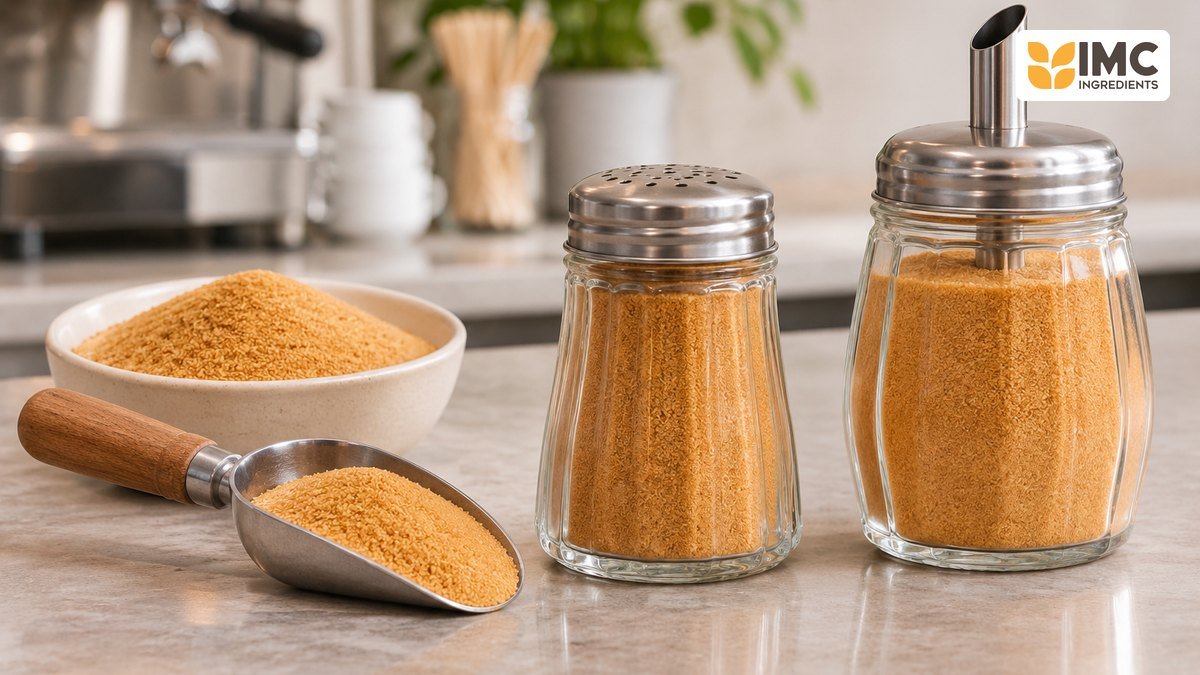
    Quick answer: The right tool makes coconut sugar easier to use. Dry stainless steel scoops suit kitchens, shakers with larger holes suit fine coconut sugar at the table, and sealed canisters or dispensers protect it from humidity in cafés. Because coconut sugar can clump in moist air, choose tools that close well and keep them dry.

    Key takeaways – Keep all tools completely dry. – Choose shaker holes that suit the grade. – Sealed dispensers protect against humidity. – Clean tools regularly and dry fully.

    Why tools matter for coconut sugar

    Coconut sugar takes up moisture more easily than white sugar. A wet spoon or an open bowl can lead to lumps. Choosing the right tool helps keep the sugar free-flowing and makes portions consistent.

    Tool options

    Tool Best for Tips
    Stainless steel scoop Kitchens, bakeries Store outside the bag, keep dry
    Measuring spoons Recipes at home Level off for accuracy
    Table shaker Cafés, homes Larger holes for mesh 50
    Sealed canister Back-of-house storage Tight lid, food-grade material
    Gravity dispenser Self-service stations Check for bridging
    Portion pump for syrup Bars and cafés Use syrup instead of granules

    Shakers

    Fine mesh 50 coconut sugar flows through shakers with medium to large holes. Coarse mesh 14 may block small holes. In humid rooms, fill shakers with small amounts and refill them often, so the sugar does not sit exposed to moist air for long.

    Canisters and dispensers

    Choose canisters with a good seal. Fill them with what you will use within a short period, and close the main bag straight away. In self-service dispensers, check daily for clumping or bridging, where sugar sticks together and stops flowing.

    Cleaning

    1. Empty the tool completely.
    2. Wash with warm water and mild detergent if needed.
    3. Rinse well.
    4. Dry fully before refilling.
    5. Do not top up old sugar with new sugar.

    Portion control

    Scoops and measuring spoons help keep recipes consistent. For drinks, many cafés use a syrup and a measured pump instead of granules, which gives exact doses and avoids undissolved sugar.

    Labelling

    Label containers clearly, especially if you also use brown sugar, which can look similar. Include the date of filling.

    Choosing materials

    Food-grade stainless steel, glass and food-safe plastics all work well. Avoid containers that hold odours, because coconut sugar can pick up smells from its surroundings. Clear containers make it easy to see when refilling is needed.

    Where does IMC fit?

    PT Integral Mulia Cipta (IMC Group) has produced coconut sugar in Central Java, Indonesia, since 2012. IMC supplies organic and conventional coconut sugar in mesh 50 and mesh 14 for food service distributors and food businesses.

    FAQ

    Can coconut sugar go in a normal shaker? Yes, mesh 50 works with medium to large holes.

    Why does my dispenser stop flowing? Moisture can cause clumping or bridging.

    Should I top up old sugar? No, empty, clean and dry first.

    Is syrup better for drinks? Often, because it doses accurately and dissolves fully.


    IMC Group (PT Integral Mulia Cipta) supplies fine-granule organic coconut sugar from Central Java to food companies worldwide. Talk to our team: info@organic-coconut-sugar.com or WhatsApp +62 821 1348 5564.

  • Coconut Sugar Ingredient Names on Labels Worldwide

    Coconut Sugar Ingredient Names on Labels Worldwide

    Quick answer: In most markets, the ingredient is simply called “coconut sugar” in the local language. Some labels use “coconut blossom sugar” or “coconut flower sugar”. Organic products add “organic” according to local rules. Check the rules of each market and keep the name consistent with your supplier’s documents.

    Key takeaways – “Coconut sugar” is the most common name. – Alternatives include coconut blossom or flower sugar. – Translations follow local language rules. – Organic wording must match certification.

    Why the name matters

    The ingredient list tells shoppers and authorities what is in a product. A clear, accurate name avoids confusion and supports traceability. Inconsistent names across packs and documents can create questions at customs or in audits.

    Common names by language

    Language Common term
    English Coconut sugar, coconut blossom sugar
    German Kokosblütenzucker
    French Sucre de coco, sucre de fleur de coco
    Spanish Azúcar de coco
    Dutch Kokosbloesemsuiker
    Italian Zucchero di cocco
    Indonesian Gula kelapa, gula semut (granulated)

    Always confirm the preferred term with a local regulatory expert.

    Organic wording

    For organic products, the ingredient may be marked as organic in the list, for example with an asterisk and a note. The exact format depends on the market’s organic rules. Only certified ingredients can be marked organic.

    Avoiding misleading names

    1. Do not call it “coconut nectar sugar” if that is not accepted locally.
    2. Avoid adding health words to the ingredient name.
    3. Do not use names that suggest it is unprocessed if it is cooked and dried.
    4. Make sure the name matches the specification and invoices.

    Added sugar rules

    Many markets require coconut sugar to be counted as added sugar in nutrition information. Check how your market treats it.

    Consistency across documents

    The product name on bags, invoices, certificates of analysis and organic documents should match. This makes customs clearance and audits smoother.

    When a product is sold in several countries

    Multi-language packs need each version to be accurate. Work with translators who understand food labelling, not only general language.

    Online product listings

    Online shops and marketplaces also show ingredient lists. Use the same wording as on the pack. If the product is sold in several countries online, check that each local listing uses the correct translation.

    Names in customs documents

    Customs documents often use the product name together with a tariff code. Agree the exact wording with your supplier and customs broker, so invoices, packing lists and labels all describe the same product in the same way.

    Where does IMC fit?

    PT Integral Mulia Cipta (IMC Group) has produced coconut sugar in Central Java, Indonesia, since 2012. IMC supplies organic and conventional coconut sugar in mesh 50 and mesh 14, with documents that use consistent product names.

    FAQ

    What is the most common name? “Coconut sugar” in the local language.

    Can I call it coconut blossom sugar? Often yes, but check local rules.

    How do I mark it as organic? Follow the organic labelling rules of your market.

    Is it counted as added sugar? In many markets, yes.


    Looking for a reliable coconut sugar partner? Contact PT Integral Mulia Cipta (IMC Group) in Central Java, Indonesia: info@organic-coconut-sugar.com or WhatsApp +62 821 1348 5564.

  • Coconut Sugar in Vegan Baking

    Coconut Sugar in Vegan Baking

    Quick answer: Coconut sugar is plant-based and processed without animal products, so it suits vegan baking. It replaces white or brown sugar 1:1 by weight. In vegan recipes, it works with plant fats, plant milks and egg replacers, adding caramel flavour and a golden colour. Test texture, because egg-free batters can behave differently.

    Key takeaways – Coconut sugar suits vegan recipes. – Swap 1:1 by weight for white or brown sugar. – Works with plant fats, milks and egg replacers. – Test texture and colour in each recipe.

    Why vegan bakers use coconut sugar

    Some refined sugars are processed in ways that vegan consumers question. Coconut sugar is made by cooking blossom sap, crystallising and drying it, so it fits vegan expectations. Its flavour also adds depth to recipes that do not contain butter.

    Common vegan baking ingredients

    Ingredient Role Pairing with coconut sugar
    Plant butter or oil Fat, tenderness Cream with mesh 50
    Plant milk Liquid Dissolves sugar
    Flax or chia gel Binding Works well
    Aquafaba Foaming Test carefully
    Starches Structure Neutral

    Tips for cookies

    Cream plant butter with mesh 50 coconut sugar until smooth. Add flax gel or another binder, then dry ingredients. Chill the dough if cookies spread too much.

    Tips for cakes

    1. Dissolve coconut sugar in plant milk and oil.
    2. Add vinegar or lemon juice if using baking soda.
    3. Fold in dry ingredients gently.
    4. Bake at a slightly lower temperature if browning is fast.

    Meringues and foams

    Aquafaba meringues need fine sugar and careful whipping. Coconut sugar gives a beige meringue with a caramel taste. Very fine milled coconut sugar works best.

    Colour and flavour

    Coconut sugar makes vegan bakes darker and adds caramel notes. This suits chocolate, spice and nut recipes particularly well.

    Labelling vegan products

    Check that every ingredient and the production process meet the requirements of any vegan label or certification you plan to use. Avoid health claims about coconut sugar.

    Organic vegan baking

    Many vegan bakers also use organic ingredients. Organic coconut sugar must be certified, and organic claims on finished goods follow certification rules.

    Testing and recording

    Vegan recipes can be sensitive to small changes in ingredients. Record the brand and type of plant butter, milk and egg replacer used with coconut sugar. When a supplier changes, repeat a small test bake before full production.

    Where does IMC fit?

    PT Integral Mulia Cipta (IMC Group) has produced coconut sugar in Central Java, Indonesia, since 2012. IMC supplies organic and conventional coconut sugar in mesh 50 and mesh 14 to bakeries and plant-based food makers.

    FAQ

    Is coconut sugar vegan? It is plant-based and made without animal products.

    Can it replace sugar 1:1? Yes, by weight.

    Does it work with aquafaba? Yes, with very fine sugar and careful whipping.

    Will vegan bakes be darker? Yes, coconut sugar adds colour.


    Questions about coconut sugar for your products? PT Integral Mulia Cipta (IMC Group), a Central Java producer since 2012, is happy to help. Email info@organic-coconut-sugar.com or WhatsApp +62 821 1348 5564.
  • Coconut Sugar in Tempeh Chips

    Coconut Sugar in Tempeh Chips

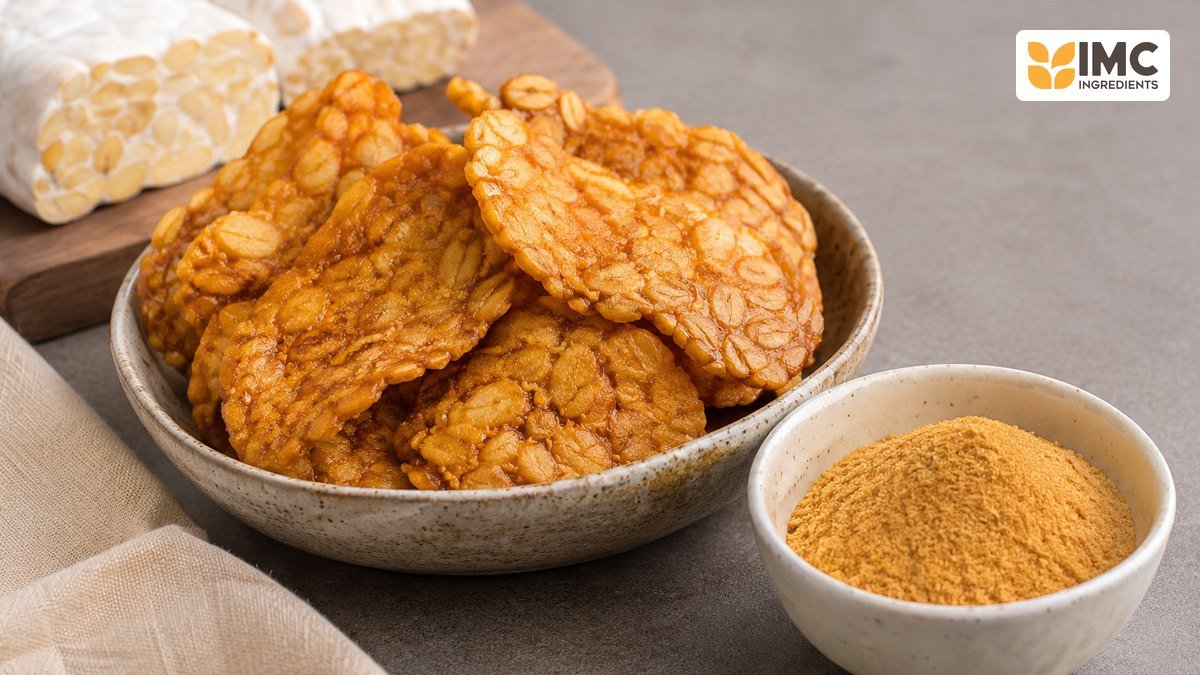
    Quick answer: Tempeh chips are thin slices of tempeh fried or baked until crisp. Coconut sugar can be used in a sweet and savoury coating, often with garlic, chilli and salt. Apply it as a syrup or glaze after frying, then dry the chips so they stay crunchy. Good packaging is essential to protect the coated chips from moisture.

    Key takeaways – Coconut sugar adds sweetness to savoury tempeh chips. – Apply it as a glaze after frying. – Drying sets the coating. – Barrier packaging keeps chips crisp.

    About tempeh chips

    Tempeh is a fermented soybean cake from Indonesia. Thinly sliced tempeh can be coated in a seasoned batter and fried until crisp. These chips are a popular snack in Indonesia and are gaining attention elsewhere as a plant-based snack.

    Coating styles

    Style Coconut sugar role
    Savoury with garlic and coriander Small amount to round flavour
    Sweet and spicy Main sweetness with chilli
    Sweet soy glaze Coconut sugar with soy sauce
    Caramel-style Thicker coconut sugar glaze

    Making a sweet-spicy glaze

    1. Fry garlic, shallots and chilli in a little oil.
    2. Add coconut sugar and a splash of water.
    3. Cook until thick and glossy.
    4. Add salt and a little tamarind or lime.
    5. Toss fried tempeh chips in the warm glaze.

    Drying and cooling

    Spread coated chips on trays so pieces do not stick together. Let them dry in a low oven or dryer until the glaze is no longer tacky. Cool fully before packing.

    Moisture and shelf life

    Sugar glazes attract moisture. Pack in a dry room, use barrier bags and consider nitrogen flushing. Test crispness over shelf life at warm and humid conditions.

    For snack producers

    Weigh coating ingredients for each batch. Record coating weight per kilo of chips. Check oil quality regularly, because sugar residues can darken frying oil.

    Labelling

    Declare soy as an allergen. Name coconut sugar in the ingredient list and count it as added sugar where required.

    Organic and plant-based versions

    Organic tempeh chips need organic soybeans, organic coconut sugar and other certified ingredients. Tempeh chips with coconut sugar are fully plant-based, which suits vegan snack ranges.

    Export considerations

    Tempeh chips for export must meet the destination market’s rules on labelling, allergens and food safety. Check frying oil declarations and allergen wording in each market before shipping.

    Where does IMC fit?

    PT Integral Mulia Cipta (IMC Group) has produced coconut sugar in Central Java, Indonesia, since 2012. IMC supplies organic and conventional coconut sugar in mesh 50 and mesh 14 to snack producers.

    FAQ

    What are tempeh chips? Thin, crispy fried slices of tempeh.

    How is coconut sugar used? In a sweet or sweet-spicy glaze after frying.

    Why are my chips sticky? The glaze needs more drying or the room is too humid.

    Are they vegan? Yes, if all ingredients are plant-based.


    Looking for a reliable coconut sugar partner? Contact PT Integral Mulia Cipta (IMC Group) in Central Java, Indonesia: info@organic-coconut-sugar.com or WhatsApp +62 821 1348 5564.
  • Coconut Sugar in Tamarind Drinks

    Coconut Sugar in Tamarind Drinks

    Quick answer: Tamarind drinks combine sour tamarind pulp with water and sweetener, often with spices. Coconut sugar balances the strong sourness of tamarind and adds caramel depth. Prepare tamarind liquid first, sweeten with coconut sugar to taste and serve cold over ice or warm with ginger. For bottled drinks, control Brix and pH.

    Key takeaways – Coconut sugar balances tamarind’s sourness. – Prepare tamarind liquid first, then sweeten. – Spices like ginger and turmeric pair well. – Bottled drinks need process control.

    About tamarind drinks

    Tamarind is a sour fruit pulp used in drinks across Asia, Africa, Latin America and the Middle East. In Indonesia, tamarind is used in traditional drinks, sometimes with turmeric. Elsewhere, tamarind drinks are sold in cafés, street stalls and bottles.

    Preparing tamarind liquid

    1. Soak tamarind pulp in warm water.
    2. Squeeze and mash to release the pulp.
    3. Strain to remove seeds and fibres.
    4. Measure the liquid for consistent strength.

    Sweetening with coconut sugar

    Dissolve coconut sugar in a little warm water to make a syrup, then add to the tamarind liquid. Taste and adjust. Because tamarind is very sour, drinks often need more sweetener than other fruit drinks.

    Flavour variations

    Variation Added ingredients
    Classic Tamarind, coconut sugar, water
    Spiced Ginger, cinnamon
    Turmeric Turmeric, tamarind, coconut sugar
    Sparkling Tamarind syrup with soda water
    Warm Tamarind, ginger, served hot

    For cafés

    Make a concentrated tamarind and coconut sugar syrup in batches. Store chilled. Mix with water or soda for each order. This keeps taste consistent and service fast.

    For beverage makers

    Bottled tamarind drinks need validated heat treatment, pH control and shelf life testing. Brix and pH are key quality checks. Sediment may form naturally; decide whether to filter or shake-before-use.

    Labelling

    Name coconut sugar in the ingredient list. Avoid health claims for tamarind or turmeric.

    Organic versions

    Organic tamarind drinks need organic tamarind, organic coconut sugar and certified processing.

    Serving presentation

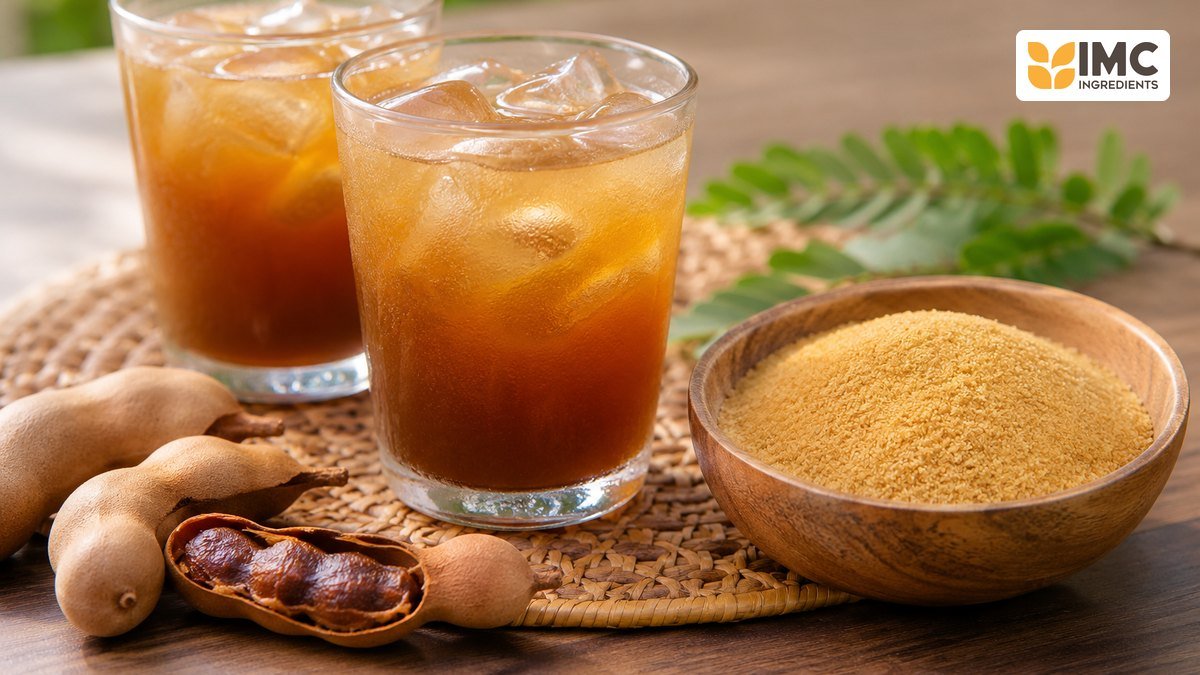
    Serve tamarind drinks in clear glasses to show their amber colour. Garnish with lime, mint or a cinnamon stick. A coconut sugar rim made with mesh 14 adds crunch and a decorative finish.

    Consistency between batches

    Tamarind pulp varies in sourness between lots. Measure the strength of each batch of tamarind liquid, for example with a simple acidity or Brix check, and adjust the coconut sugar syrup so the finished drink tastes the same every time.

    Where does IMC fit?

    PT Integral Mulia Cipta (IMC Group) has produced coconut sugar in Central Java, Indonesia, since 2012. IMC supplies organic and conventional coconut sugar in mesh 50 and mesh 14 to beverage producers and cafés.

    FAQ

    Why use coconut sugar with tamarind? It balances sourness and adds caramel depth.

    How is tamarind prepared? Soaked, mashed and strained.

    Can I serve it warm? Yes, often with ginger.

    What should beverage makers measure? Brix and pH.


    IMC Group (PT Integral Mulia Cipta) supplies fine-granule organic coconut sugar from Central Java to food companies worldwide. Talk to our team: info@organic-coconut-sugar.com or WhatsApp +62 821 1348 5564.