
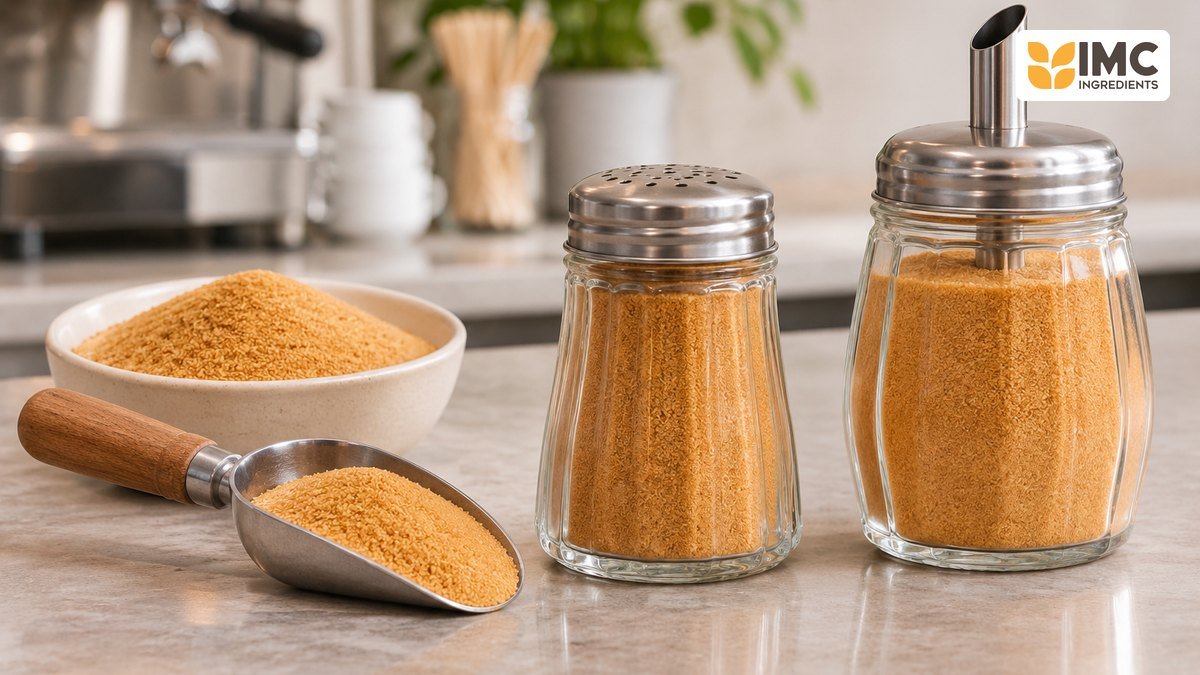
Quick answer: The right tool makes coconut sugar easier to use. Dry stainless steel scoops suit kitchens, shakers with larger holes suit fine coconut sugar at the table, and sealed canisters or dispensers protect it from humidity in cafés. Because coconut sugar can clump in moist air, choose tools that close well and keep them dry.
Key takeaways – Keep all tools completely dry. – Choose shaker holes that suit the grade. – Sealed dispensers protect against humidity. – Clean tools regularly and dry fully.
Why tools matter for coconut sugar
Coconut sugar takes up moisture more easily than white sugar. A wet spoon or an open bowl can lead to lumps. Choosing the right tool helps keep the sugar free-flowing and makes portions consistent.
Tool options
| Tool | Best for | Tips |
|---|---|---|
| Stainless steel scoop | Kitchens, bakeries | Store outside the bag, keep dry |
| Measuring spoons | Recipes at home | Level off for accuracy |
| Table shaker | Cafés, homes | Larger holes for mesh 50 |
| Sealed canister | Back-of-house storage | Tight lid, food-grade material |
| Gravity dispenser | Self-service stations | Check for bridging |
| Portion pump for syrup | Bars and cafés | Use syrup instead of granules |
Shakers
Fine mesh 50 coconut sugar flows through shakers with medium to large holes. Coarse mesh 14 may block small holes. In humid rooms, fill shakers with small amounts and refill them often, so the sugar does not sit exposed to moist air for long.
Canisters and dispensers
Choose canisters with a good seal. Fill them with what you will use within a short period, and close the main bag straight away. In self-service dispensers, check daily for clumping or bridging, where sugar sticks together and stops flowing.
Cleaning
- Empty the tool completely.
- Wash with warm water and mild detergent if needed.
- Rinse well.
- Dry fully before refilling.
- Do not top up old sugar with new sugar.
Portion control
Scoops and measuring spoons help keep recipes consistent. For drinks, many cafés use a syrup and a measured pump instead of granules, which gives exact doses and avoids undissolved sugar.
Labelling
Label containers clearly, especially if you also use brown sugar, which can look similar. Include the date of filling.
Choosing materials
Food-grade stainless steel, glass and food-safe plastics all work well. Avoid containers that hold odours, because coconut sugar can pick up smells from its surroundings. Clear containers make it easy to see when refilling is needed.
Where does IMC fit?
PT Integral Mulia Cipta (IMC Group) has produced coconut sugar in Central Java, Indonesia, since 2012. IMC supplies organic and conventional coconut sugar in mesh 50 and mesh 14 for food service distributors and food businesses.
FAQ
Can coconut sugar go in a normal shaker? Yes, mesh 50 works with medium to large holes.
Why does my dispenser stop flowing? Moisture can cause clumping or bridging.
Should I top up old sugar? No, empty, clean and dry first.
Is syrup better for drinks? Often, because it doses accurately and dissolves fully.
IMC Group (PT Integral Mulia Cipta) supplies fine-granule organic coconut sugar from Central Java to food companies worldwide. Talk to our team: info@organic-coconut-sugar.com or WhatsApp +62 821 1348 5564.