Author: IMC Group

  • Hygiene Habits That Protect Product and People

    Hygiene Habits That Protect Product and People

    Quick answer: Daily hygiene habits protect both the product and the people who make it. Handwashing, clean work clothes, hair covering, clean work areas and reporting illness prevent contamination of food and reduce the spread of illness among workers. Habits stick when facilities are convenient, rules are clear and supervisors lead by example.

    Key takeaways – Hygiene protects product safety and worker health. – Convenient facilities make good habits easier. – Clear routines turn rules into habits. – Supervisors’ behaviour sets the standard.

    Two goals, one set of habits

    Hygiene in food factories is often seen only as protecting the product. But the same habits also protect workers. Washing hands reduces the spread of germs between colleagues. Clean break areas and toilets support health. Reporting illness protects co-workers as well as consumers.

    Core habits

    Habit Protects product Protects people
    Handwashing Prevents contamination Reduces illness spread
    Clean clothing Prevents foreign matter Keeps workers comfortable
    Hair covering Prevents hair in product Safety near machines
    Clean workstations Prevents cross-contamination Reduces slips and hazards
    Illness reporting Prevents contamination Protects colleagues

    Making it easy

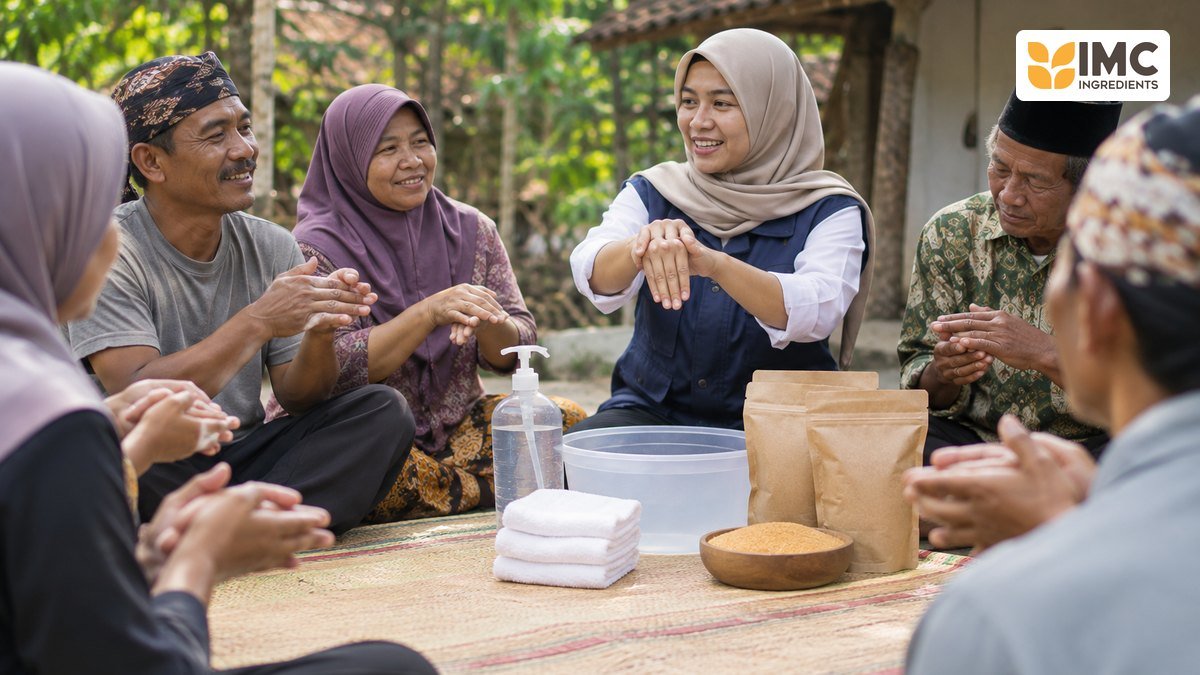
    Handwashing stations should be at entrances to production, near toilets and break areas, with soap, clean water and drying options always available. Changing rooms should have enough space and storage. Clean work clothes should be provided and laundered regularly.

    Building routines

    • Wash hands every time you enter production.
    • Change into work clothes before entering.
    • Check hair covering in a mirror.
    • Clean your workstation at the end of each task.
    • Report symptoms before starting work.

    Routines repeated daily become habits.

    Role of supervisors

    Supervisors should follow every rule themselves, check hygiene at shift start and give friendly reminders. Recognising good practice encourages others.

    Training

    Short, visual training sessions in the local language explain the reasons behind each rule. When workers understand why, they are more likely to follow rules consistently.

    Illness policy

    Workers should be able to report illness without losing pay or their job. Otherwise, they may hide symptoms, which risks both product and colleagues.

    Monitoring

    Hygiene inspections, hand swabs and observations show whether habits are followed. Results should be shared and used to improve facilities or training.

    Visitors and new workers

    Visitors and new workers are most likely to forget hygiene rules because routines are new to them. A clear entrance briefing, visible signs and an experienced buddy for new staff help. Visitors should follow the same handwashing and clothing rules as workers. Making hygiene part of the first day sets the tone for everything that follows.

    Where does IMC fit?

    PT Integral Mulia Cipta (IMC Group) has produced coconut sugar in Central Java, Indonesia, since 2012. Since 2025, IMC’s GIZ develoPPP partnership has supported training, safer work, organic certification and dwarf coconut.

    FAQ

    Who does hygiene protect? Both the product and the workers.

    What makes handwashing easier? Convenient, well-stocked stations.

    Why explain reasons for rules? Understanding improves consistency.

    Should workers report illness? Yes, without fear of losing pay or their job.


    PT Integral Mulia Cipta (IMC Group) has produced organic coconut sugar in Central Java, Indonesia, since 2012. For specifications or samples, email info@organic-coconut-sugar.com or WhatsApp +62 821 1348 5564.
  • Coconut Sugar in Seasoning for Roasted Vegetables

    Coconut Sugar in Seasoning for Roasted Vegetables

    Quick answer: A little coconut sugar in a seasoning blend helps roasted vegetables caramelise and balances salt, spice and bitterness. Mix it with salt, pepper, spices and oil, toss the vegetables and roast at a moderate-high temperature. Because sugar can burn, keep amounts small and turn the vegetables during roasting.

    Key takeaways – Small amounts improve browning and flavour balance. – Mix with salt, spices and oil for even coating. – Turn vegetables to avoid burning. – Works well with root vegetables and squash.

    Why add sugar to roasting

    Roasting creates flavour through browning. Vegetables contain natural sugars, but a little added sugar can deepen colour and add caramel notes, especially for vegetables that are less sweet, such as Brussels sprouts or cauliflower. Coconut sugar’s caramel flavour suits this purpose.

    Basic blend

    Ingredient Amount for 1 kg vegetables
    Coconut sugar 1 to 2 teaspoons
    Salt 1 teaspoon
    Black pepper Half a teaspoon
    Spice (paprika, cumin or chilli) 1 teaspoon
    Oil 2 to 3 tablespoons

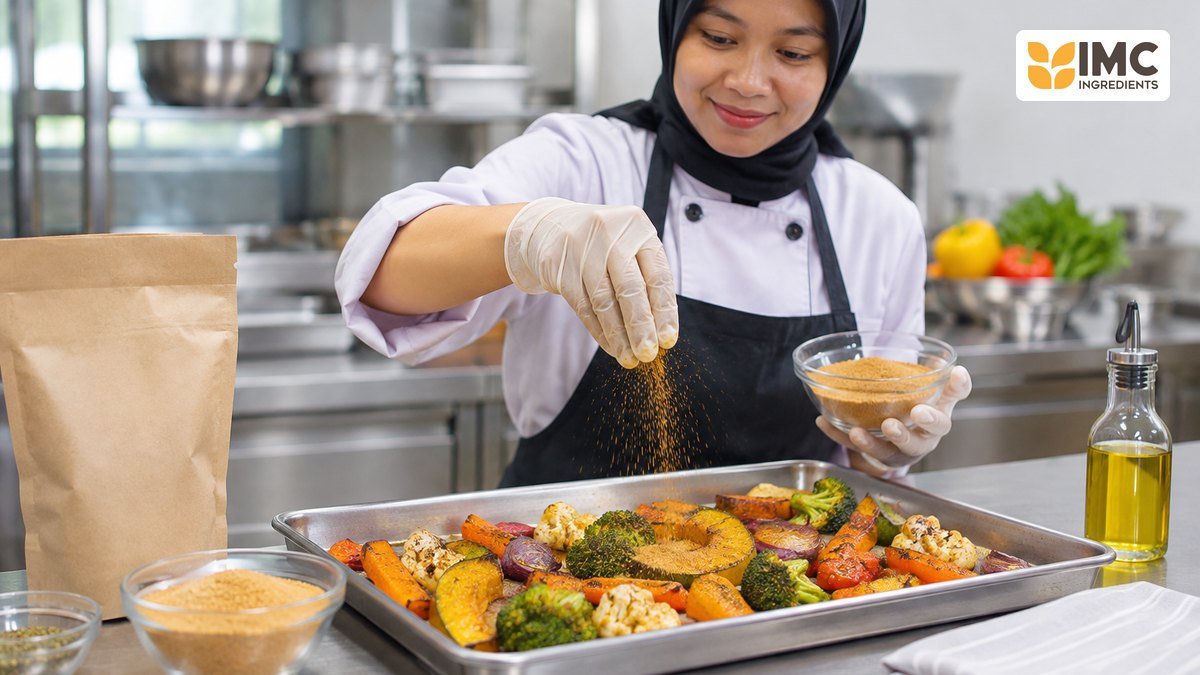
    Mix the dry ingredients, toss vegetables with oil, then sprinkle with the blend.

    Best vegetables

    • Carrots and parsnips.
    • Pumpkin and squash.
    • Sweet potato.
    • Brussels sprouts.
    • Cauliflower and broccoli.
    • Onions and beetroot.

    Roasting tips

    Cut vegetables into even pieces. Spread them in a single layer so they roast rather than steam. Roast around 200 degrees Celsius, turning halfway. Check near the end, as sugared edges darken quickly.

    Flavour ideas

    • Smoky: smoked paprika, garlic and coconut sugar.
    • Middle Eastern style: cumin, coriander and coconut sugar.
    • Asian style: chilli flakes, ginger and coconut sugar, finished with lime.
    • Herby: thyme, rosemary and a little coconut sugar.

    For food producers

    Seasoning blend producers can include coconut sugar in dry rubs and vegetable seasonings. Use a fine grade for even distribution, control moisture to prevent caking and test flow in dispensing equipment.

    Storage of the blend

    Store homemade blends in an airtight jar in a dry cupboard. Coconut sugar can absorb moisture and cause clumping.

    Glazes as an alternative

    Instead of a dry blend, some cooks prefer a glaze. Mix coconut sugar with oil, a splash of vinegar or citrus juice and spices, then brush it over vegetables in the last ten minutes of roasting. This gives a glossy finish and reduces the risk of burning, because the sugar spends less time in the hot oven.

    Serving ideas

    Roasted vegetables with a coconut sugar seasoning work as side dishes, in grain bowls, on flatbreads or blended into soups. A sprinkle of fresh herbs, toasted seeds or a squeeze of lemon after roasting brightens the flavour. Leftovers can be added to salads the next day.

    Where does IMC fit?

    PT Integral Mulia Cipta (IMC Group) has produced coconut sugar in Central Java, Indonesia, since 2012. IMC supplies organic and conventional coconut sugar in mesh 14 and mesh 50; the fine mesh 50 grade suits seasoning blends.

    FAQ

    Why add coconut sugar to roasted vegetables? For better browning and flavour balance.

    How much should I use? Small amounts, around 1 to 2 teaspoons per kilogram.

    Will it burn? It can, so turn vegetables and check near the end.

    Which vegetables work best? Root vegetables, squash and brassicas.


    Looking for a reliable coconut sugar partner? Contact PT Integral Mulia Cipta (IMC Group) in Central Java, Indonesia: info@organic-coconut-sugar.com or WhatsApp +62 821 1348 5564.

  • Coconut Sugar and Fair Prices: What Shoppers Ask

    Coconut Sugar and Fair Prices: What Shoppers Ask

    Quick answer: Shoppers often ask why coconut sugar costs more than white sugar and whether farmers are paid fairly. The price reflects labour-intensive production by smallholders, small volumes, processing, testing, certification, packaging, shipping and retail costs. Fair pricing depends on how value is shared along the chain. Brands can explain their sourcing honestly without making claims they cannot prove.

    Key takeaways – Coconut sugar is labour-intensive and produced in small volumes. – Many steps between farm and shelf add cost. – Fairness depends on how value is shared. – Claims about farmer income must be supported by facts.

    Why coconut sugar costs more

    Cost factor Explanation
    Labour Tappers climb trees twice daily
    Cooking Sap is cooked in small batches
    Volume Much smaller than cane or beet sugar
    Processing Sieving, drying, packing
    Testing and certification Quality and organic
    Logistics Export shipping and import costs
    Retail Packaging, distribution, store margin

    What shoppers want to know

    Shoppers ask whether farmers receive a fair share, whether working conditions are safe, and whether the product is really organic. These are good questions, and brands should answer them with facts.

    What “fair” can mean

    Fair pricing can involve stable prices, timely payment, premiums for quality or organic production, and support such as training or tools. Some products carry fair trade certification, which has specific rules. Without such certification, brands should avoid using “fair trade” wording.

    How brands can answer

    • Describe the supply chain simply and accurately.
    • Share verified information about supplier programmes.
    • Avoid vague claims like “farmers earn more” without evidence.
    • Use certification labels only when certified.

    Role of buyers

    Buyers who commit to longer-term relationships, pay on time and share forecasts help suppliers offer stable prices to farmers. Supporting training and tool programmes can improve quality and income over time.

    Role of shoppers

    Shoppers can ask brands about sourcing, read labels and choose products whose claims are clear and verified.

    Honest communication

    Price discussions are complex. Simple, honest explanations build more trust than broad promises.

    Reading labels

    Shoppers can learn a lot from labels. Certification logos show that a product meets specific standards. Origin statements show where the main ingredient comes from. Some brands add a short sourcing description on the back of the pack or website. If a claim is unclear, shoppers can contact the brand. Clear answers are a good sign of a transparent supply chain.

    Where does IMC fit?

    PT Integral Mulia Cipta (IMC Group) has produced coconut sugar in Central Java, Indonesia, since 2012, working with smallholder farmers. In 2023, IMC and PUR Projet renewed production tools for farmers in Banyumas, Purbalingga, Cilacap and Kebumen, and since 2025 its GIZ develoPPP partnership has supported training and safer work.

    FAQ

    Why is coconut sugar more expensive? Production is labour-intensive and volumes are small.

    Are farmers paid fairly? It depends on the supply chain; ask brands for facts.

    Can brands say “fair trade”? Only with the relevant certification.

    How can buyers help? Long-term relationships, timely payment and support programmes.


    Looking for a reliable coconut sugar partner? Contact PT Integral Mulia Cipta (IMC Group) in Central Java, Indonesia: info@organic-coconut-sugar.com or WhatsApp +62 821 1348 5564.

  • Organic Food Market Trends and Natural Sweeteners

    Organic Food Market Trends and Natural Sweeteners

    Quick answer: Organic food remains an established category in many markets, supported by shoppers who look for certified production methods and simple ingredients. Natural sweeteners such as organic coconut sugar, cane sugar, maple syrup and honey are used in organic snacks, cereals, drinks and baking products. Brands need certified ingredients, clear labelling and stable supply.

    Key takeaways – Organic products require certified ingredients across the chain. – Natural sweeteners are widely used in organic ranges. – Demand drivers include ingredient transparency and origin. – Market data should be read carefully, with sources named.

    What drives organic demand

    Shoppers choose organic products for many reasons, including interest in farming methods, ingredient lists and origin. Retailers have expanded organic own-label ranges, making organic products more widely available. Demand varies by country, income level and product category.

    Where natural sweeteners fit

    Organic category Typical sweetener use
    Breakfast cereals and granola Coconut sugar, cane sugar, syrups
    Snack bars Syrups and granulated sugars
    Drinks Syrups, sugar
    Baking mixes Granulated sugars
    Sauces and dressings Sugars, fruit concentrates
    Retail baking sugars Organic coconut sugar, cane sugar

    Why brands choose coconut sugar

    Organic coconut sugar offers caramel notes and a distinct origin story. It can be used in many recipes as a replacement for brown or white sugar. Brands often highlight it in ingredient lists and product names.

    Certification requirements

    Every ingredient in a certified organic product must meet the organic rules of the target market, with some exceptions for small amounts of non-organic ingredients where allowed. Brands need valid organic certificates and transaction documents from suppliers.

    Reading market data

    Market reports give different figures depending on definitions and methods. When quoting a trend or market size, name the source and year, and avoid treating forecasts as certain.

    Challenges

    • Ensuring organic integrity in long supply chains.
    • Price differences compared with conventional ingredients.
    • Supply stability for smaller-volume ingredients.
    • Changing regulations in different markets.

    Opportunities for suppliers

    Suppliers with reliable certification, traceability and consistent quality are well placed to serve organic brands. Clear documentation and responsive communication matter.

    Questions brands ask organic suppliers

    Organic brands often ask suppliers about certification scope, the certifier’s name, how organic and conventional products are kept separate, and how traceability works back to farmer groups. They may also ask about residue testing and how often it is done. Clear, consistent answers and up-to-date certificates help suppliers move quickly through brand approval processes.

    Where does IMC fit?

    PT Integral Mulia Cipta (IMC Group) has produced coconut sugar in Central Java, Indonesia, since 2012. IMC supplies organic and conventional coconut sugar in mesh 14 and mesh 50. Since 2025, its GIZ develoPPP partnership has supported organic certification.

    FAQ

    Why do organic brands use natural sweeteners? They fit organic ranges and ingredient expectations.

    Must every ingredient be organic? Mostly, under the rules of each market.

    Are market reports reliable? They vary; name sources and read methods.

    What do brands need from suppliers? Certificates, traceability and consistent quality.


    IMC Group (PT Integral Mulia Cipta) supplies fine-granule organic coconut sugar from Central Java to food companies worldwide. Talk to our team: info@organic-coconut-sugar.com or WhatsApp +62 821 1348 5564.

  • Supplier Questionnaires: How to Answer Well

    Supplier Questionnaires: How to Answer Well

    Quick answer: Food buyers send suppliers questionnaires on food safety, quality, organic status, allergens, social responsibility and more. Answer well by being accurate and honest, giving evidence where asked, keeping answers consistent across buyers, meeting deadlines and maintaining a library of approved answers and documents to reuse.

    Key takeaways – Accuracy and honesty matter more than perfect answers. – Attach evidence such as certificates when requested. – Consistent answers across buyers build trust. – A reusable answer library saves time.

    Why questionnaires matter

    Questionnaires are often the first step in supplier approval. Buyers use them to assess risk before audits or orders. Poor or inconsistent answers can delay approval or raise concerns. Good answers make the buyer’s work easier and show that the supplier is organised.

    Common topics

    Topic Typical questions
    Company Legal name, address, contacts
    Food safety Certification, HACCP, recalls
    Quality Specifications, testing, complaints
    Organic Certifier, scope, certificates
    Allergens Allergens on site, controls
    Social Labour practices, audits
    Environment Policies, waste, energy
    Traceability Lot coding, recall tests

    Preparing

    • Read the whole questionnaire first.
    • Identify who in the company should answer each part.
    • Collect current certificates and documents.
    • Note questions that need clarification.

    Answering honestly

    If something does not apply or is not yet in place, say so clearly and, where possible, explain plans. False or exaggerated answers can be discovered during audits and damage trust.

    Providing evidence

    Attach documents when asked, and make sure they are current and readable. Name files clearly. Check expiry dates on certificates.

    Consistency

    Different buyers ask similar questions. Keep answers consistent, especially on facts like certifications, allergen status and processes. Inconsistent answers to different buyers can cause problems if buyers compare notes or if an auditor checks.

    Building an answer library

    Store approved answers and documents in one place, updated when things change. Assign someone to review the library regularly. This speeds up future questionnaires.

    Deadlines and follow-up

    Reply on time, or ask for an extension early. After submitting, be ready for follow-up questions.

    When questions do not fit

    Some questions do not fit a supplier’s product or process, such as questions written for meat or dairy plants. In these cases, answer “not applicable” and add a short explanation, rather than leaving a blank. If a question is unclear, ask the buyer what they mean before answering. Clear communication avoids follow-up rounds and shows that the supplier has read the questionnaire carefully.

    Online portals

    Many large buyers now use online supplier portals instead of spreadsheets. Portals may have character limits, required fields and upload rules. Save answers in your own library before entering them, because portals can time out or lose data. Check uploaded files open correctly. Note login details securely so that a colleague can update information when needed.

    Where does IMC fit?

    PT Integral Mulia Cipta (IMC Group) has produced coconut sugar in Central Java, Indonesia, since 2012. IMC supplies organic and conventional coconut sugar in mesh 14 and mesh 50 and responds to buyer document requests at info@organic-coconut-sugar.com.

    FAQ

    What do supplier questionnaires cover? Food safety, quality, organic, allergens, social and more.

    What if a requirement is not in place? Say so honestly and explain plans.

    Should answers be consistent? Yes, across all buyers.

    How can I save time? Keep a library of approved answers and documents.


    Questions about coconut sugar for your products? PT Integral Mulia Cipta (IMC Group), a Central Java producer since 2012, is happy to help. Email info@organic-coconut-sugar.com or WhatsApp +62 821 1348 5564.

  • Why Coconut Sugar Smells Like Caramel

    Why Coconut Sugar Smells Like Caramel

    Quick answer: Coconut sugar smells like caramel because its sap is cooked in open pans. Heat triggers browning reactions between sugars and small amounts of amino acids, creating aroma compounds similar to those in caramel and toffee. The scent varies with cooking time, heat and sap quality, and it can fade if the sugar is stored open.

    Key takeaways – The aroma comes from cooking the sap. – Browning reactions create caramel-like compounds. – Cooking time and heat change the intensity. – Sealed storage protects the aroma.

    From sap to aroma

    Fresh coconut blossom sap is a sweet, almost clear liquid. It has little caramel smell. During cooking, water evaporates, sugars become concentrated and the temperature rises. This is when the aroma develops.

    The browning reactions

    Reaction What happens Aroma result
    Caramelisation Sugars break down under heat Caramel, toffee notes
    Maillard reaction Sugars react with amino acids Roasted, nutty, bready notes

    Coconut sap contains small amounts of amino acids and reducing sugars, so both reactions can take place. Together they give coconut sugar its typical aroma.

    What changes the aroma

    1. Longer cooking gives deeper, darker notes.
    2. Higher heat can add roasted or slightly bitter notes.
    3. Fresh sap gives a cleaner aroma.
    4. Drying and storage conditions affect how long the aroma lasts.

    Why it does not smell of coconut

    Many people expect coconut sugar to smell like coconut flesh or coconut milk. It does not, because it comes from the sap of the flower stalk, not the nut. The aroma is closer to caramel or light molasses.

    Aroma in finished products

    In baking, coconut sugar’s aroma blends with butter, vanilla and spices. In coffee drinks it adds a caramel note. In savoury sauces it supports roasted and umami flavours.

    Protecting the aroma

    Store coconut sugar sealed and away from strong smells, such as spices or cleaning products. Sugar can absorb odours. Open bags lose aroma over time and can pick up off-notes.

    Smelling as a quality check

    Food buyers often smell samples as part of incoming checks. A clean caramel aroma is expected. Burnt, sour or musty smells may point to problems in processing or storage and should be reported.

    Describing the aroma

    When writing product descriptions, use simple, accurate words such as caramel, toffee or light molasses. Avoid exaggerated descriptions that buyers or shoppers may not recognise when they open the pack.

    Where does IMC fit?

    PT Integral Mulia Cipta (IMC Group) has produced coconut sugar in Central Java, Indonesia, since 2012. IMC supplies organic and conventional coconut sugar in mesh 50 and mesh 14, packed in paper bags with a food-grade PE liner that helps protect aroma.

    FAQ

    Why does coconut sugar smell like caramel? Cooking the sap creates caramel-like aroma compounds.

    Does it smell like coconut? No, it comes from sap, not the nut.

    Can the aroma fade? Yes, if stored open or near strong smells.

    What smells are a warning sign? Burnt, sour or musty notes.


    Looking for a reliable coconut sugar partner? Contact PT Integral Mulia Cipta (IMC Group) in Central Java, Indonesia: info@organic-coconut-sugar.com or WhatsApp +62 821 1348 5564.

  • What “Smallholder” Means

    What “Smallholder” Means

    Quick answer: A smallholder is a farmer who works a small area of land, mostly with family labour, often growing several crops and sometimes raising animals. There is no single global size limit; definitions vary by country and organisation. In coconut sugar production, smallholders tap their own or local trees and often cook the sap at home.

    Key takeaways – Smallholders farm small areas with family labour. – Definitions vary between countries and organisations. – Coconut sugar is mostly a smallholder product. – Smallholder supply needs specific support and planning.

    Common features

    Feature Description
    Farm size Small, often a few hectares or less
    Labour Mostly family members
    Crops Several crops for food and income
    Market access Often through groups or collectors
    Resources Limited capital and equipment

    Smallholders in coconut sugar

    Coconut sugar is typically made by families who tap trees, collect sap and cook it into sugar. Each household produces relatively small amounts. Farmer groups or collectors bring these together for processing and export.

    Strengths of smallholder supply

    Smallholder supply spreads income across many families. Farmers know their land well and often use traditional practices. Group certification allows smallholders to access organic markets together.

    Challenges

    1. Limited access to finance and tools.
    2. Exposure to price and weather changes.
    3. Safety risks in tapping tall trees.
    4. Difficulty meeting complex documentation demands.
    5. Ageing farmers and youth migration.

    Support that helps

    Training, tools, group organisation and fair, stable trading relationships help smallholders. IMC’s CSR includes a tool renewal programme with PUR Projet in 2023 and a GIZ develoPPP partnership since 2025 covering training, safer work, organic certification and dwarf coconut.

    Why buyers should understand the term

    Buyers increasingly report on their supply chains. Knowing that coconut sugar comes from many smallholders helps buyers set realistic expectations on volumes, documentation and timelines, and design support that fits.

    Using the term carefully

    When writing about smallholders, avoid generalisations or invented stories. Describe the specific context and use accurate information.

    Smallholder groups and organic certification

    Group certification allows many small farmers to be certified together under one internal control system. This lowers the cost per farmer and makes organic markets reachable. The group shares responsibility, so training and internal inspections are important for every member.

    Smallholders and documentation

    Buyers often ask for documents that are easy for a large farm but hard for a smallholder. Suppliers and farmer groups can bridge this gap by keeping group records on behalf of members.

    Where does IMC fit?

    PT Integral Mulia Cipta (IMC Group) has produced coconut sugar in Central Java, Indonesia, since 2012. IMC works with smallholder farmer groups and supplies organic and conventional coconut sugar in mesh 14 and mesh 50.

    FAQ

    Is there a fixed size for a smallholder? No, definitions vary.

    Is coconut sugar a smallholder product? Mostly, yes.

    How do smallholders access organic markets? Often through group certification.

    What support helps smallholders? Training, tools, organisation and stable trade.


    IMC Group (PT Integral Mulia Cipta) supplies fine-granule organic coconut sugar from Central Java to food companies worldwide. Talk to our team: info@organic-coconut-sugar.com or WhatsApp +62 821 1348 5564.

  • What Makes Coconut Sugar Organic?

    What Makes Coconut Sugar Organic?

    Quick answer: Coconut sugar is organic when it is produced under a recognised organic standard and certified by an approved control body. That means the trees are managed without synthetic fertilisers or pesticides, the sap and sugar are kept separate from non-organic product, every step is recorded and inspected, and the right certificates travel with each shipment.

    Key takeaways – Organic is a certified process, not just a description. – Farms avoid synthetic fertilisers and pesticides. – Separation and records protect organic integrity. – Certificates and import documents prove the status.

    Organic is about the whole chain

    Many people think organic only concerns the farm. In reality, organic status covers every step: farming, sap collection, cooking, drying, sieving, packing, storage and transport. If one step breaks the rules, the product can lose its organic status.

    The farm level

    Organic coconut farms are managed without synthetic fertilisers, synthetic pesticides or herbicides. Farmers use natural practices such as compost, mulching and manual weeding. Buffer zones may be needed where organic farms border conventional fields. Smallholders are usually certified as a group with an internal control system.

    Processing and handling

    Step Organic requirement
    Sap collection Clean tools, no prohibited substances
    Cooking No prohibited additives
    Drying and sieving Clean equipment, separation
    Packing Clear organic labelling and lot codes
    Storage Separated from non-organic product
    Transport Clean containers, correct documents

    Certification and inspection

    An approved control body inspects the farms, the farmer group’s internal control system and the processing site at least once a year. Inspectors check records, visit fields, interview farmers and may take samples for testing. If the operation meets the standard, a certificate is issued.

    Standards differ by market

    Organic standards are set by each market. The European Union, the United States and other countries each have their own rules and import procedures. A supplier may need several certifications to sell organic coconut sugar in different regions.

    Documents buyers should see

    1. A valid organic certificate covering the product.
    2. The certificate holder’s name matching the seller.
    3. Import documents required by the destination market.
    4. Lot codes on bags matching the documents.

    What organic does not mean

    Organic describes how a product is produced. It is not a health claim. Brands should avoid suggesting that organic coconut sugar has special health effects.

    Why buyers choose organic

    Organic food brands need certified ingredients to keep their own products organic. For them, an organic sweetener is not optional. Other buyers choose organic because their customers ask for it or because it fits their brand values.

    Where does IMC fit?

    PT Integral Mulia Cipta (IMC Group) has produced coconut sugar in Central Java, Indonesia, since 2012. IMC supplies organic coconut sugar in mesh 14 and mesh 50, and since 2025 its GIZ develoPPP partnership has supported organic certification work with farmer groups.

    FAQ

    Is organic just a label? No, it is a certified, inspected process.

    Who certifies organic coconut sugar? An approved control body for each standard.

    Does organic apply only to the farm? No, it covers processing, storage and transport too.

    Is organic a health claim? No, it describes production methods.


    Questions about coconut sugar for your products? PT Integral Mulia Cipta (IMC Group), a Central Java producer since 2012, is happy to help. Email info@organic-coconut-sugar.com or WhatsApp +62 821 1348 5564.

  • Village Savings Groups

    Village Savings Groups

    Quick answer: A village savings group is a small group of community members who save money together and lend to each other from their shared savings. Members meet regularly, contribute agreed amounts and follow simple written rules. Savings groups help households manage irregular income, cover emergencies and invest in small improvements without relying on expensive informal loans.

    Key takeaways – Members save and borrow from a shared fund. – Groups follow clear, agreed rules. – Good records and transparency are essential. – Savings groups help manage irregular income.

    How savings groups work

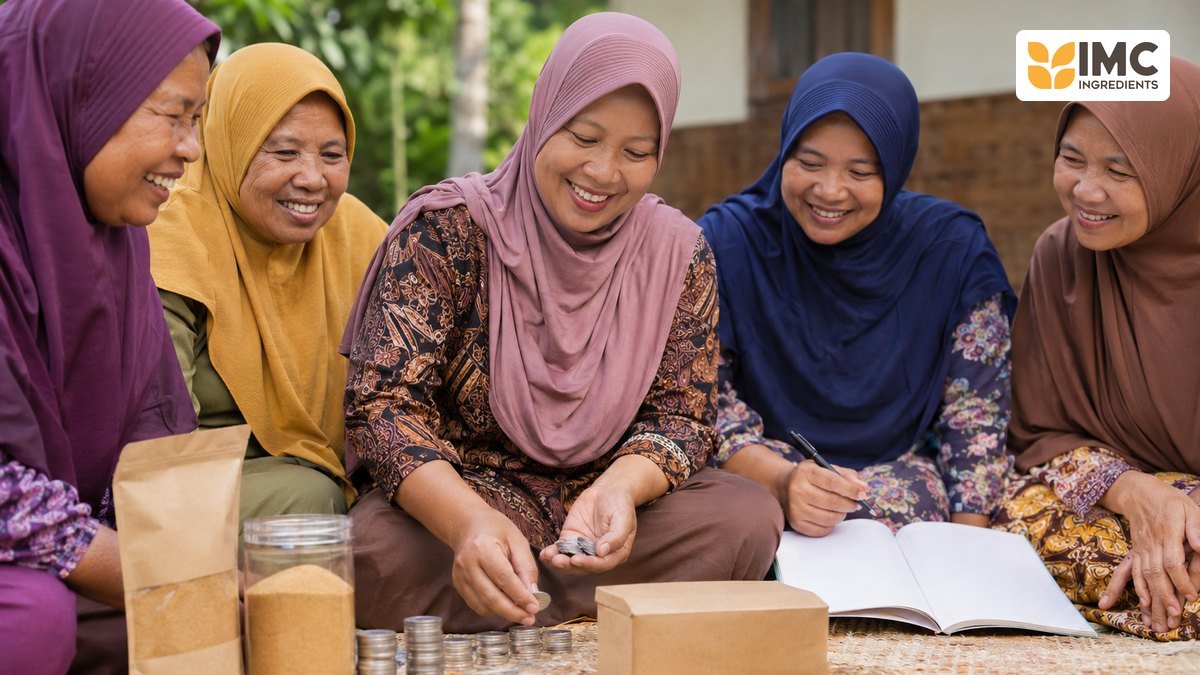
    Members agree on how much to save at each meeting. The money is kept in a secure box or account. Members can borrow from the fund and repay with a small agreed charge, which grows the fund. At the end of a cycle, savings and earnings are shared among members.

    Typical rules

    Rule Purpose
    Regular meetings Builds discipline and trust
    Fixed savings amounts Fairness
    Loan limits Protects the fund
    Repayment schedule Keeps money circulating
    Record keeping Transparency
    Elected leaders Accountability

    Why savings groups help farming households

    Income from farming can be irregular. Coconut sugar provides daily income, but sap flow and prices can change. A savings group lets families set money aside in good times and borrow when needed, for example for school fees, tools or repairs.

    Starting a group

    1. Gather interested members who trust each other.
    2. Agree on rules and write them down.
    3. Elect leaders and a record keeper.
    4. Decide on meeting times and savings amounts.
    5. Start saving before lending.
    6. Review rules at the end of each cycle.

    Record keeping

    Each member’s savings and loans should be recorded clearly. Records are read aloud or shown at meetings so everyone can check them. Simple ledger books or passbooks work well.

    Support from programmes

    NGOs and community programmes sometimes train groups in record keeping and financial planning. Companies can support such training as part of CSR, while leaving management of the group to its members.

    Risks

    Poor record keeping, unclear rules or loans that are too large can cause conflict. Training and transparency reduce these risks.

    Links to other activities

    Savings groups often meet at the same time as farmer group meetings or training sessions. This saves travel time and builds stronger community ties. Some groups also discuss topics such as health, schooling or farming practices at their meetings.

    Keeping the fund safe

    Groups often use a cash box with several locks, each key held by a different member, so no single person can open it alone.

    Where does IMC fit?

    PT Integral Mulia Cipta (IMC Group) has produced coconut sugar in Central Java, Indonesia, since 2012. IMC works with farmer communities through CSR programmes and supplies organic and conventional coconut sugar in mesh 14 and mesh 50.

    FAQ

    What is a village savings group? A group that saves and lends from a shared fund.

    Who manages the group? Members, through elected leaders.

    Why are records important? They keep the group transparent and fair.

    Can companies help? By supporting training, not managing the group.


    PT Integral Mulia Cipta (IMC Group) has produced organic coconut sugar in Central Java, Indonesia, since 2012. For specifications or samples, email info@organic-coconut-sugar.com or WhatsApp +62 821 1348 5564.

  • Traceability From Farmer Group to Bag

    Traceability From Farmer Group to Bag

    Quick answer: Traceability means being able to follow a product back to where it came from. For coconut sugar, this links each export bag’s lot code to the processing records and to the farmer groups that supplied the raw sugar. Clear records at collection, processing and packing make this possible and support organic integrity and quick answers to buyer questions.

    Key takeaways – Traceability links bags to farmer groups. – Records are needed at every handover. – Lot codes connect documents and products. – Good traceability supports organic and quality checks.

    Why traceability matters

    Buyers need to know where their ingredients come from. Food safety rules require one step back and one step forward traceability. Organic rules require proof that the product comes from certified sources. Traceability also helps investigate complaints.

    Steps in the chain

    Step Record
    Farmer production Farmer list, group membership
    Collection Date, group, quantity, organic status
    Receipt at factory Incoming lot number
    Processing Drying, sieving, blending records
    Packing Finished lot code, quantity
    Shipment Container, lot codes, documents

    Smallholder groups

    Many small farmers deliver to a collection point. Each delivery is weighed and recorded under the farmer group. For organic groups, the internal control system keeps the list of certified members.

    Linking lots

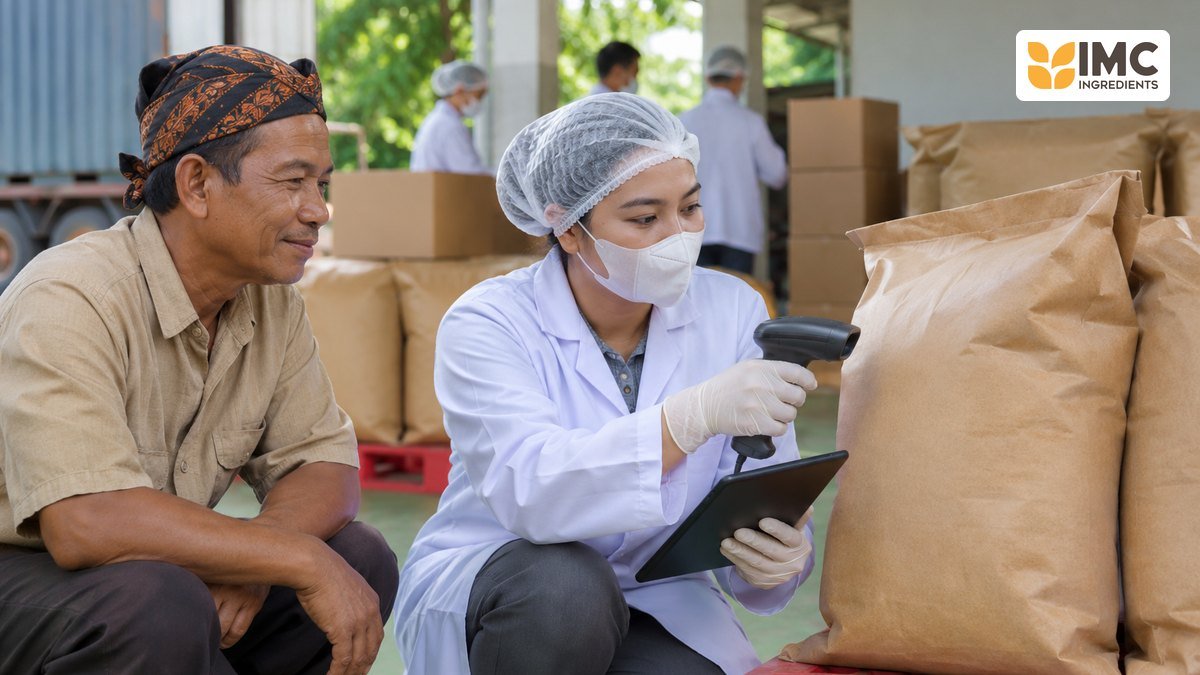
    When incoming lots are combined during processing, the factory records which incoming lots went into each finished lot. This creates the link from bag to group.

    Testing traceability

    1. Pick a finished lot code.
    2. Trace back to incoming lots and groups.
    3. Trace forward to customers.
    4. Check timing and completeness.
    5. Record the test result.

    Regular tests show whether the system works in practice.

    Digital and paper records

    Small operations may use paper forms at collection points and spreadsheets in the office. What matters is that records are complete, legible and stored safely.

    Sharing information with buyers

    Buyers may ask for traceability information during approval or audits. Suppliers can share the system description and test results while protecting farmers’ personal data.

    Protecting farmers’ data

    Farmer lists contain personal information such as names and locations. Store these lists securely and share only what buyers or auditors need. Summaries by group or region are often enough for buyer questions.

    Where does IMC fit?

    PT Integral Mulia Cipta (IMC Group) has produced coconut sugar in Central Java, Indonesia, since 2012. IMC works with farmer groups and supplies organic and conventional coconut sugar in mesh 14 and mesh 50 with lot coding on every bag.

    FAQ

    What is traceability? Following a product back to its source and forward to customers.

    How are farmer groups linked to bags? Through collection records and lot codes.

    How is traceability tested? By tracing a lot back and forward and checking records.

    Can buyers see farmer data? They see system information; personal data is protected.


    PT Integral Mulia Cipta (IMC Group) has produced organic coconut sugar in Central Java, Indonesia, since 2012. For specifications or samples, email info@organic-coconut-sugar.com or WhatsApp +62 821 1348 5564.