Category: CSR

  • Hygiene Habits That Protect Product and People

    Hygiene Habits That Protect Product and People

    Quick answer: Daily hygiene habits protect both the product and the people who make it. Handwashing, clean work clothes, hair covering, clean work areas and reporting illness prevent contamination of food and reduce the spread of illness among workers. Habits stick when facilities are convenient, rules are clear and supervisors lead by example.

    Key takeaways – Hygiene protects product safety and worker health. – Convenient facilities make good habits easier. – Clear routines turn rules into habits. – Supervisors’ behaviour sets the standard.

    Two goals, one set of habits

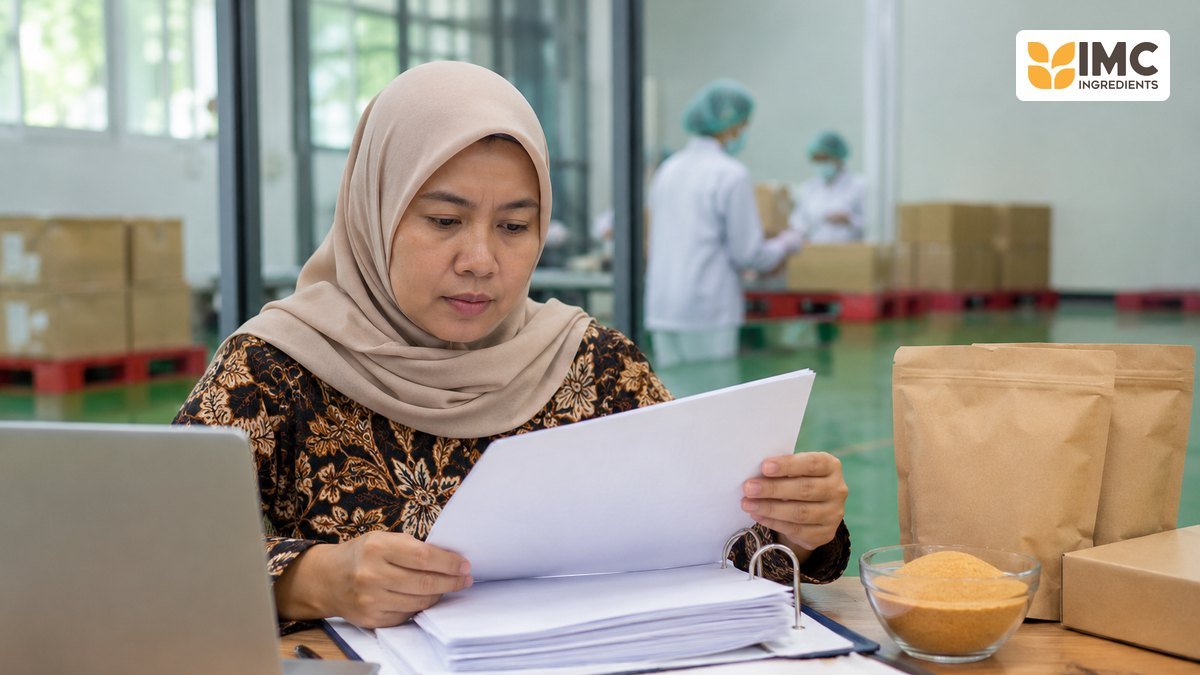
    Hygiene in food factories is often seen only as protecting the product. But the same habits also protect workers. Washing hands reduces the spread of germs between colleagues. Clean break areas and toilets support health. Reporting illness protects co-workers as well as consumers.

    Core habits

    Habit Protects product Protects people
    Handwashing Prevents contamination Reduces illness spread
    Clean clothing Prevents foreign matter Keeps workers comfortable
    Hair covering Prevents hair in product Safety near machines
    Clean workstations Prevents cross-contamination Reduces slips and hazards
    Illness reporting Prevents contamination Protects colleagues

    Making it easy

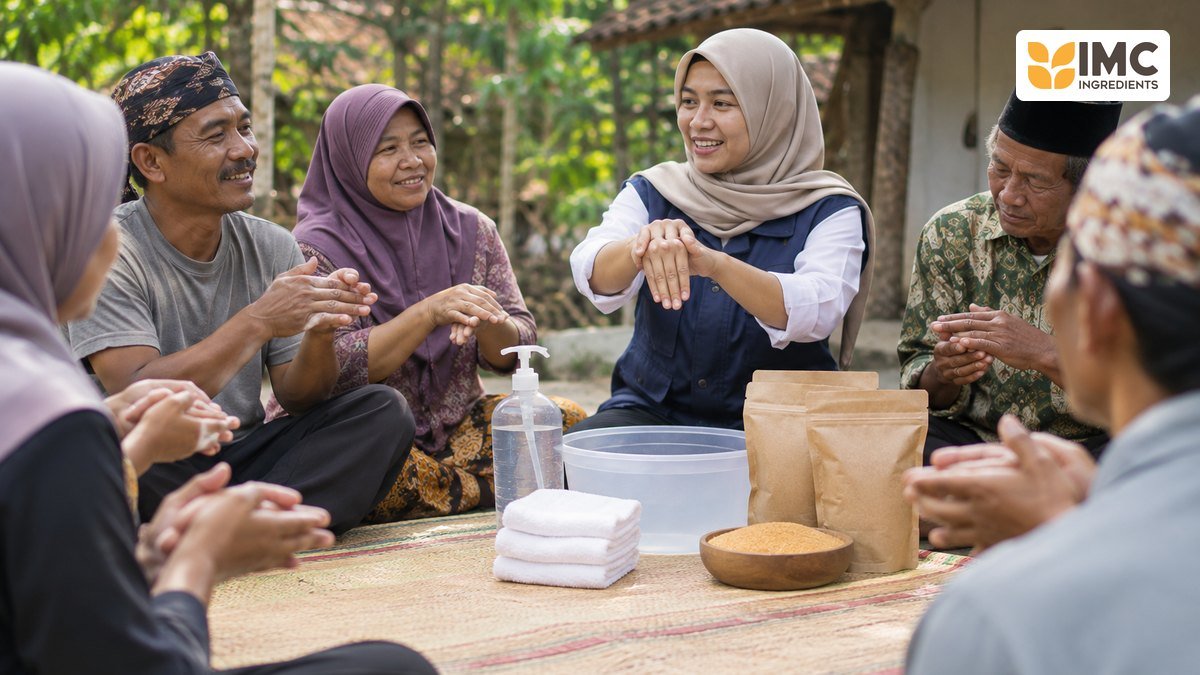
    Handwashing stations should be at entrances to production, near toilets and break areas, with soap, clean water and drying options always available. Changing rooms should have enough space and storage. Clean work clothes should be provided and laundered regularly.

    Building routines

    • Wash hands every time you enter production.
    • Change into work clothes before entering.
    • Check hair covering in a mirror.
    • Clean your workstation at the end of each task.
    • Report symptoms before starting work.

    Routines repeated daily become habits.

    Role of supervisors

    Supervisors should follow every rule themselves, check hygiene at shift start and give friendly reminders. Recognising good practice encourages others.

    Training

    Short, visual training sessions in the local language explain the reasons behind each rule. When workers understand why, they are more likely to follow rules consistently.

    Illness policy

    Workers should be able to report illness without losing pay or their job. Otherwise, they may hide symptoms, which risks both product and colleagues.

    Monitoring

    Hygiene inspections, hand swabs and observations show whether habits are followed. Results should be shared and used to improve facilities or training.

    Visitors and new workers

    Visitors and new workers are most likely to forget hygiene rules because routines are new to them. A clear entrance briefing, visible signs and an experienced buddy for new staff help. Visitors should follow the same handwashing and clothing rules as workers. Making hygiene part of the first day sets the tone for everything that follows.

    Where does IMC fit?

    PT Integral Mulia Cipta (IMC Group) has produced coconut sugar in Central Java, Indonesia, since 2012. Since 2025, IMC’s GIZ develoPPP partnership has supported training, safer work, organic certification and dwarf coconut.

    FAQ

    Who does hygiene protect? Both the product and the workers.

    What makes handwashing easier? Convenient, well-stocked stations.

    Why explain reasons for rules? Understanding improves consistency.

    Should workers report illness? Yes, without fear of losing pay or their job.


    PT Integral Mulia Cipta (IMC Group) has produced organic coconut sugar in Central Java, Indonesia, since 2012. For specifications or samples, email info@organic-coconut-sugar.com or WhatsApp +62 821 1348 5564.
  • What “Smallholder” Means

    What “Smallholder” Means

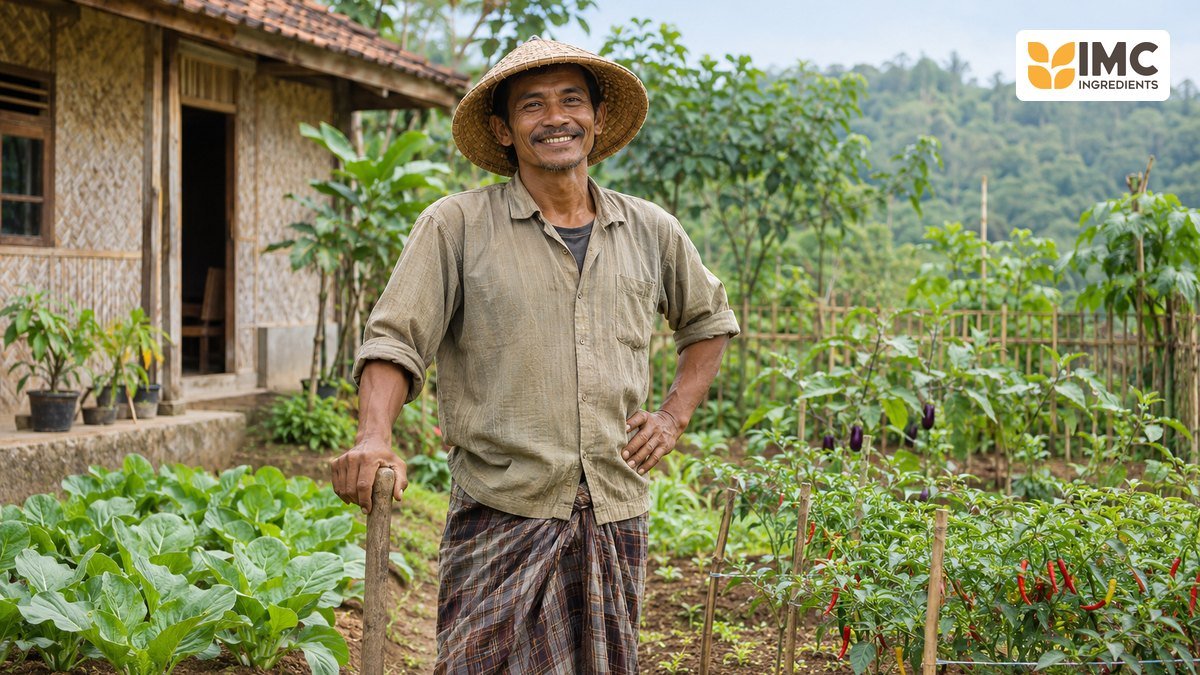
    Quick answer: A smallholder is a farmer who works a small area of land, mostly with family labour, often growing several crops and sometimes raising animals. There is no single global size limit; definitions vary by country and organisation. In coconut sugar production, smallholders tap their own or local trees and often cook the sap at home.

    Key takeaways – Smallholders farm small areas with family labour. – Definitions vary between countries and organisations. – Coconut sugar is mostly a smallholder product. – Smallholder supply needs specific support and planning.

    Common features

    Feature Description
    Farm size Small, often a few hectares or less
    Labour Mostly family members
    Crops Several crops for food and income
    Market access Often through groups or collectors
    Resources Limited capital and equipment

    Smallholders in coconut sugar

    Coconut sugar is typically made by families who tap trees, collect sap and cook it into sugar. Each household produces relatively small amounts. Farmer groups or collectors bring these together for processing and export.

    Strengths of smallholder supply

    Smallholder supply spreads income across many families. Farmers know their land well and often use traditional practices. Group certification allows smallholders to access organic markets together.

    Challenges

    1. Limited access to finance and tools.
    2. Exposure to price and weather changes.
    3. Safety risks in tapping tall trees.
    4. Difficulty meeting complex documentation demands.
    5. Ageing farmers and youth migration.

    Support that helps

    Training, tools, group organisation and fair, stable trading relationships help smallholders. IMC’s CSR includes a tool renewal programme with PUR Projet in 2023 and a GIZ develoPPP partnership since 2025 covering training, safer work, organic certification and dwarf coconut.

    Why buyers should understand the term

    Buyers increasingly report on their supply chains. Knowing that coconut sugar comes from many smallholders helps buyers set realistic expectations on volumes, documentation and timelines, and design support that fits.

    Using the term carefully

    When writing about smallholders, avoid generalisations or invented stories. Describe the specific context and use accurate information.

    Smallholder groups and organic certification

    Group certification allows many small farmers to be certified together under one internal control system. This lowers the cost per farmer and makes organic markets reachable. The group shares responsibility, so training and internal inspections are important for every member.

    Smallholders and documentation

    Buyers often ask for documents that are easy for a large farm but hard for a smallholder. Suppliers and farmer groups can bridge this gap by keeping group records on behalf of members.

    Where does IMC fit?

    PT Integral Mulia Cipta (IMC Group) has produced coconut sugar in Central Java, Indonesia, since 2012. IMC works with smallholder farmer groups and supplies organic and conventional coconut sugar in mesh 14 and mesh 50.

    FAQ

    Is there a fixed size for a smallholder? No, definitions vary.

    Is coconut sugar a smallholder product? Mostly, yes.

    How do smallholders access organic markets? Often through group certification.

    What support helps smallholders? Training, tools, organisation and stable trade.


    IMC Group (PT Integral Mulia Cipta) supplies fine-granule organic coconut sugar from Central Java to food companies worldwide. Talk to our team: info@organic-coconut-sugar.com or WhatsApp +62 821 1348 5564.

  • Village Savings Groups

    Village Savings Groups

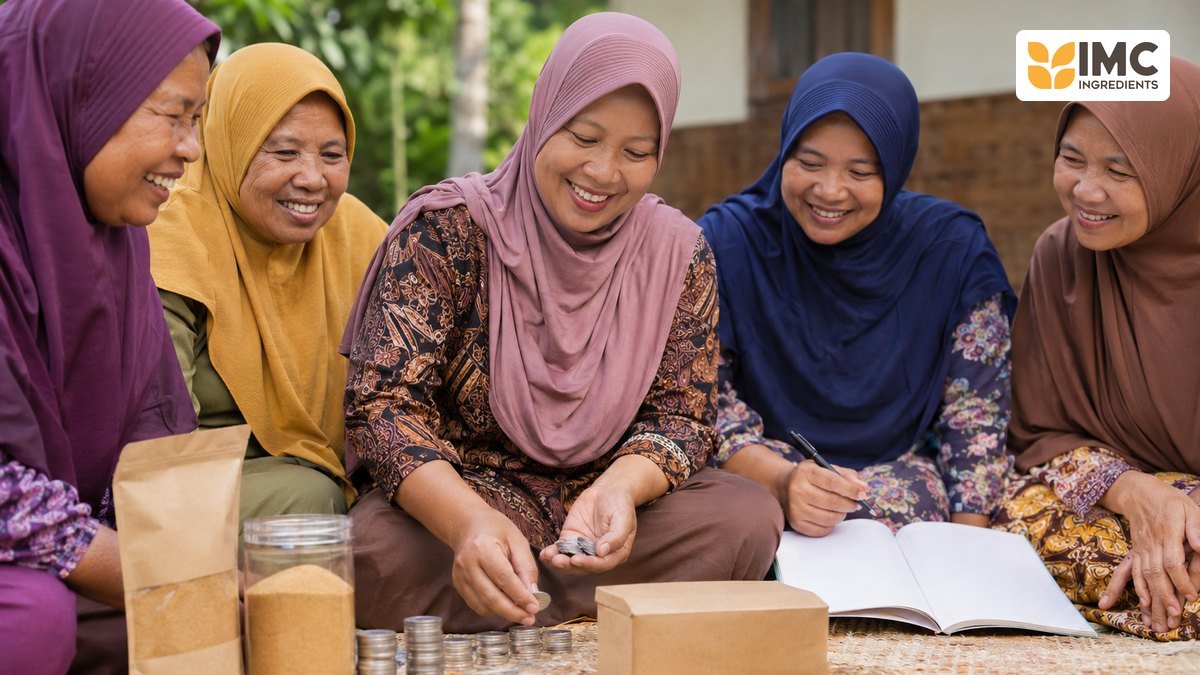
    Quick answer: A village savings group is a small group of community members who save money together and lend to each other from their shared savings. Members meet regularly, contribute agreed amounts and follow simple written rules. Savings groups help households manage irregular income, cover emergencies and invest in small improvements without relying on expensive informal loans.

    Key takeaways – Members save and borrow from a shared fund. – Groups follow clear, agreed rules. – Good records and transparency are essential. – Savings groups help manage irregular income.

    How savings groups work

    Members agree on how much to save at each meeting. The money is kept in a secure box or account. Members can borrow from the fund and repay with a small agreed charge, which grows the fund. At the end of a cycle, savings and earnings are shared among members.

    Typical rules

    Rule Purpose
    Regular meetings Builds discipline and trust
    Fixed savings amounts Fairness
    Loan limits Protects the fund
    Repayment schedule Keeps money circulating
    Record keeping Transparency
    Elected leaders Accountability

    Why savings groups help farming households

    Income from farming can be irregular. Coconut sugar provides daily income, but sap flow and prices can change. A savings group lets families set money aside in good times and borrow when needed, for example for school fees, tools or repairs.

    Starting a group

    1. Gather interested members who trust each other.
    2. Agree on rules and write them down.
    3. Elect leaders and a record keeper.
    4. Decide on meeting times and savings amounts.
    5. Start saving before lending.
    6. Review rules at the end of each cycle.

    Record keeping

    Each member’s savings and loans should be recorded clearly. Records are read aloud or shown at meetings so everyone can check them. Simple ledger books or passbooks work well.

    Support from programmes

    NGOs and community programmes sometimes train groups in record keeping and financial planning. Companies can support such training as part of CSR, while leaving management of the group to its members.

    Risks

    Poor record keeping, unclear rules or loans that are too large can cause conflict. Training and transparency reduce these risks.

    Links to other activities

    Savings groups often meet at the same time as farmer group meetings or training sessions. This saves travel time and builds stronger community ties. Some groups also discuss topics such as health, schooling or farming practices at their meetings.

    Keeping the fund safe

    Groups often use a cash box with several locks, each key held by a different member, so no single person can open it alone.

    Where does IMC fit?

    PT Integral Mulia Cipta (IMC Group) has produced coconut sugar in Central Java, Indonesia, since 2012. IMC works with farmer communities through CSR programmes and supplies organic and conventional coconut sugar in mesh 14 and mesh 50.

    FAQ

    What is a village savings group? A group that saves and lends from a shared fund.

    Who manages the group? Members, through elected leaders.

    Why are records important? They keep the group transparent and fair.

    Can companies help? By supporting training, not managing the group.


    PT Integral Mulia Cipta (IMC Group) has produced organic coconut sugar in Central Java, Indonesia, since 2012. For specifications or samples, email info@organic-coconut-sugar.com or WhatsApp +62 821 1348 5564.

  • SDG 17: Partnerships for the Goals

    SDG 17: Partnerships for the Goals

    Quick answer: SDG 17 is the United Nations goal that focuses on partnerships to achieve the other Sustainable Development Goals. For food suppliers, it means working with development agencies, NGOs, governments, buyers and farmer groups to tackle issues that no single organisation can solve alone. Good partnerships have clear goals, shared responsibilities and honest reporting.

    Key takeaways – SDG 17 is about partnerships across sectors. – Suppliers can partner with agencies, NGOs, buyers and farmers. – Clear goals and roles make partnerships work. – Report results honestly.

    Why partnerships matter

    Problems in agricultural supply chains, such as safety risks, low productivity or climate change, are complex. Companies, governments and civil society each bring different skills and resources. Partnerships combine them.

    Types of partners

    Partner Possible contribution
    Development agencies Funding, expertise, programme design
    NGOs Community work, training
    Local government Infrastructure, regulations, extension services
    Buyers Market access, co-funding, requirements
    Farmer groups Local knowledge, participation
    Research institutes Data, testing, innovation

    Examples from coconut sugar

    IMC’s CSR work shows partnership in practice. In 2023, a tool renewal programme with PUR Projet provided aluminium pans, strainers, sieves and bamboo containers to farmers in Banyumas, Purbalingga, Cilacap and Kebumen. Since 2025, a GIZ develoPPP partnership has supported training, safer work, organic certification and dwarf coconut.

    What makes partnerships work

    1. Shared, clear goals.
    2. Defined roles and responsibilities.
    3. Realistic budgets and timelines.
    4. Regular communication.
    5. Monitoring and honest reporting.
    6. Involvement of farmers in planning.

    Challenges

    Partners may have different priorities, timelines or reporting needs. Agreeing these at the start reduces conflict. Programmes should plan for what happens after funding ends.

    Communicating partnerships

    Describe partnerships accurately, naming partners and activities. Respect partners’ communication rules and avoid overstating results.

    How buyers can join

    Buyers can support existing programmes, co-fund activities or share expertise. Long-term buying relationships also support partnership goals by giving suppliers confidence to invest.

    Lessons for future programmes

    Each partnership teaches lessons about what works in a given community. Recording these lessons, including mistakes, helps design better programmes later and shows partners that the supplier takes learning seriously.

    Measuring partnership results

    Partners should agree early on which results they will measure and how. Simple indicators, such as farmers trained or tools provided, make progress visible. Regular joint reviews help partners adjust activities and keep everyone informed.

    Where does IMC fit?

    PT Integral Mulia Cipta (IMC Group) has produced coconut sugar in Central Java, Indonesia, since 2012. IMC supplies organic and conventional coconut sugar in mesh 14 and mesh 50 and works with partners on CSR programmes for farmer communities.

    FAQ

    What is SDG 17? The UN goal on partnerships for sustainable development.

    Who can partner with suppliers? Agencies, NGOs, governments, buyers and farmer groups.

    What makes a partnership successful? Clear goals, roles and honest reporting.

    Can buyers take part? Yes, through support, co-funding and long-term sourcing.


    Looking for a reliable coconut sugar partner? Contact PT Integral Mulia Cipta (IMC Group) in Central Java, Indonesia: info@organic-coconut-sugar.com or WhatsApp +62 821 1348 5564.

  • Supplier Codes of Conduct: What They Ask

    Supplier Codes of Conduct: What They Ask

    Quick answer: A supplier code of conduct is a document in which a buyer sets out minimum expectations for its suppliers on labour, safety, ethics and environment. Signing it means agreeing to meet these standards and allow checks. Small suppliers should read codes carefully, compare them with their practices and be honest about any gaps.

    Key takeaways – Codes set minimum standards for suppliers. – Common topics are labour, safety, ethics and environment. – Signing is a commitment that may be checked. – Be honest about gaps and plan improvements.

    Why buyers use codes

    Buyers are responsible for risks in their supply chains. A code of conduct communicates expectations clearly and forms part of contracts and supplier approval.

    Common topics

    Topic Typical requirements
    Child labour No employment below legal age
    Forced labour No forced, bonded or prison labour
    Wages and hours Legal wages and working hours
    Health and safety Safe workplace, training, equipment
    Non-discrimination Equal treatment
    Ethics No bribery or corruption
    Environment Comply with laws, reduce impacts
    Subcontracting Pass requirements down the chain

    What signing means

    Signing usually means the supplier agrees to follow the code and allows the buyer or an auditor to check. Some codes require suppliers to inform the buyer of serious problems.

    Preparing to comply

    1. Read the code fully.
    2. Compare each requirement with current practice.
    3. Note gaps and plan improvements.
    4. Keep evidence, such as payroll and training records.
    5. Discuss unclear points with the buyer.

    Farm-level topics

    Codes may ask suppliers to address risks among farmers who supply raw materials. Describe how you work with farmer groups, for example through training and safety programmes.

    Multiple codes

    Suppliers often receive different codes from different buyers. Many topics overlap. A clear internal policy covering common topics makes it easier to respond.

    Honesty

    Do not sign a code you cannot meet without discussing it. Buyers usually prefer an honest improvement plan to a signature without action.

    Keeping the code alive

    A signed code should not sit in a drawer. Share key points with managers and staff, include them in training and review them each year. When the buyer updates the code, check what has changed and whether practices need to change too.

    Asking for support

    Some buyers offer training or tools to help suppliers meet their codes. Ask whether such support exists, especially for topics that are new to your team.

    Where does IMC fit?

    PT Integral Mulia Cipta (IMC Group) has produced coconut sugar in Central Java, Indonesia, since 2012. IMC supplies organic and conventional coconut sugar in mesh 14 and mesh 50 and reviews buyer requirements as part of supplier approval.

    FAQ

    What is a supplier code of conduct? A buyer’s minimum expectations for suppliers.

    Does signing allow audits? Usually, yes.

    What if I cannot meet a requirement? Discuss it and agree an improvement plan.

    Do codes cover farmers? Many ask suppliers to address farm-level risks.


    PT Integral Mulia Cipta (IMC Group) has produced organic coconut sugar in Central Java, Indonesia, since 2012. For specifications or samples, email info@organic-coconut-sugar.com or WhatsApp +62 821 1348 5564.

  • Responsible Energy Use in Factories

    Responsible Energy Use in Factories

    Quick answer: Responsible energy use means knowing where energy is used, avoiding waste and choosing efficient options when equipment is replaced. In a coconut sugar factory, drying, motors, lighting and cooling are typical energy users. Simple steps like metering, maintenance and switching off idle equipment can reduce use and cost.

    Key takeaways – Measure energy use before trying to reduce it. – Drying and motors are often major users. – Maintenance and habits save energy at low cost. – Report progress honestly with real data.

    Why energy matters

    Energy is a cost and an environmental issue. Buyers increasingly ask suppliers about energy and emissions. Even small factories can show responsible practices with simple data and actions.

    Where energy goes

    Area Typical use
    Drying Heat and fans
    Motors Sieves, conveyors, mixers
    Lighting Production and warehouse areas
    Cooling and ventilation Offices and some process areas
    Compressed air Cleaning and equipment

    Simple savings

    1. Switch off machines and lights when not in use.
    2. Fix air leaks and insulate hot surfaces.
    3. Keep motors and fans clean and maintained.
    4. Use daylight where possible.
    5. Replace old lamps with efficient lighting.
    6. Plan production to avoid idle running.

    Monitoring

    Read meters regularly and record energy use per tonne of product. This shows whether changes make a difference. Share results with staff to build awareness.

    Investment decisions

    When equipment needs replacing, compare energy efficiency as well as purchase price. Over time, efficient equipment can reduce operating costs.

    Renewable options

    Some factories explore solar panels or other renewable sources. Assess costs, space and local regulations carefully before investing.

    Reporting

    Report energy data honestly. Avoid claims such as “carbon neutral” unless they are fully verified. Describe actual steps and measured results.

    Involving staff

    Operators often see energy waste first, such as machines left running or lights on in empty rooms. Invite staff to suggest savings and recognise good ideas. Simple reminders near switches help build good habits.

    Setting simple targets

    Once a factory knows its energy use per tonne, it can set a modest target for improvement, such as a small reduction over a year. Track progress monthly and explain any changes, such as a new production line or a very wet season that required longer drying. Simple, realistic targets are more useful than ambitious numbers without a plan, and they give buyers clear, honest information.

    Where does IMC fit?

    PT Integral Mulia Cipta (IMC Group) has produced coconut sugar in Central Java, Indonesia, since 2012. IMC supplies organic and conventional coconut sugar in mesh 14 and mesh 50 and shares CSR information with buyers on request.

    FAQ

    Where do factories use most energy? Often in drying and motors.

    What is a simple first step? Measure use and switch off idle equipment.

    How should energy be reported? With real data and no unverified claims.

    Are renewables always worth it? Assess costs and conditions carefully first.


    IMC Group (PT Integral Mulia Cipta) supplies fine-granule organic coconut sugar from Central Java to food companies worldwide. Talk to our team: info@organic-coconut-sugar.com or WhatsApp +62 821 1348 5564.

  • Keeping Rivers Clean Near Farms

    Keeping Rivers Clean Near Farms

    Quick answer: Rivers near farming villages provide water for households, farms and wildlife. They can be polluted by soil runoff, household waste, wastewater and agricultural chemicals. Simple steps such as ground cover, waste collection, careful handling of any chemicals and good sanitation help keep rivers clean. Organic farming, which avoids synthetic inputs, also reduces chemical runoff.

    Key takeaways – Rivers are vital to village life and farming. – Runoff and waste are the main pollution sources. – Ground cover and waste management protect water. – Organic practices reduce chemical runoff.

    Why clean rivers matter

    In many villages, rivers and streams are used for washing, irrigation and sometimes drinking water after treatment. Pollution can affect health, crops and fish. Clean water also matters for food processing, including coconut sugar making.

    Sources of pollution

    Source Example
    Soil erosion Bare soil washed into rivers by rain
    Household waste Plastic and food waste thrown in water
    Wastewater Washing water and sewage
    Agricultural inputs Fertiliser and pesticide runoff
    Processing waste Residues from small-scale processing

    Practical steps for farmers

    1. Keep soil covered with plants or mulch.
    2. Plant grass or shrubs along riverbanks.
    3. Avoid washing tools and containers directly in rivers.
    4. Collect and manage household waste.
    5. Store any farm inputs away from water.

    Steps for farmer groups and villages

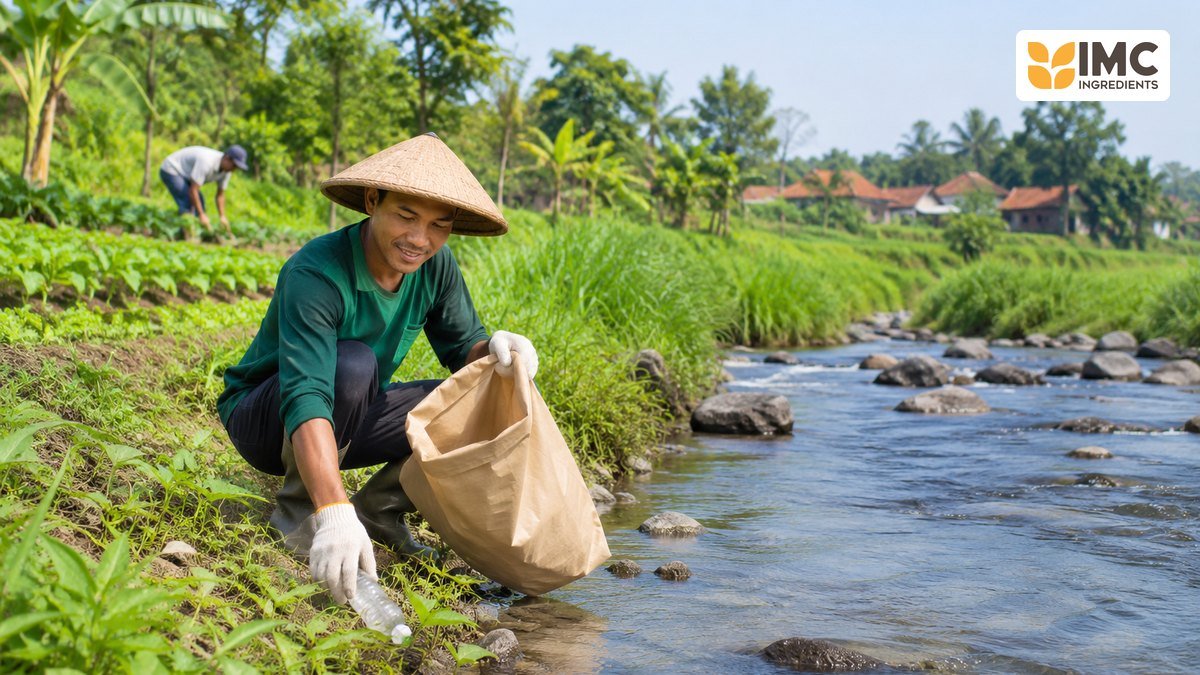
    Farmer groups can organise clean-up days, agree on waste collection points and share information about safe practices. Village leaders and local authorities can support waste collection and sanitation facilities.

    Role of organic farming

    Organic farming does not use synthetic fertilisers or pesticides, which reduces the risk of these substances entering rivers. Organic groups also learn about soil protection, which reduces erosion.

    What suppliers can do

    Suppliers can include water and waste topics in farmer training, support clean-up activities and manage their own factory wastewater responsibly. They should describe such activities accurately in CSR communication.

    Monitoring

    Simple observations, such as water clarity and visible waste, can be recorded by farmer groups. For more detailed checks, local authorities or partners may test water quality.

    Working with schools

    Schools can help spread good habits. Simple lessons about keeping rivers clean, followed by a small clean-up activity, often reach whole families through the children. Farmer groups can support these activities with time and materials.

    Where does IMC fit?

    PT Integral Mulia Cipta (IMC Group) has produced coconut sugar in Central Java, Indonesia, since 2012. IMC works with farmer communities through CSR programmes and supplies organic and conventional coconut sugar in mesh 14 and mesh 50.

    FAQ

    What pollutes rivers near farms? Soil runoff, waste, wastewater and chemical inputs.

    How does ground cover help? It reduces soil erosion into rivers.

    Does organic farming help? Yes, it avoids synthetic chemical inputs.

    What can villages do? Organise waste collection and clean-up days.


    IMC Group (PT Integral Mulia Cipta) supplies fine-granule organic coconut sugar from Central Java to food companies worldwide. Talk to our team: info@organic-coconut-sugar.com or WhatsApp +62 821 1348 5564.

  • Germany’s Supply Chain Act and Small Suppliers

    Germany’s Supply Chain Act and Small Suppliers

    Quick answer: Germany’s Supply Chain Due Diligence Act applies directly to large companies based in Germany, not to small foreign suppliers. But those large companies must assess human rights and environmental risks in their supply chains, so they pass questions and requirements on to their suppliers. Small suppliers can prepare with simple policies, records and honest answers.

    Key takeaways – The law applies directly to large German companies. – Suppliers are affected through buyer requirements. – Buyers ask about labour, safety and environment. – Clear policies and records make answers easier.

    What the law requires

    The act, in force since 2023, requires large companies in Germany to set up risk management for human rights and certain environmental risks in their supply chains. They must analyse risks, take preventive measures, provide a complaints procedure and document their work. The details and reporting rules have been under political discussion, so suppliers should follow updates from their buyers.

    How it reaches small suppliers

    Buyer action What suppliers may see
    Risk analysis Questionnaires about the supplier and its sources
    Code of conduct Request to sign or accept a supplier code
    Contract clauses Commitments on labour and environment
    Audits or visits Checks on site or remotely
    Grievance access Information about complaint channels

    Topics buyers usually ask about

    1. No child labour or forced labour.
    2. Safe and healthy working conditions.
    3. Fair wages and working hours.
    4. Freedom of association.
    5. No discrimination.
    6. Environmental protection relevant to the law.

    Preparing as a small supplier

    Write short policies on the topics above. Keep records of safety training, working hours and complaints. Map where your raw materials come from. Assign one person to answer buyer questionnaires. Answer honestly, including where improvements are still in progress.

    Farmer communities

    For agricultural products, many risks sit at farm level. Buyers want to know how suppliers understand and address these risks. CSR activities, such as IMC’s GIZ develoPPP partnership since 2025 on training, safer work, organic certification and dwarf coconut, can be described as part of the answer.

    Working together

    The law encourages buyers to work with suppliers rather than simply ending relationships. Joint improvement plans are often the best outcome for both sides and for workers and farmers.

    The wider EU picture

    The European Union has also adopted a corporate sustainability due diligence directive, with timelines and scope that have been revised. Suppliers selling to several EU countries should expect similar questions from many buyers, so a single set of well-organised documents saves time.

    Where does IMC fit?

    PT Integral Mulia Cipta (IMC Group) has produced coconut sugar in Central Java, Indonesia, since 2012. IMC supplies organic and conventional coconut sugar in mesh 14 and mesh 50 and shares CSR information with buyers on request.

    FAQ

    Does the law apply to Indonesian suppliers? Not directly, but German buyers pass on requirements.

    What will buyers ask? About labour, safety, environment and sourcing risks.

    Do I need a code of conduct? Many buyers ask suppliers to accept theirs.

    Should I answer “in progress”? Yes, honest answers are better than overstatements.


    Questions about coconut sugar for your products? PT Integral Mulia Cipta (IMC Group), a Central Java producer since 2012, is happy to help. Email info@organic-coconut-sugar.com or WhatsApp +62 821 1348 5564.

  • Flood Risk in Lowland Villages

    Flood Risk in Lowland Villages

    Quick answer: Lowland villages near rivers and coasts can face floods during heavy rain. Floods damage homes, crops, roads and stored goods, and can interrupt daily work such as sap collection and sugar cooking. Preparation, including drainage, safe storage, early warning and community plans, reduces losses and helps villages recover faster.

    Key takeaways – Heavy rain and poor drainage cause floods. – Floods affect homes, farms, roads and stock. – Preparation reduces damage and recovery time. – Farmer groups and suppliers can support plans.

    Why lowland villages are at risk

    Lowland areas collect water from higher ground. When rivers overflow or drainage is blocked, water spreads into fields and homes. Changes in rainfall patterns can increase the frequency of heavy rain events in some areas.

    Effects of flooding

    Area Possible effect
    Homes Damage, displacement
    Farms Crop loss, soil damage
    Roads Blocked access to markets
    Stored goods Wet sugar, spoiled supplies
    Health Risks from dirty water

    Preparing households

    1. Store sugar and tools on raised shelves.
    2. Keep important documents in waterproof bags.
    3. Know the safe route to higher ground.
    4. Keep basic supplies ready.
    5. Follow local warnings.

    Village and group actions

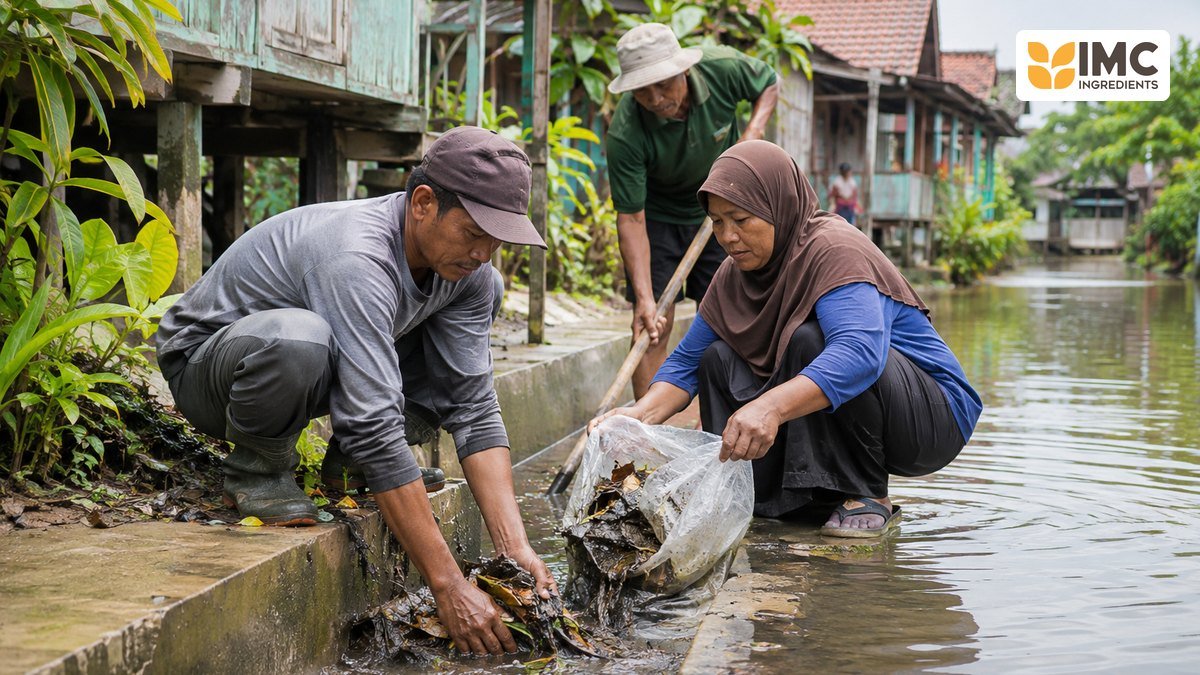
    Villages can clear drainage channels regularly, keep riverbanks planted and agree on community warning systems. Farmer groups can plan how to protect stored product and how to communicate with buyers if collection is delayed.

    Impact on coconut sugar supply

    Floods can stop sap collection for days and block roads to collection points. Wet conditions also raise moisture risks for stored sugar. Suppliers should keep buyers informed and check quality of any product stored during floods.

    Recovery

    After a flood, clean and dry tools and storage areas before restarting production. Check sugar for moisture damage. Support from local authorities and partners can help families recover.

    Role of suppliers

    Suppliers can include flood preparation in farmer training, help with safe storage equipment and keep flexible schedules after events. CSR communication should describe such support factually.

    Learning after each event

    After a flood, farmer groups can meet to discuss what worked and what did not. Simple notes on water levels, damaged areas and response times help improve the plan for next time.

    Protecting stored sugar

    Sugar absorbs moisture quickly, so flood preparation should include safe storage. Keep sugar in sealed containers on raised platforms, away from walls and floors, and move stock to higher ground when warnings are issued.

    Where does IMC fit?

    PT Integral Mulia Cipta (IMC Group) has produced coconut sugar in Central Java, Indonesia, since 2012. IMC works with farmer communities and supplies organic and conventional coconut sugar in mesh 14 and mesh 50.

    FAQ

    Why do lowland villages flood? Water collects from higher ground and drainage can overflow.

    How can households prepare? Raise stored goods and plan safe routes.

    How do floods affect supply? They can stop collection and damage stored sugar.

    What should be done after a flood? Clean, dry and check tools, storage and product.


    PT Integral Mulia Cipta (IMC Group) has produced organic coconut sugar in Central Java, Indonesia, since 2012. For specifications or samples, email info@organic-coconut-sugar.com or WhatsApp +62 821 1348 5564.

  • CSR Communication Guidelines

    CSR Communication Guidelines

    Quick answer: Good CSR communication is honest, specific and backed by evidence. Describe what was done, where, when and with whom. Avoid vague or exaggerated claims, invented stories and unconsented photos. Keep messages consistent across reports, websites and sales materials, and update them when facts change.

    Key takeaways – Be specific: activity, place, date, partners. – Back every claim with evidence. – Use photos and stories only with consent. – Avoid greenwashing and exaggeration.

    Why guidelines help

    CSR information is used by buyers, auditors, journalists and consumers. Inconsistent or exaggerated claims can damage trust and break advertising rules. Simple internal guidelines help everyone in the company communicate the same facts in the same way.

    Core principles

    Principle Example
    Accuracy State numbers that can be checked
    Specificity Name the programme, region and year
    Balance Mention challenges as well as progress
    Consent Ask before using names, photos or quotes
    Consistency Same facts in all channels

    Words to use with care

    Words like “sustainable”, “eco-friendly”, “fair” and “carbon neutral” have strong meanings. Use them only when they can be fully supported. Prefer describing the actual activity, such as “provided aluminium pans and sieves to farmers in 2023”.

    Example: describing IMC’s CSR

    • In 2023, IMC and PUR Projet renewed production tools, including aluminium pans, strainers, sieves and bamboo containers, for farmers in Banyumas, Purbalingga, Cilacap and Kebumen.
    • Since 2025, IMC’s GIZ develoPPP partnership has supported training, safer work, organic certification and dwarf coconut.

    These statements are factual and specific.

    Stories and quotes

    Do not invent anecdotes or quotes. If you share a farmer’s story, record it with consent and share it accurately.

    Review process

    1. Draft the message.
    2. Check facts against records.
    3. Confirm consent for photos and names.
    4. Review wording for exaggeration.
    5. Approve and publish.
    6. Update when programmes change.

    Responding to questions

    When buyers or the public ask about CSR, answer with facts and, where possible, documents. If you do not know, say so and follow up.

    Using the word CSR consistently

    Choose one clear term for your programmes and use it everywhere. Mixing different labels for the same activities can confuse readers. Simple, consistent language makes reports and websites easier to understand.

    One source of facts

    Keep one internal document with the approved CSR facts: programme names, partners, dates, locations and indicators. Sales, marketing and quality teams all use this document when they write to buyers or update the website. This prevents small differences from creeping in over time.

    Where does IMC fit?

    PT Integral Mulia Cipta (IMC Group) has produced coconut sugar in Central Java, Indonesia, since 2012. IMC supplies organic and conventional coconut sugar in mesh 14 and mesh 50 and communicates its CSR work with factual descriptions.

    FAQ

    What is greenwashing? Making misleading environmental or social claims.

    Can I use farmer photos? Only with consent.

    Should challenges be mentioned? Yes, balance builds trust.

    How often should CSR messages be updated? Whenever programmes or facts change.


    Questions about coconut sugar for your products? PT Integral Mulia Cipta (IMC Group), a Central Java producer since 2012, is happy to help. Email info@organic-coconut-sugar.com or WhatsApp +62 821 1348 5564.