
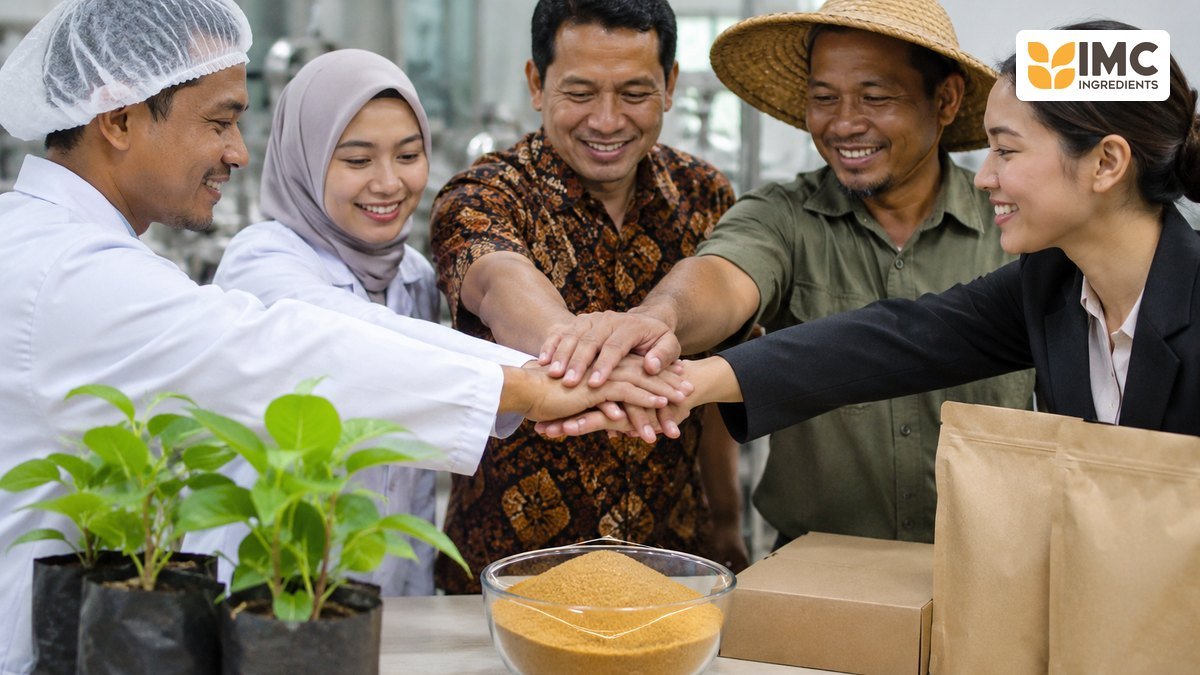
Quick answer: SDG 17 is the United Nations goal that focuses on partnerships to achieve the other Sustainable Development Goals. For food suppliers, it means working with development agencies, NGOs, governments, buyers and farmer groups to tackle issues that no single organisation can solve alone. Good partnerships have clear goals, shared responsibilities and honest reporting.
Key takeaways – SDG 17 is about partnerships across sectors. – Suppliers can partner with agencies, NGOs, buyers and farmers. – Clear goals and roles make partnerships work. – Report results honestly.
Why partnerships matter
Problems in agricultural supply chains, such as safety risks, low productivity or climate change, are complex. Companies, governments and civil society each bring different skills and resources. Partnerships combine them.
Types of partners
| Partner | Possible contribution |
|---|---|
| Development agencies | Funding, expertise, programme design |
| NGOs | Community work, training |
| Local government | Infrastructure, regulations, extension services |
| Buyers | Market access, co-funding, requirements |
| Farmer groups | Local knowledge, participation |
| Research institutes | Data, testing, innovation |
Examples from coconut sugar
IMC’s CSR work shows partnership in practice. In 2023, a tool renewal programme with PUR Projet provided aluminium pans, strainers, sieves and bamboo containers to farmers in Banyumas, Purbalingga, Cilacap and Kebumen. Since 2025, a GIZ develoPPP partnership has supported training, safer work, organic certification and dwarf coconut.
What makes partnerships work
- Shared, clear goals.
- Defined roles and responsibilities.
- Realistic budgets and timelines.
- Regular communication.
- Monitoring and honest reporting.
- Involvement of farmers in planning.
Challenges
Partners may have different priorities, timelines or reporting needs. Agreeing these at the start reduces conflict. Programmes should plan for what happens after funding ends.
Communicating partnerships
Describe partnerships accurately, naming partners and activities. Respect partners’ communication rules and avoid overstating results.
How buyers can join
Buyers can support existing programmes, co-fund activities or share expertise. Long-term buying relationships also support partnership goals by giving suppliers confidence to invest.
Lessons for future programmes
Each partnership teaches lessons about what works in a given community. Recording these lessons, including mistakes, helps design better programmes later and shows partners that the supplier takes learning seriously.
Measuring partnership results
Partners should agree early on which results they will measure and how. Simple indicators, such as farmers trained or tools provided, make progress visible. Regular joint reviews help partners adjust activities and keep everyone informed.
Where does IMC fit?
PT Integral Mulia Cipta (IMC Group) has produced coconut sugar in Central Java, Indonesia, since 2012. IMC supplies organic and conventional coconut sugar in mesh 14 and mesh 50 and works with partners on CSR programmes for farmer communities.
FAQ
What is SDG 17? The UN goal on partnerships for sustainable development.
Who can partner with suppliers? Agencies, NGOs, governments, buyers and farmer groups.
What makes a partnership successful? Clear goals, roles and honest reporting.
Can buyers take part? Yes, through support, co-funding and long-term sourcing.
Looking for a reliable coconut sugar partner? Contact PT Integral Mulia Cipta (IMC Group) in Central Java, Indonesia: info@organic-coconut-sugar.com or WhatsApp +62 821 1348 5564.