
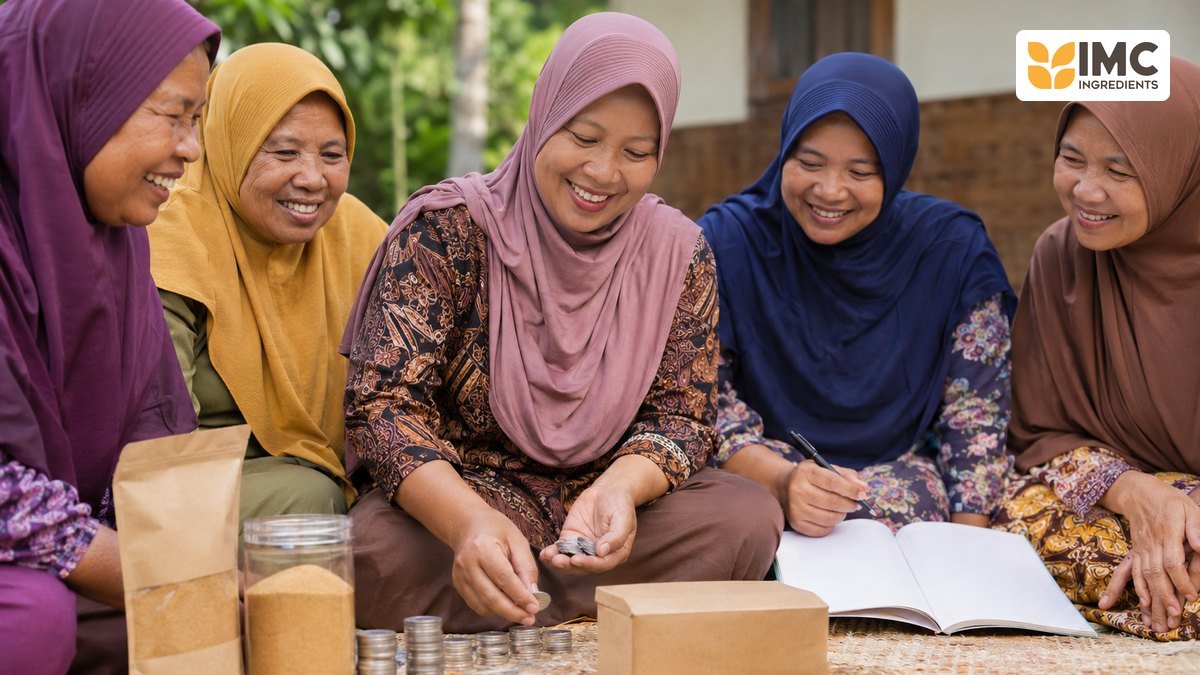
Quick answer: A village savings group is a small group of community members who save money together and lend to each other from their shared savings. Members meet regularly, contribute agreed amounts and follow simple written rules. Savings groups help households manage irregular income, cover emergencies and invest in small improvements without relying on expensive informal loans.
Key takeaways – Members save and borrow from a shared fund. – Groups follow clear, agreed rules. – Good records and transparency are essential. – Savings groups help manage irregular income.
How savings groups work
Members agree on how much to save at each meeting. The money is kept in a secure box or account. Members can borrow from the fund and repay with a small agreed charge, which grows the fund. At the end of a cycle, savings and earnings are shared among members.
Typical rules
| Rule | Purpose |
|---|---|
| Regular meetings | Builds discipline and trust |
| Fixed savings amounts | Fairness |
| Loan limits | Protects the fund |
| Repayment schedule | Keeps money circulating |
| Record keeping | Transparency |
| Elected leaders | Accountability |
Why savings groups help farming households
Income from farming can be irregular. Coconut sugar provides daily income, but sap flow and prices can change. A savings group lets families set money aside in good times and borrow when needed, for example for school fees, tools or repairs.
Starting a group
- Gather interested members who trust each other.
- Agree on rules and write them down.
- Elect leaders and a record keeper.
- Decide on meeting times and savings amounts.
- Start saving before lending.
- Review rules at the end of each cycle.
Record keeping
Each member’s savings and loans should be recorded clearly. Records are read aloud or shown at meetings so everyone can check them. Simple ledger books or passbooks work well.
Support from programmes
NGOs and community programmes sometimes train groups in record keeping and financial planning. Companies can support such training as part of CSR, while leaving management of the group to its members.
Risks
Poor record keeping, unclear rules or loans that are too large can cause conflict. Training and transparency reduce these risks.
Links to other activities
Savings groups often meet at the same time as farmer group meetings or training sessions. This saves travel time and builds stronger community ties. Some groups also discuss topics such as health, schooling or farming practices at their meetings.
Keeping the fund safe
Groups often use a cash box with several locks, each key held by a different member, so no single person can open it alone.
Where does IMC fit?
PT Integral Mulia Cipta (IMC Group) has produced coconut sugar in Central Java, Indonesia, since 2012. IMC works with farmer communities through CSR programmes and supplies organic and conventional coconut sugar in mesh 14 and mesh 50.
FAQ
What is a village savings group? A group that saves and lends from a shared fund.
Who manages the group? Members, through elected leaders.
Why are records important? They keep the group transparent and fair.
Can companies help? By supporting training, not managing the group.
PT Integral Mulia Cipta (IMC Group) has produced organic coconut sugar in Central Java, Indonesia, since 2012. For specifications or samples, email info@organic-coconut-sugar.com or WhatsApp +62 821 1348 5564.