
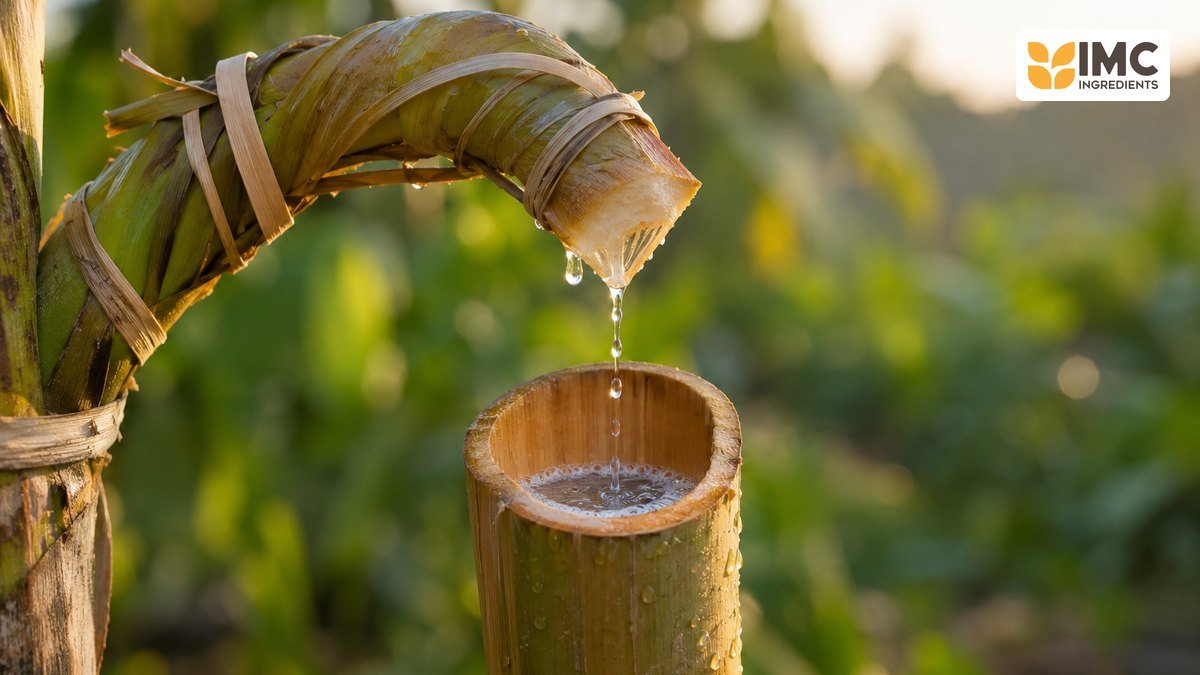
Quick answer: Coconut blossom sap starts to ferment soon after it leaves the tree, especially in warm weather. Fermentation lowers the sugar available for crystallising and can affect colour, flavour and texture. Clean containers, regular collection and cooking the sap soon after collection all help keep sap fresh and the final sugar consistent.
Key takeaways – Fresh sap ferments quickly in warm conditions. – Fermentation affects yield, colour and flavour. – Clean containers and quick cooking protect quality. – Training and tools support good practice.
What happens to sap after collection
Sap contains sugars and is a good environment for natural yeasts and bacteria. Once collected, these microbes start to convert sugar into acids and alcohol. The warmer it is, the faster this happens. That is why timing matters so much in coconut sugar making.
Effects of poor sap quality
| Problem | Possible effect on sugar |
|---|---|
| Fermented sap | Lower yield, sour notes |
| Dirty containers | Faster spoilage, foreign matter |
| Long delay before cooking | Darker colour, softer texture |
| Contaminated sap | Quality and safety risks |
Good practices
- Clean collection containers before every use.
- Collect sap at regular times, usually morning and afternoon.
- Strain sap to remove insects and debris.
- Start cooking as soon as possible.
- Use clean pans and stirring tools.
- Keep the cooking area tidy and covered.
Traditional methods
In many villages, small amounts of natural materials are traditionally added to sap containers to slow fermentation. Any practice must comply with food safety rules and, for organic sugar, with the organic standard. Suppliers check these practices through training and inspection.
Tools make a difference
Better tools help farmers keep sap clean. In 2023, IMC’s tool renewal programme with PUR Projet provided aluminium pans, strainers, sieves and bamboo containers to farmers in Banyumas, Purbalingga, Cilacap and Kebumen.
Why buyers should care
Sap quality is the start of product quality. Consistent, fresh sap leads to more consistent colour, flavour and texture in the final sugar. Buyers benefit from suppliers that invest in farmer training and tools.
Seasonal challenges
In the rainy season, sap may be more diluted, and in hot months it may ferment faster. Farmers adjust collection and cooking routines to the season. Suppliers that understand these patterns can plan quality checks accordingly.
Checking sap quality in the village
Simple checks help farmers spot problems early. Fresh sap smells sweet and looks fairly clear. Sour smells, foam or cloudiness suggest fermentation has started. Farmer group training often covers these signs, so producers can decide quickly whether sap is still suitable for cooking.
Where does IMC fit?
PT Integral Mulia Cipta (IMC Group) has produced coconut sugar in Central Java, Indonesia, since 2012. IMC supplies organic and conventional coconut sugar in mesh 50 and mesh 14 and supports farmers with training and tools through its CSR work.
FAQ
Why does sap ferment? Natural microbes convert its sugars in warm conditions.
How quickly should sap be cooked? As soon as possible after collection.
Do clean containers matter? Yes, they slow spoilage and prevent contamination.
Can tools improve quality? Yes, clean, suitable tools help keep sap fresh.
Questions about coconut sugar for your products? PT Integral Mulia Cipta (IMC Group), a Central Java producer since 2012, is happy to help. Email info@organic-coconut-sugar.com or WhatsApp +62 821 1348 5564.