Category: Coconut Sugar Basics

  • Coconut Sugar and Fair Prices: What Shoppers Ask

    Coconut Sugar and Fair Prices: What Shoppers Ask

    Quick answer: Shoppers often ask why coconut sugar costs more than white sugar and whether farmers are paid fairly. The price reflects labour-intensive production by smallholders, small volumes, processing, testing, certification, packaging, shipping and retail costs. Fair pricing depends on how value is shared along the chain. Brands can explain their sourcing honestly without making claims they cannot prove.

    Key takeaways – Coconut sugar is labour-intensive and produced in small volumes. – Many steps between farm and shelf add cost. – Fairness depends on how value is shared. – Claims about farmer income must be supported by facts.

    Why coconut sugar costs more

    Cost factor Explanation
    Labour Tappers climb trees twice daily
    Cooking Sap is cooked in small batches
    Volume Much smaller than cane or beet sugar
    Processing Sieving, drying, packing
    Testing and certification Quality and organic
    Logistics Export shipping and import costs
    Retail Packaging, distribution, store margin

    What shoppers want to know

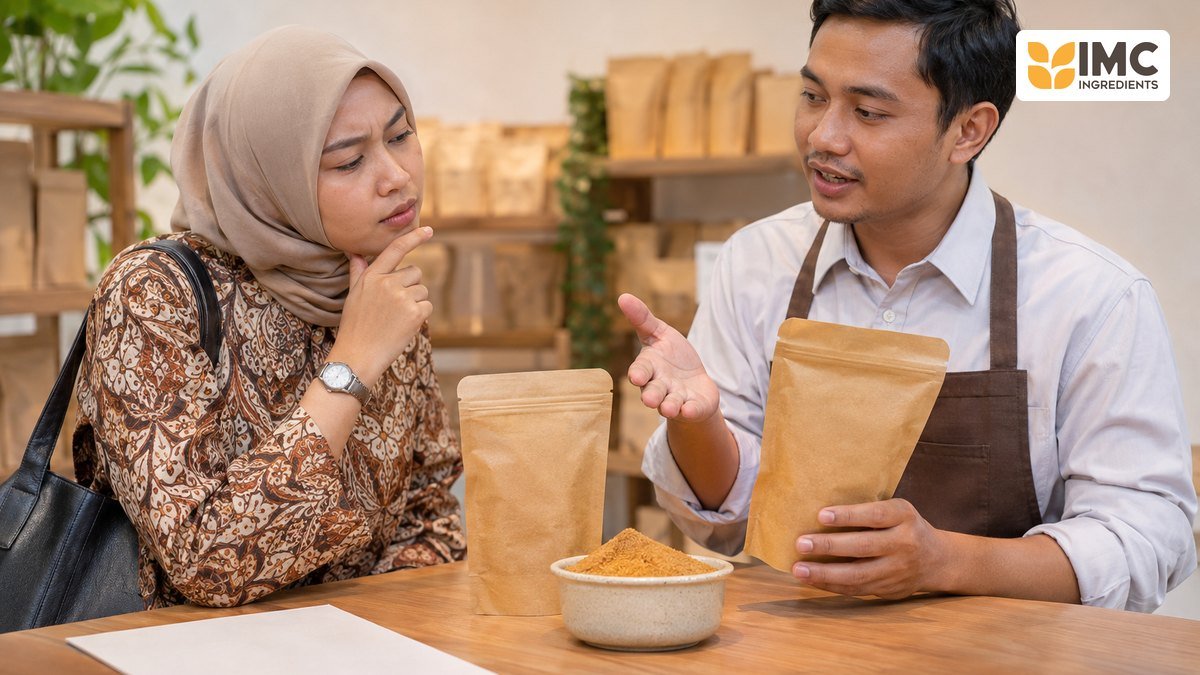
    Shoppers ask whether farmers receive a fair share, whether working conditions are safe, and whether the product is really organic. These are good questions, and brands should answer them with facts.

    What “fair” can mean

    Fair pricing can involve stable prices, timely payment, premiums for quality or organic production, and support such as training or tools. Some products carry fair trade certification, which has specific rules. Without such certification, brands should avoid using “fair trade” wording.

    How brands can answer

    • Describe the supply chain simply and accurately.
    • Share verified information about supplier programmes.
    • Avoid vague claims like “farmers earn more” without evidence.
    • Use certification labels only when certified.

    Role of buyers

    Buyers who commit to longer-term relationships, pay on time and share forecasts help suppliers offer stable prices to farmers. Supporting training and tool programmes can improve quality and income over time.

    Role of shoppers

    Shoppers can ask brands about sourcing, read labels and choose products whose claims are clear and verified.

    Honest communication

    Price discussions are complex. Simple, honest explanations build more trust than broad promises.

    Reading labels

    Shoppers can learn a lot from labels. Certification logos show that a product meets specific standards. Origin statements show where the main ingredient comes from. Some brands add a short sourcing description on the back of the pack or website. If a claim is unclear, shoppers can contact the brand. Clear answers are a good sign of a transparent supply chain.

    Where does IMC fit?

    PT Integral Mulia Cipta (IMC Group) has produced coconut sugar in Central Java, Indonesia, since 2012, working with smallholder farmers. In 2023, IMC and PUR Projet renewed production tools for farmers in Banyumas, Purbalingga, Cilacap and Kebumen, and since 2025 its GIZ develoPPP partnership has supported training and safer work.

    FAQ

    Why is coconut sugar more expensive? Production is labour-intensive and volumes are small.

    Are farmers paid fairly? It depends on the supply chain; ask brands for facts.

    Can brands say “fair trade”? Only with the relevant certification.

    How can buyers help? Long-term relationships, timely payment and support programmes.


    Looking for a reliable coconut sugar partner? Contact PT Integral Mulia Cipta (IMC Group) in Central Java, Indonesia: info@organic-coconut-sugar.com or WhatsApp +62 821 1348 5564.
  • Why Coconut Sugar Smells Like Caramel

    Why Coconut Sugar Smells Like Caramel

    Quick answer: Coconut sugar smells like caramel because its sap is cooked in open pans. Heat triggers browning reactions between sugars and small amounts of amino acids, creating aroma compounds similar to those in caramel and toffee. The scent varies with cooking time, heat and sap quality, and it can fade if the sugar is stored open.

    Key takeaways – The aroma comes from cooking the sap. – Browning reactions create caramel-like compounds. – Cooking time and heat change the intensity. – Sealed storage protects the aroma.

    From sap to aroma

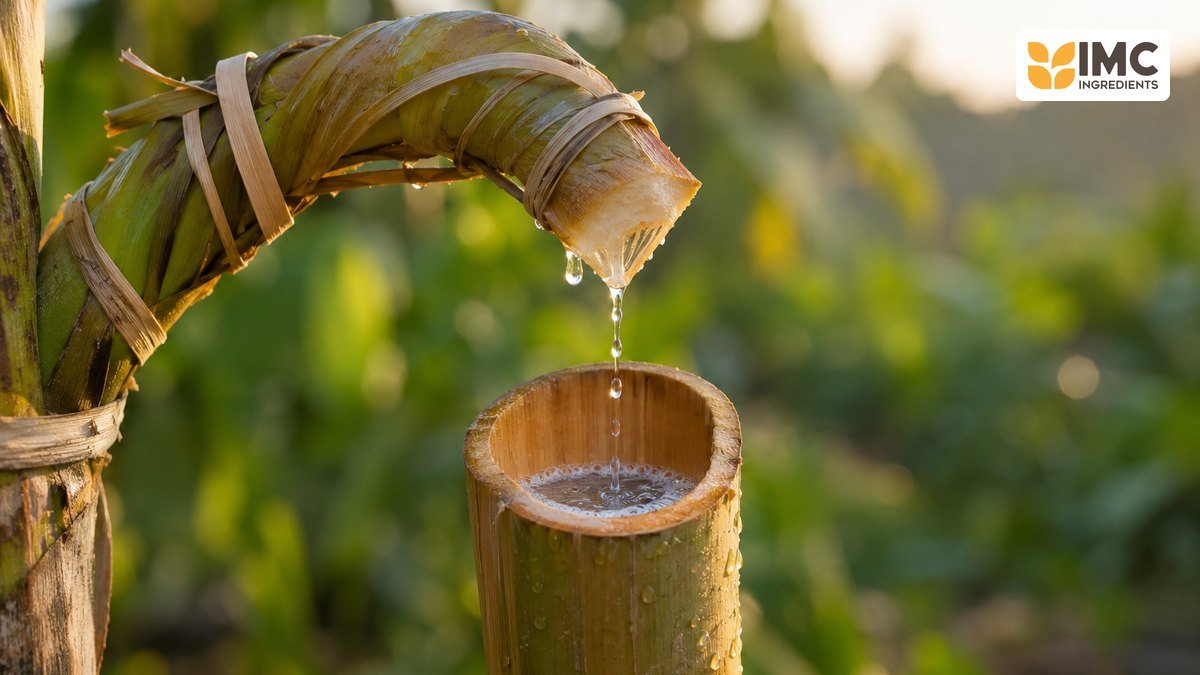
    Fresh coconut blossom sap is a sweet, almost clear liquid. It has little caramel smell. During cooking, water evaporates, sugars become concentrated and the temperature rises. This is when the aroma develops.

    The browning reactions

    Reaction What happens Aroma result
    Caramelisation Sugars break down under heat Caramel, toffee notes
    Maillard reaction Sugars react with amino acids Roasted, nutty, bready notes

    Coconut sap contains small amounts of amino acids and reducing sugars, so both reactions can take place. Together they give coconut sugar its typical aroma.

    What changes the aroma

    1. Longer cooking gives deeper, darker notes.
    2. Higher heat can add roasted or slightly bitter notes.
    3. Fresh sap gives a cleaner aroma.
    4. Drying and storage conditions affect how long the aroma lasts.

    Why it does not smell of coconut

    Many people expect coconut sugar to smell like coconut flesh or coconut milk. It does not, because it comes from the sap of the flower stalk, not the nut. The aroma is closer to caramel or light molasses.

    Aroma in finished products

    In baking, coconut sugar’s aroma blends with butter, vanilla and spices. In coffee drinks it adds a caramel note. In savoury sauces it supports roasted and umami flavours.

    Protecting the aroma

    Store coconut sugar sealed and away from strong smells, such as spices or cleaning products. Sugar can absorb odours. Open bags lose aroma over time and can pick up off-notes.

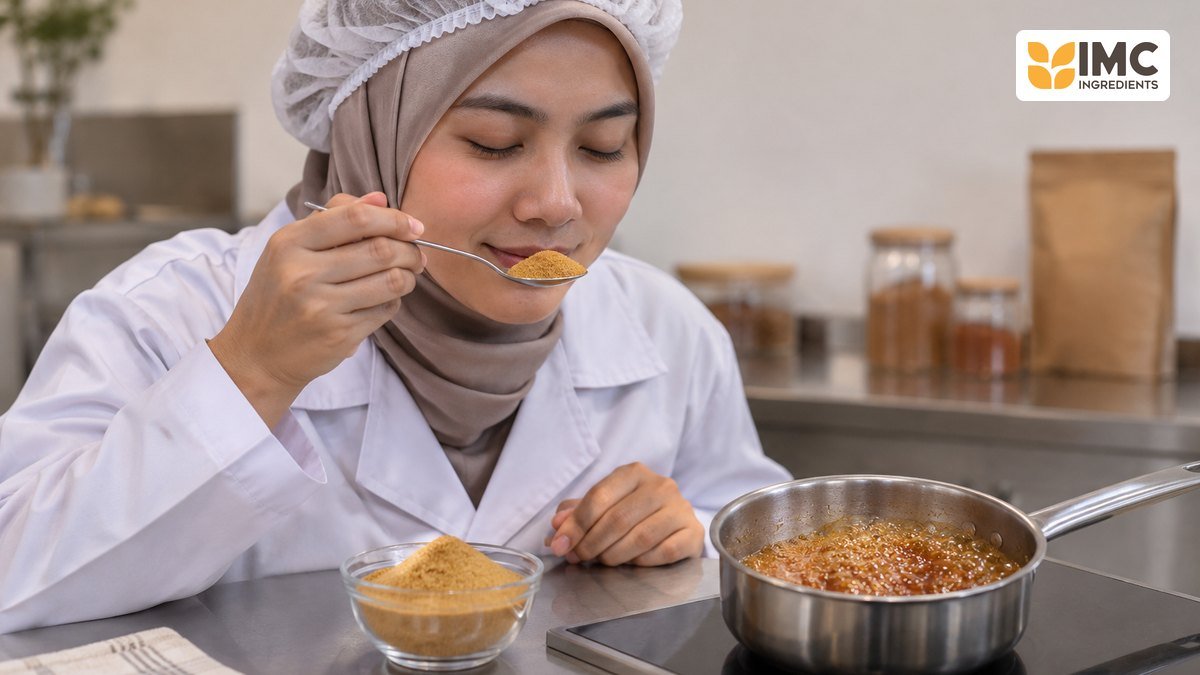
    Smelling as a quality check

    Food buyers often smell samples as part of incoming checks. A clean caramel aroma is expected. Burnt, sour or musty smells may point to problems in processing or storage and should be reported.

    Describing the aroma

    When writing product descriptions, use simple, accurate words such as caramel, toffee or light molasses. Avoid exaggerated descriptions that buyers or shoppers may not recognise when they open the pack.

    Where does IMC fit?

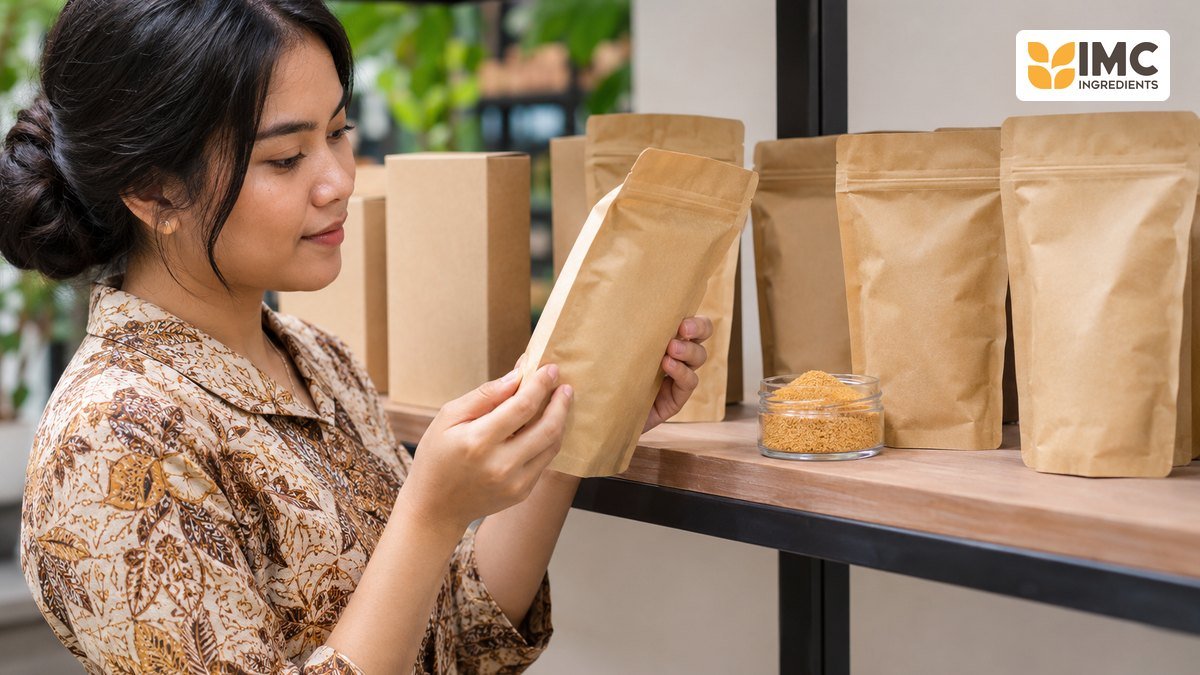
    PT Integral Mulia Cipta (IMC Group) has produced coconut sugar in Central Java, Indonesia, since 2012. IMC supplies organic and conventional coconut sugar in mesh 50 and mesh 14, packed in paper bags with a food-grade PE liner that helps protect aroma.

    FAQ

    Why does coconut sugar smell like caramel? Cooking the sap creates caramel-like aroma compounds.

    Does it smell like coconut? No, it comes from sap, not the nut.

    Can the aroma fade? Yes, if stored open or near strong smells.

    What smells are a warning sign? Burnt, sour or musty notes.


    Looking for a reliable coconut sugar partner? Contact PT Integral Mulia Cipta (IMC Group) in Central Java, Indonesia: info@organic-coconut-sugar.com or WhatsApp +62 821 1348 5564.

  • Sap Quality and Why Freshness Matters

    Sap Quality and Why Freshness Matters

    Quick answer: Coconut blossom sap starts to ferment soon after it leaves the tree, especially in warm weather. Fermentation lowers the sugar available for crystallising and can affect colour, flavour and texture. Clean containers, regular collection and cooking the sap soon after collection all help keep sap fresh and the final sugar consistent.

    Key takeaways – Fresh sap ferments quickly in warm conditions. – Fermentation affects yield, colour and flavour. – Clean containers and quick cooking protect quality. – Training and tools support good practice.

    What happens to sap after collection

    Sap contains sugars and is a good environment for natural yeasts and bacteria. Once collected, these microbes start to convert sugar into acids and alcohol. The warmer it is, the faster this happens. That is why timing matters so much in coconut sugar making.

    Effects of poor sap quality

    Problem Possible effect on sugar
    Fermented sap Lower yield, sour notes
    Dirty containers Faster spoilage, foreign matter
    Long delay before cooking Darker colour, softer texture
    Contaminated sap Quality and safety risks

    Good practices

    1. Clean collection containers before every use.
    2. Collect sap at regular times, usually morning and afternoon.
    3. Strain sap to remove insects and debris.
    4. Start cooking as soon as possible.
    5. Use clean pans and stirring tools.
    6. Keep the cooking area tidy and covered.

    Traditional methods

    In many villages, small amounts of natural materials are traditionally added to sap containers to slow fermentation. Any practice must comply with food safety rules and, for organic sugar, with the organic standard. Suppliers check these practices through training and inspection.

    Tools make a difference

    Better tools help farmers keep sap clean. In 2023, IMC’s tool renewal programme with PUR Projet provided aluminium pans, strainers, sieves and bamboo containers to farmers in Banyumas, Purbalingga, Cilacap and Kebumen.

    Why buyers should care

    Sap quality is the start of product quality. Consistent, fresh sap leads to more consistent colour, flavour and texture in the final sugar. Buyers benefit from suppliers that invest in farmer training and tools.

    Seasonal challenges

    In the rainy season, sap may be more diluted, and in hot months it may ferment faster. Farmers adjust collection and cooking routines to the season. Suppliers that understand these patterns can plan quality checks accordingly.

    Checking sap quality in the village

    Simple checks help farmers spot problems early. Fresh sap smells sweet and looks fairly clear. Sour smells, foam or cloudiness suggest fermentation has started. Farmer group training often covers these signs, so producers can decide quickly whether sap is still suitable for cooking.

    Where does IMC fit?

    PT Integral Mulia Cipta (IMC Group) has produced coconut sugar in Central Java, Indonesia, since 2012. IMC supplies organic and conventional coconut sugar in mesh 50 and mesh 14 and supports farmers with training and tools through its CSR work.

    FAQ

    Why does sap ferment? Natural microbes convert its sugars in warm conditions.

    How quickly should sap be cooked? As soon as possible after collection.

    Do clean containers matter? Yes, they slow spoilage and prevent contamination.

    Can tools improve quality? Yes, clean, suitable tools help keep sap fresh.


    Questions about coconut sugar for your products? PT Integral Mulia Cipta (IMC Group), a Central Java producer since 2012, is happy to help. Email info@organic-coconut-sugar.com or WhatsApp +62 821 1348 5564.

  • How Many Coconut Blossoms Make a Kilo of Sugar?

    How Many Coconut Blossoms Make a Kilo of Sugar?

    Quick answer: There is no single number. The amount of sugar from one coconut blossom depends on how much sap it gives each day, how much sugar the sap contains, the season, the tree’s condition and how the sap is cooked. Because sap is mostly water, many litres of sap are needed for each kilo of sugar, and output varies from farm to farm.

    Key takeaways – Output per blossom varies widely. – Sap is mostly water, so much is evaporated. – Season, tree health and tapping skill matter. – Farmers tap several trees every day.

    How sap is collected

    A tapper climbs the coconut tree and cuts the tip of a flower stalk. Sap drips into a container over several hours. The tapper collects it, usually twice a day, and trims the stalk again to keep the flow going. One stalk can be tapped for a period of weeks before a new one is used.

    What decides the output

    Factor Effect
    Sap volume per day More sap means more sugar
    Sugar content of sap Higher content means less to evaporate
    Season and rainfall Can change both volume and content
    Tree age and health Strong trees usually yield better
    Tapping skill Good cutting keeps sap flowing
    Freshness Fermented sap gives less usable sugar

    From sap to sugar

    Fresh sap is mostly water with dissolved sugars. During cooking, the water evaporates until a thick syrup remains. The syrup is then stirred as it cools so it crystallises into granules. Because so much water is removed, the weight of sugar is much lower than the weight of sap.

    Why exact numbers are hard to give

    Studies and field reports show wide ranges, because conditions differ between regions, varieties and seasons. Any figure should be treated as an estimate for a specific place and time, not as a general rule.

    What it means for buyers

    Coconut sugar production depends on daily work by many small producers. Supply can change with the weather and season. Planning orders early and sharing forecasts helps suppliers prepare.

    Dwarf coconut and future supply

    Programmes that support planting dwarf coconut varieties aim to make tapping easier and safer, because the trees are shorter. IMC’s GIZ develoPPP partnership since 2025 includes dwarf coconut work with farmers.

    Respecting the work behind each kilo

    Every kilo of coconut sugar represents many hours of tapping, carrying and cooking. Understanding this helps buyers appreciate why quality, fair relationships and steady demand matter to producing families.

    Where does IMC fit?

    PT Integral Mulia Cipta (IMC Group) has produced coconut sugar in Central Java, Indonesia, since 2012. IMC works with farmer communities and supplies organic and conventional coconut sugar in mesh 50 and mesh 14.

    FAQ

    Is there a fixed amount of sugar per blossom? No, it varies with many factors.

    Why is so much sap needed? Sap is mostly water that must be evaporated.

    Does the season matter? Yes, it can change sap volume and sugar content.

    How often is sap collected? Usually twice a day.


    IMC Group (PT Integral Mulia Cipta) supplies fine-granule organic coconut sugar from Central Java to food companies worldwide. Talk to our team: info@organic-coconut-sugar.com or WhatsApp +62 821 1348 5564.

  • Coconut Sugar Scoops, Shakers and Dispensers

    Coconut Sugar Scoops, Shakers and Dispensers

    Quick answer: The right tool makes coconut sugar easier to use. Dry stainless steel scoops suit kitchens, shakers with larger holes suit fine coconut sugar at the table, and sealed canisters or dispensers protect it from humidity in cafés. Because coconut sugar can clump in moist air, choose tools that close well and keep them dry.

    Key takeaways – Keep all tools completely dry. – Choose shaker holes that suit the grade. – Sealed dispensers protect against humidity. – Clean tools regularly and dry fully.

    Why tools matter for coconut sugar

    Coconut sugar takes up moisture more easily than white sugar. A wet spoon or an open bowl can lead to lumps. Choosing the right tool helps keep the sugar free-flowing and makes portions consistent.

    Tool options

    Tool Best for Tips
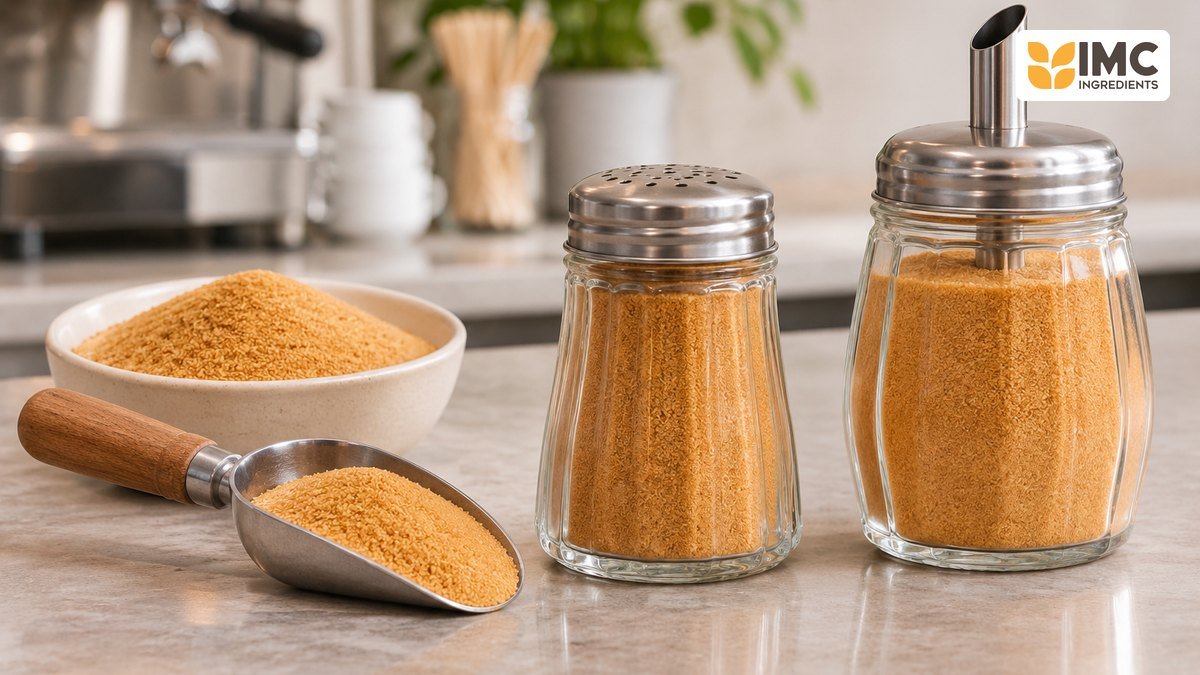
    Stainless steel scoop Kitchens, bakeries Store outside the bag, keep dry
    Measuring spoons Recipes at home Level off for accuracy
    Table shaker Cafés, homes Larger holes for mesh 50
    Sealed canister Back-of-house storage Tight lid, food-grade material
    Gravity dispenser Self-service stations Check for bridging
    Portion pump for syrup Bars and cafés Use syrup instead of granules

    Shakers

    Fine mesh 50 coconut sugar flows through shakers with medium to large holes. Coarse mesh 14 may block small holes. In humid rooms, fill shakers with small amounts and refill them often, so the sugar does not sit exposed to moist air for long.

    Canisters and dispensers

    Choose canisters with a good seal. Fill them with what you will use within a short period, and close the main bag straight away. In self-service dispensers, check daily for clumping or bridging, where sugar sticks together and stops flowing.

    Cleaning

    1. Empty the tool completely.
    2. Wash with warm water and mild detergent if needed.
    3. Rinse well.
    4. Dry fully before refilling.
    5. Do not top up old sugar with new sugar.

    Portion control

    Scoops and measuring spoons help keep recipes consistent. For drinks, many cafés use a syrup and a measured pump instead of granules, which gives exact doses and avoids undissolved sugar.

    Labelling

    Label containers clearly, especially if you also use brown sugar, which can look similar. Include the date of filling.

    Choosing materials

    Food-grade stainless steel, glass and food-safe plastics all work well. Avoid containers that hold odours, because coconut sugar can pick up smells from its surroundings. Clear containers make it easy to see when refilling is needed.

    Where does IMC fit?

    PT Integral Mulia Cipta (IMC Group) has produced coconut sugar in Central Java, Indonesia, since 2012. IMC supplies organic and conventional coconut sugar in mesh 50 and mesh 14 for food service distributors and food businesses.

    FAQ

    Can coconut sugar go in a normal shaker? Yes, mesh 50 works with medium to large holes.

    Why does my dispenser stop flowing? Moisture can cause clumping or bridging.

    Should I top up old sugar? No, empty, clean and dry first.

    Is syrup better for drinks? Often, because it doses accurately and dissolves fully.


    IMC Group (PT Integral Mulia Cipta) supplies fine-granule organic coconut sugar from Central Java to food companies worldwide. Talk to our team: info@organic-coconut-sugar.com or WhatsApp +62 821 1348 5564.

  • Coconut Sugar With Gelatin and Agar Sets

    Coconut Sugar With Gelatin and Agar Sets

    Quick answer: Coconut sugar works with both gelatin and agar. Dissolve it fully in the warm liquid before the gelling agent sets, and expect an amber colour rather than a clear set. Sugar levels can affect setting strength, so keep total sugar close to your usual recipe and test the firmness before scaling up.

    Key takeaways – Dissolve coconut sugar completely before setting. – Expect amber colour and less clarity. – Gelatin suits creamy and soft sets; agar gives firm, plant-based sets. – Test firmness when changing sugar type or level.

    Gelatin and agar in short

    Gelatin is an animal-derived protein that melts near body temperature and gives a soft, wobbly texture. Agar comes from seaweed, sets firmly at room temperature and is popular in Asian desserts and plant-based recipes. Both are used with sugar in jellies, puddings, gummies and mousses.

    How coconut sugar behaves

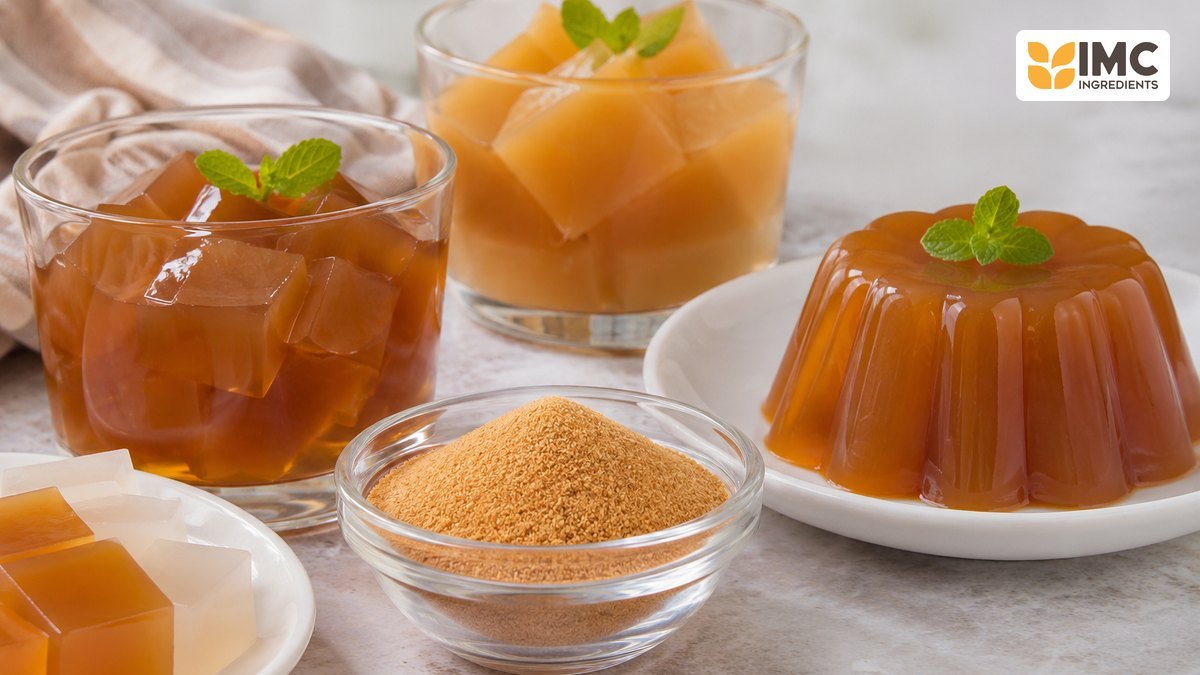
    Coconut sugar is mostly sucrose, so it behaves much like regular sugar in gels. The main differences are colour and flavour. Its natural compounds give a light to medium brown tint and caramel notes. In clear fruit jellies, this changes the look. In milk-based or coffee desserts, it fits well.

    Comparison

    Point Gelatin desserts Agar desserts
    Typical texture Soft, melting Firm, clean bite
    Setting temperature Fridge Room temperature
    Coconut sugar colour effect Amber tint Amber tint
    Best uses Panna cotta, mousse Jellies, layered desserts
    Plant-based No Yes

    Method with gelatin

    1. Bloom gelatin in cold liquid.
    2. Warm the main liquid and dissolve mesh 50 coconut sugar.
    3. Remove from heat and stir in bloomed gelatin.
    4. Strain if needed, pour into moulds and chill.

    Method with agar

    1. Mix agar powder with cold liquid.
    2. Bring to a boil and simmer briefly to activate the agar.
    3. Add coconut sugar and stir until dissolved.
    4. Pour into moulds and allow to set.

    Setting strength and sugar level

    High sugar levels can change how firm a gel becomes. If you increase sugar a lot, or switch from a liquid sweetener to coconut sugar, test a small batch. Adjust the gelling agent dose, not only the sugar.

    Colour and clarity tips

    For a light colour, use a partial swap, such as half coconut sugar and half white sugar. For an attractive look, make layered desserts with one amber layer and one pale layer. Strain the warm mixture through a fine sieve to remove any tiny particles.

    Flavour ideas

    Coconut sugar pairs well with coffee, pandan, vanilla, ginger, cocoa and coconut milk. Layered agar desserts with a coconut milk layer and a coconut sugar layer are common in Southeast Asian cafés and dessert shops.

    Where does IMC fit?

    PT Integral Mulia Cipta (IMC Group) has produced coconut sugar in Central Java, Indonesia, since 2012. IMC supplies organic and conventional coconut sugar in mesh 50 and mesh 14 for dessert makers and food businesses.

    FAQ

    Can coconut sugar be used with agar? Yes, dissolve it after the agar has boiled.

    Will my jelly be clear? It will be amber rather than fully clear.

    Does sugar change setting strength? It can; test firmness when changing recipes.

    Which grade dissolves best? Mesh 50.


    Looking for a reliable coconut sugar partner? Contact PT Integral Mulia Cipta (IMC Group) in Central Java, Indonesia: info@organic-coconut-sugar.com or WhatsApp +62 821 1348 5564.
  • Coconut Sugar Ingredient Names on Labels Worldwide

    Coconut Sugar Ingredient Names on Labels Worldwide

    Quick answer: In most markets, the ingredient is simply called “coconut sugar” in the local language. Some labels use “coconut blossom sugar” or “coconut flower sugar”. Organic products add “organic” according to local rules. Check the rules of each market and keep the name consistent with your supplier’s documents.

    Key takeaways – “Coconut sugar” is the most common name. – Alternatives include coconut blossom or flower sugar. – Translations follow local language rules. – Organic wording must match certification.

    Why the name matters

    The ingredient list tells shoppers and authorities what is in a product. A clear, accurate name avoids confusion and supports traceability. Inconsistent names across packs and documents can create questions at customs or in audits.

    Common names by language

    Language Common term
    English Coconut sugar, coconut blossom sugar
    German Kokosblütenzucker
    French Sucre de coco, sucre de fleur de coco
    Spanish Azúcar de coco
    Dutch Kokosbloesemsuiker
    Italian Zucchero di cocco
    Indonesian Gula kelapa, gula semut (granulated)

    Always confirm the preferred term with a local regulatory expert.

    Organic wording

    For organic products, the ingredient may be marked as organic in the list, for example with an asterisk and a note. The exact format depends on the market’s organic rules. Only certified ingredients can be marked organic.

    Avoiding misleading names

    1. Do not call it “coconut nectar sugar” if that is not accepted locally.
    2. Avoid adding health words to the ingredient name.
    3. Do not use names that suggest it is unprocessed if it is cooked and dried.
    4. Make sure the name matches the specification and invoices.

    Added sugar rules

    Many markets require coconut sugar to be counted as added sugar in nutrition information. Check how your market treats it.

    Consistency across documents

    The product name on bags, invoices, certificates of analysis and organic documents should match. This makes customs clearance and audits smoother.

    When a product is sold in several countries

    Multi-language packs need each version to be accurate. Work with translators who understand food labelling, not only general language.

    Online product listings

    Online shops and marketplaces also show ingredient lists. Use the same wording as on the pack. If the product is sold in several countries online, check that each local listing uses the correct translation.

    Names in customs documents

    Customs documents often use the product name together with a tariff code. Agree the exact wording with your supplier and customs broker, so invoices, packing lists and labels all describe the same product in the same way.

    Where does IMC fit?

    PT Integral Mulia Cipta (IMC Group) has produced coconut sugar in Central Java, Indonesia, since 2012. IMC supplies organic and conventional coconut sugar in mesh 50 and mesh 14, with documents that use consistent product names.

    FAQ

    What is the most common name? “Coconut sugar” in the local language.

    Can I call it coconut blossom sugar? Often yes, but check local rules.

    How do I mark it as organic? Follow the organic labelling rules of your market.

    Is it counted as added sugar? In many markets, yes.


    Looking for a reliable coconut sugar partner? Contact PT Integral Mulia Cipta (IMC Group) in Central Java, Indonesia: info@organic-coconut-sugar.com or WhatsApp +62 821 1348 5564.
  • Coconut Sugar in Breakfast at Home

    Coconut Sugar in Breakfast at Home

    Quick answer: At home, coconut sugar is an easy swap for white or brown sugar at breakfast. Sprinkle it on porridge or yoghurt, stir it into coffee or tea, use it in pancake batter or mix it with cinnamon for toast. It adds a caramel flavour. Keep it in a sealed jar so it stays free-flowing.

    Key takeaways – Use it like white or brown sugar, 1:1 by weight. – It adds caramel notes to simple breakfast foods. – Fine granules dissolve quickly in hot drinks. – Store sealed to prevent clumping.

    Why try coconut sugar at breakfast

    Breakfast is often where people first try a new sweetener. Coconut sugar’s caramel and toffee taste suits warm, comforting foods. It is plant-based, so it works for vegan breakfasts too. As with all sugars, it is best used in moderation.

    Easy breakfast ideas

    Breakfast item How to use coconut sugar
    Porridge or oatmeal Sprinkle on top or stir in while cooking
    Yoghurt and fruit Light sprinkle for crunch and sweetness
    Toast Mix with cinnamon and butter
    Pancakes or waffles Add to batter or make a quick syrup
    Coffee and tea Stir in like regular sugar
    Smoothies Blend a small amount with fruit
    Granola Use in homemade clusters

    Quick coconut sugar syrup

    Heat equal weights of coconut sugar and water in a small pan, stirring until dissolved. Cool and pour over pancakes, waffles or fruit. Keep leftovers in a clean jar in the refrigerator and use within a short time.

    Cinnamon coconut sugar

    Mix coconut sugar with ground cinnamon and keep it in a small shaker. It is quick to sprinkle on toast, porridge or fruit. You can add a little cardamom or nutmeg for variety.

    Measuring tips

    Coconut sugar granules can vary in size, so the same spoon may hold slightly different amounts. For baking, weighing is best. For breakfast toppings, start with a small amount and adjust to taste.

    Storage at home

    Keep coconut sugar in an airtight jar in a cool, dry cupboard. Avoid storing it above the kettle or stove, where steam can make it clump. Always use a dry spoon. If lumps form, break them up with a fork or a quick pulse in a dry blender.

    Fine or coarse?

    Fine coconut sugar dissolves quickly in hot drinks and batters. Coarser coconut sugar gives a nice crunch on yoghurt or toast. Many households keep one jar of each.

    Breakfast for guests

    When guests visit, a small bowl of coconut sugar on the table looks attractive and gives a talking point. Place a spoon in the bowl and keep the lid nearby to protect it from moisture between uses.

    Where does IMC fit?

    PT Integral Mulia Cipta (IMC Group) has produced coconut sugar in Central Java, Indonesia, since 2012. IMC supplies organic and conventional coconut sugar in mesh 50 and mesh 14 to brands and distributors that pack it for home use.

    FAQ

    Can I use coconut sugar in coffee? Yes, it dissolves like regular sugar.

    How do I make a quick syrup? Heat equal weights of coconut sugar and water until dissolved.

    Why does my coconut sugar clump? It absorbs moisture; store it sealed and away from steam.

    Is it a 1:1 swap? Yes, by weight for white or brown sugar.


    PT Integral Mulia Cipta (IMC Group) has produced organic coconut sugar in Central Java, Indonesia, since 2012. For specifications or samples, email info@organic-coconut-sugar.com or WhatsApp +62 821 1348 5564.
  • Coconut Sugar and Flavour Carry-Over in Recipes

    Coconut Sugar and Flavour Carry-Over in Recipes

    Quick answer: Flavour carry-over means how much of an ingredient’s own taste remains in the finished product. Coconut sugar carries caramel and toffee notes into drinks, baked goods and sauces. In strongly flavoured products the effect is subtle; in simple, light products it is clearly noticeable. You can boost or soften it through dose, pairing and partial swaps.

    Key takeaways – Coconut sugar’s caramel notes carry into many foods. – Strong flavours mask it; light foods show it. – Pairing ingredients can boost or balance it. – Partial swaps reduce the effect.

    What carries over

    Coconut sugar has a warm caramel, toffee and light molasses profile. These notes come from the cooking of the sap. When coconut sugar replaces white sugar, these notes appear in the final product along with the sweetness.

    Where carry-over is strong or weak

    Product Carry-over Why
    Plain sugar cookies Strong Few other flavours
    Vanilla cake Noticeable Light base
    Chocolate brownies Subtle Cocoa dominates
    Spiced cakes Subtle, blends in Spices mask it
    Coffee drinks Noticeable, pleasant Matches roast notes
    Tomato sauces Subtle Acidity and umami dominate
    Peanut sauces Pleasant depth Matches roasted notes

    Boosting the caramel note

    Pair coconut sugar with butter, vanilla, cinnamon, coffee, nuts or sea salt. These ingredients share or complement caramel flavours. A small pinch of salt makes the caramel taste more pronounced.

    Softening the caramel note

    1. Use a partial swap, such as 25 to 50 percent.
    2. Add bright flavours like citrus.
    3. Use stronger flavours like cocoa or spices.
    4. Reduce cooking time if extra browning is adding notes.

    Testing carry-over

    Make two versions of the recipe: one with your usual sugar and one with coconut sugar. Taste them side by side, ideally blind. Note differences in sweetness, aroma and aftertaste. Repeat after storage, because flavours can change over time.

    Communicating flavour

    If coconut sugar is a highlight on the pack, the flavour difference can be an advantage. Describe it accurately with words like caramel or toffee rather than making health claims.

    Flavour and colour together

    Flavour carry-over usually comes with colour carry-over. A product that tastes more caramel-like will often look darker too. Plan both together when developing a recipe, especially for products where appearance matters to shoppers.

    Where does IMC fit?

    PT Integral Mulia Cipta (IMC Group) has produced coconut sugar in Central Java, Indonesia, since 2012. IMC supplies organic and conventional coconut sugar in mesh 50 and mesh 14 for food and beverage developers.

    FAQ

    What flavour does coconut sugar add? Caramel, toffee and light molasses notes.

    Where is the flavour most noticeable? In light, simple products.

    How can I reduce the flavour? Use a partial swap or stronger flavours.

    How do I test it? Compare versions side by side, ideally blind.


    Questions about coconut sugar for your products? PT Integral Mulia Cipta (IMC Group), a Central Java producer since 2012, is happy to help. Email info@organic-coconut-sugar.com or WhatsApp +62 821 1348 5564.
  • Coconut Sugar and Acid: Balancing Sour Flavours

    Coconut Sugar and Acid: Balancing Sour Flavours

    Quick answer: Sweetness and acidity balance each other. A small amount of coconut sugar softens sharp sour notes from lime, vinegar, tamarind or fruit, while its caramel flavour adds depth. Add coconut sugar step by step, taste often and remember that salt and fat also change how sour a dish tastes.

    Key takeaways – Sugar softens the perception of sourness. – Coconut sugar adds caramel depth as well as sweetness. – Add in small steps and taste. – Salt and fat also influence balance.

    Why sweet and sour work together

    Our tongues sense sweet and sour at the same time, and each changes how strong the other seems. A little sugar makes lime juice taste rounder. Too much hides the fresh sour note. Many classic dishes, from dressings to chutneys, rely on this balance.

    Common sour ingredients

    Sour ingredient Typical use Coconut sugar role
    Lime and lemon Dressings, drinks Rounds sharp citrus
    Vinegar Pickles, sauces Softens harsh notes
    Tamarind Sauces, drinks Adds depth to fruity sourness
    Yoghurt Marinades, drinks Gentle balance
    Tomato Sauces, sambal Reduces acidity perception
    Sour fruit Jams, compotes Brings out fruit flavour

    Practical method

    1. Start with the sour ingredient in your recipe.
    2. Dissolve a small amount of mesh 50 coconut sugar in it.
    3. Taste and add salt if needed.
    4. Add more sugar in small steps until balanced.
    5. Taste again after adding fat or oil.

    Example: simple lime dressing

    A basic Southeast Asian-style dressing combines lime juice, fish sauce or salt, coconut sugar and chilli. Dissolve the coconut sugar in the lime juice first, then add the rest. Adjust until no single taste dominates.

    Example: tamarind drink base

    Tamarind pulp is very sour. Simmer it with water, strain, then sweeten with coconut sugar to taste. The caramel notes match the fruity sourness well.

    Colour considerations

    Coconut sugar adds a light brown tint. In pale vinaigrettes this may be visible, but in tamarind, tomato or soy-based sauces it blends in.

    For food producers

    In bottled sauces and drinks, the balance of sugar and acid also affects stability and shelf life. Measure Brix and pH and work with a food technologist to set the right formula and process.

    Tasting tips

    Taste with a clean spoon and drink water between tastes. Ask two or three people to taste, because sensitivity to sour flavours differs between people. Write down each change so you can repeat the final balance later.

    Where does IMC fit?

    PT Integral Mulia Cipta (IMC Group) has produced coconut sugar in Central Java, Indonesia, since 2012. IMC supplies organic and conventional coconut sugar in mesh 50 and mesh 14 to sauce, beverage and food makers.

    FAQ

    Why add sugar to sour dishes? To soften sharp sourness and round the flavour.

    Which grade dissolves best in dressings? Mesh 50.

    Does coconut sugar change the colour? It adds a light brown tint.

    Should producers measure pH? Yes, along with Brix, for consistency and stability.


    Looking for a reliable coconut sugar partner? Contact PT Integral Mulia Cipta (IMC Group) in Central Java, Indonesia: info@organic-coconut-sugar.com or WhatsApp +62 821 1348 5564.