
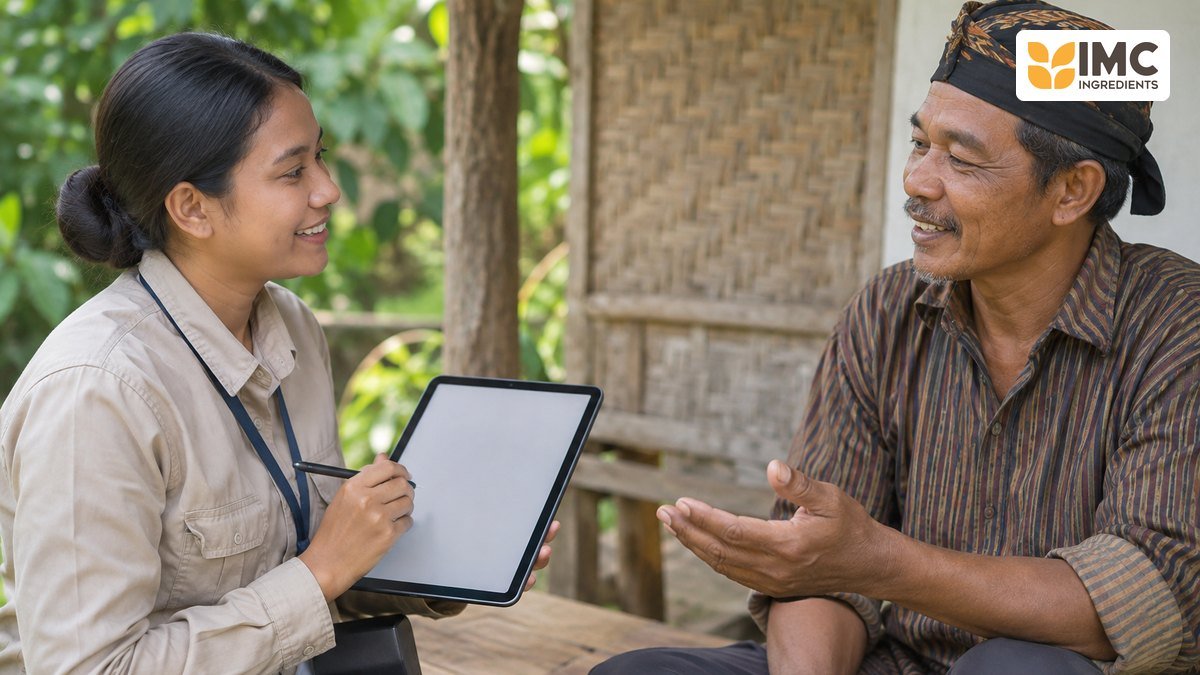
Quick answer: A baseline survey records the situation before a programme starts, such as farmers’ practices, tools, training needs and working conditions. Later surveys are compared with the baseline to see what has changed. Good baselines are simple, focused on the programme’s goals, collected with consent and stored securely.
Key takeaways – A baseline shows the starting point. – Measure what the programme aims to change. – Use clear questions and consent. – Compare later results fairly with the baseline.
Why baselines matter
Without a baseline, it is hard to show whether a programme made a difference. Buyers, partners and donors often ask for evidence of change. A baseline also helps programme teams understand farmers’ real needs.
What to measure
| Topic | Example questions |
|---|---|
| Production practices | How is sap collected and cooked? |
| Tools | Which tools are used and in what condition? |
| Safety | Are protective items available? |
| Training | Which topics have farmers already learned? |
| Organic status | Is the farmer part of a certified group? |
| Household | Number of people working in production |
Keep the survey focused. Long surveys tire respondents and reduce data quality.
Sampling
It may not be possible to survey every farmer. A sample can represent the group if chosen carefully. Record how the sample was selected.
Consent and privacy
- Explain the purpose of the survey.
- Ask for consent before starting.
- Use the local language.
- Protect personal data.
- Share results in summary form.
Data quality
Train enumerators, test questions before use and check data for errors. Record dates and locations.
Using the baseline
Repeat key questions after a set period. Compare results honestly. Some changes take time; some results may be unexpected. Report both.
Linking to CSR activities
Programmes such as tool renewal or safety training can be assessed against a baseline. For example, IMC’s tool renewal with PUR Projet in 2023 and its GIZ develoPPP partnership since 2025 are activities where baseline and follow-up data can show change.
Sharing results with farmers
Farmers who answer surveys should hear what was learned. A short meeting to share summary results shows respect for their time and can lead to useful discussion about next steps.
Keeping surveys short
A short survey that farmers can finish in a reasonable time gives better data than a long one. Test the questions with a few farmers first and remove anything unclear or unnecessary.
Where does IMC fit?
PT Integral Mulia Cipta (IMC Group) has produced coconut sugar in Central Java, Indonesia, since 2012. IMC works with farmer groups through CSR programmes and supplies organic and conventional coconut sugar in mesh 14 and mesh 50.
FAQ
What is a baseline survey? A record of the starting situation before a programme.
Must every farmer be surveyed? Not always; a careful sample can work.
Is consent needed? Yes, always.
How is the baseline used? To compare later results and track change.
IMC Group (PT Integral Mulia Cipta) supplies fine-granule organic coconut sugar from Central Java to food companies worldwide. Talk to our team: info@organic-coconut-sugar.com or WhatsApp +62 821 1348 5564.