
Quick answer: Organic products can be contaminated by spray drift, residues on tools, cleaning chemicals, pest treatments, packaging or previous cargo. Preventing contamination needs a risk assessment, buffer zones, approved cleaning and pest control methods, clean packaging and transport checks. Testing helps confirm that controls are working.
Key takeaways – Contamination can happen at many points. – Prevention is better than testing alone. – Use approved cleaning and pest control methods. – Test to verify controls.
Sources of contamination
| Source | Example |
|---|---|
| Spray drift | Pesticides from nearby conventional fields |
| Tools and containers | Residues from earlier use |
| Cleaning agents | Residues left on surfaces |
| Pest control | Prohibited treatments in storage |
| Packaging | Materials not suitable for food |
| Transport | Residues from previous cargo |
Farm level controls
Farmers in organic groups learn about prohibited inputs and how to avoid them. Buffer zones and hedges reduce drift risk. Internal inspectors visit farms and check for prohibited products.
Processing controls
Cleaning agents should be suitable for food contact and rinsed thoroughly. Equipment shared with non-organic products must be cleaned before organic runs. Records show when and how cleaning was done.
Storage and pest control
Physical pest control such as traps, screens and good housekeeping works well in organic storage. Chemical treatments must be checked against organic rules before use.
Packaging
Use food-grade packaging from approved suppliers. Store packaging clean and covered. IMC packs coconut sugar in paper bags with a food-grade PE liner.
Transport
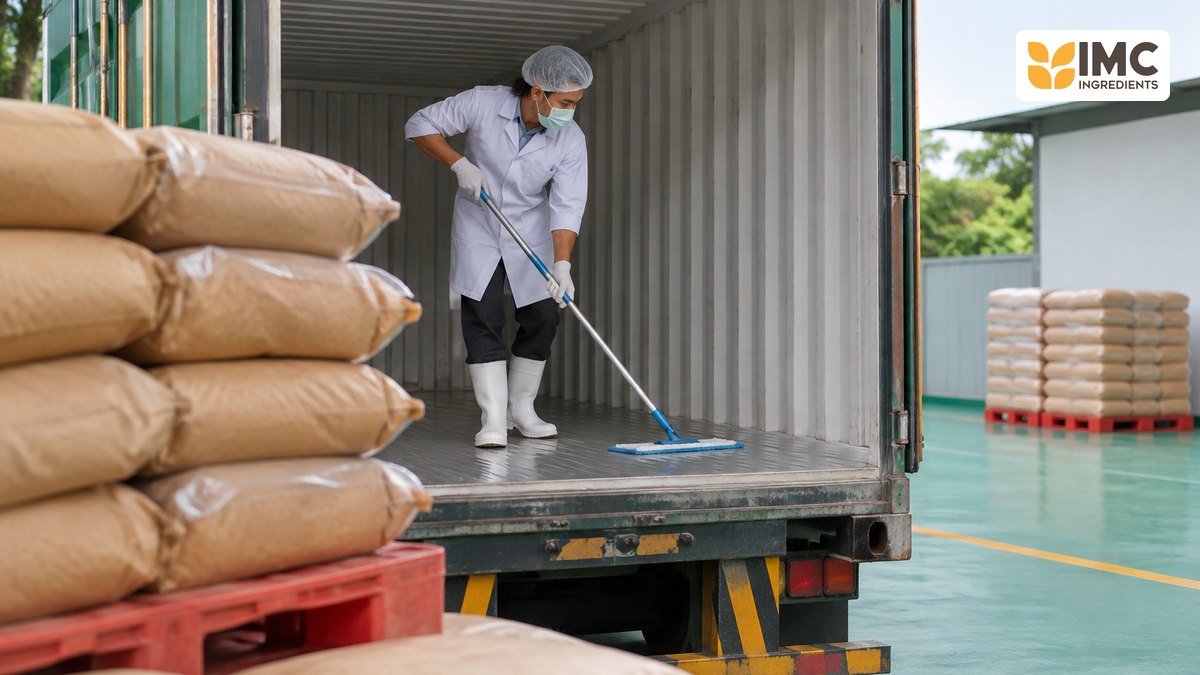
Inspect containers before loading. Reject containers with odours or residues. Use liners where needed.
Testing as verification
- Plan residue tests based on risk.
- Use accredited laboratories.
- Record results by lot.
- Investigate any detection.
- Review controls if trends appear.
When something is found
If a residue is detected, isolate the lot, inform the control body and buyer as required, and investigate the cause. Clear records make the investigation faster.
Working with suppliers of packaging and services
Contamination can also come from outside suppliers, such as packaging makers, pest control companies or transport firms. Include organic requirements in contracts and check their practices. A short annual review of these service providers adds another layer of protection.
A simple risk assessment
Start by listing every step from farm to shipment and asking where a prohibited substance could enter. Rate each point as low, medium or high risk. Focus controls and testing on the high-risk points first. Review the list once a year or whenever the process, suppliers or surroundings change.
Where does IMC fit?
PT Integral Mulia Cipta (IMC Group) has produced coconut sugar in Central Java, Indonesia, since 2012. IMC supplies organic coconut sugar in mesh 14 and mesh 50 and supports buyers with lot documentation.
FAQ
What is spray drift? Pesticide carried by wind from nearby fields.
Is testing enough to prevent contamination? No, prevention controls come first.
Can shared equipment be used? Yes, with cleaning and records.
What if residues are found? Isolate the lot, inform the right parties and investigate.
IMC Group (PT Integral Mulia Cipta) supplies fine-granule organic coconut sugar from Central Java to food companies worldwide. Talk to our team: info@organic-coconut-sugar.com or WhatsApp +62 821 1348 5564.