
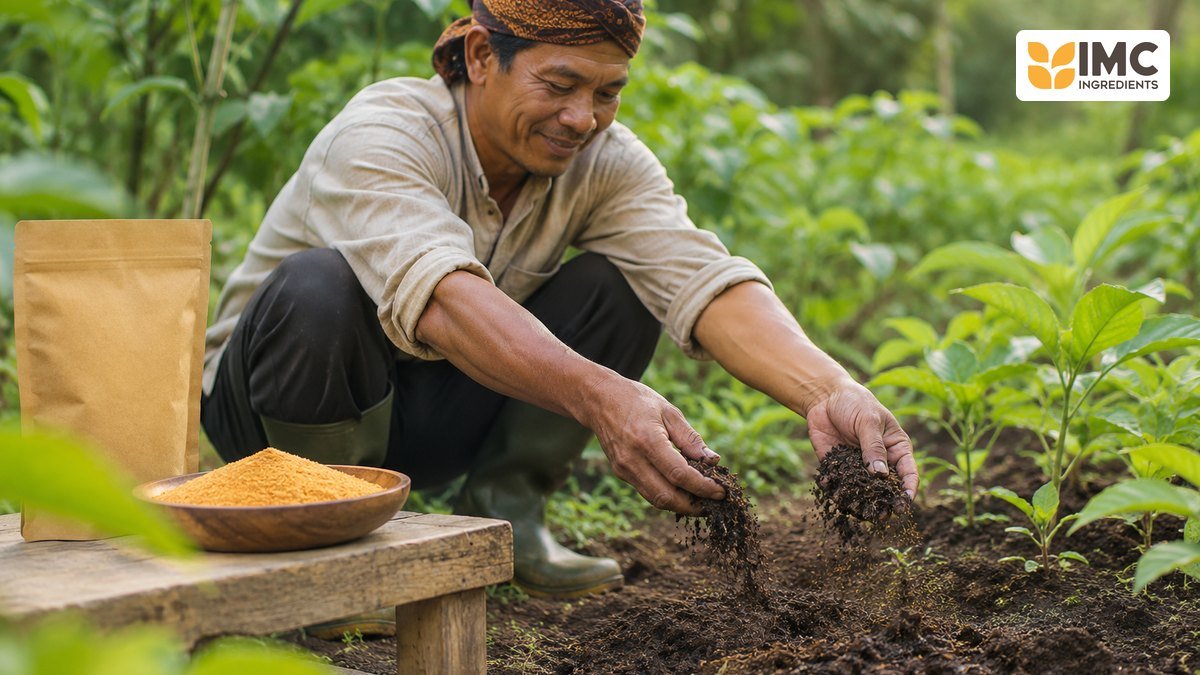
Quick answer: Coconut sugar is organic when it is produced under a recognised organic standard and certified by an approved control body. That means the trees are managed without synthetic fertilisers or pesticides, the sap and sugar are kept separate from non-organic product, every step is recorded and inspected, and the right certificates travel with each shipment.
Key takeaways – Organic is a certified process, not just a description. – Farms avoid synthetic fertilisers and pesticides. – Separation and records protect organic integrity. – Certificates and import documents prove the status.
Organic is about the whole chain
Many people think organic only concerns the farm. In reality, organic status covers every step: farming, sap collection, cooking, drying, sieving, packing, storage and transport. If one step breaks the rules, the product can lose its organic status.
The farm level
Organic coconut farms are managed without synthetic fertilisers, synthetic pesticides or herbicides. Farmers use natural practices such as compost, mulching and manual weeding. Buffer zones may be needed where organic farms border conventional fields. Smallholders are usually certified as a group with an internal control system.
Processing and handling
| Step | Organic requirement |
|---|---|
| Sap collection | Clean tools, no prohibited substances |
| Cooking | No prohibited additives |
| Drying and sieving | Clean equipment, separation |
| Packing | Clear organic labelling and lot codes |
| Storage | Separated from non-organic product |
| Transport | Clean containers, correct documents |
Certification and inspection
An approved control body inspects the farms, the farmer group’s internal control system and the processing site at least once a year. Inspectors check records, visit fields, interview farmers and may take samples for testing. If the operation meets the standard, a certificate is issued.
Standards differ by market
Organic standards are set by each market. The European Union, the United States and other countries each have their own rules and import procedures. A supplier may need several certifications to sell organic coconut sugar in different regions.
Documents buyers should see
- A valid organic certificate covering the product.
- The certificate holder’s name matching the seller.
- Import documents required by the destination market.
- Lot codes on bags matching the documents.
What organic does not mean
Organic describes how a product is produced. It is not a health claim. Brands should avoid suggesting that organic coconut sugar has special health effects.
Why buyers choose organic
Organic food brands need certified ingredients to keep their own products organic. For them, an organic sweetener is not optional. Other buyers choose organic because their customers ask for it or because it fits their brand values.
Where does IMC fit?
PT Integral Mulia Cipta (IMC Group) has produced coconut sugar in Central Java, Indonesia, since 2012. IMC supplies organic coconut sugar in mesh 14 and mesh 50, and since 2025 its GIZ develoPPP partnership has supported organic certification work with farmer groups.
FAQ
Is organic just a label? No, it is a certified, inspected process.
Who certifies organic coconut sugar? An approved control body for each standard.
Does organic apply only to the farm? No, it covers processing, storage and transport too.
Is organic a health claim? No, it describes production methods.
Questions about coconut sugar for your products? PT Integral Mulia Cipta (IMC Group), a Central Java producer since 2012, is happy to help. Email info@organic-coconut-sugar.com or WhatsApp +62 821 1348 5564.