
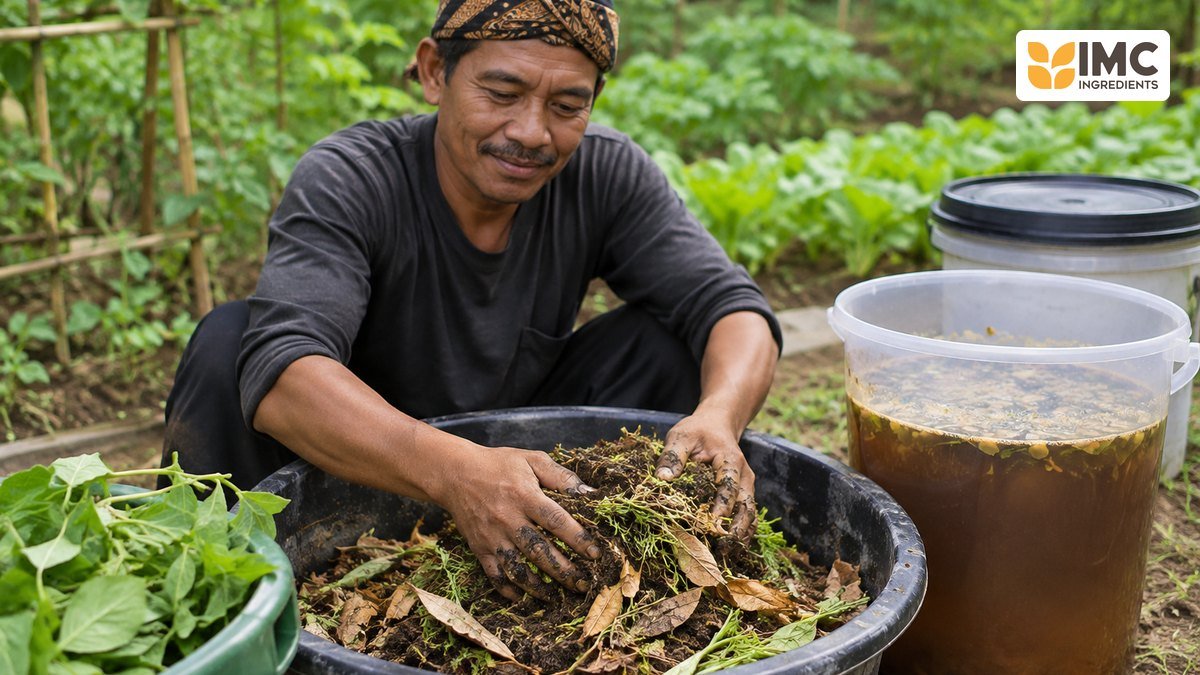
Quick answer: Organic farmers manage their land without synthetic fertilisers, pesticides or herbicides. In coconut gardens, this means using compost and organic matter for nutrients, mulching and manual weeding for weed control, and natural methods for pests. Records and inspections confirm that no prohibited inputs are used.
Key takeaways – No synthetic fertilisers, pesticides or herbicides. – Compost and mulch feed the soil. – Weeds are controlled by hand or with ground cover. – Records show which inputs are used.
Feeding the soil
Organic farming relies on building healthy soil. Farmers add compost, plant residues and other permitted organic materials. These release nutrients slowly and improve soil structure.
Common practices
| Practice | Purpose |
|---|---|
| Composting | Recycles plant material into nutrients |
| Mulching | Keeps soil moist, suppresses weeds |
| Manual weeding | Removes weeds without herbicides |
| Intercropping | Uses space, adds diversity |
| Natural pest control | Traps, hand removal, encouraging predators |
Weed control
Without herbicides, farmers cut weeds by hand or with simple tools. Mulch and ground cover plants reduce weed growth. This takes time, so farmer groups often share work or plan weeding at key times.
Pest and disease control
Organic farmers rely on prevention: healthy plants, clean gardens and monitoring. Where pests appear, they use physical methods or inputs permitted under the organic standard. Any input must be checked before use.
Records
- List of inputs used, with dates and amounts.
- Source of compost or organic materials.
- Notes on pest problems and actions.
- Training attendance.
Role of the internal control system
In smallholder groups, internal inspectors visit farms and check practices and records. They help farmers understand rules and report problems early.
Challenges
Organic practices can require more labour. Yields may change during the transition period. Training, tools and steady market demand help farmers stay organic.
Transition period
Land moving from conventional to organic management usually needs a conversion period before its products can be sold as organic. During this time, farmers follow organic rules but cannot yet use the organic claim. Planning ahead helps farmers manage this period.
Sharing knowledge in farmer groups
Farmer groups are a practical place to learn organic methods. Members can share compost recipes, show each other how to mulch and discuss pest problems. Field days and short demonstrations often work better than written guides, because farmers see results directly in a neighbour’s garden. Group leaders can also pass on updates about organic rules and remind members about record keeping before inspections.
Where does IMC fit?
PT Integral Mulia Cipta (IMC Group) has produced coconut sugar in Central Java, Indonesia, since 2012. IMC supplies organic coconut sugar in mesh 14 and mesh 50, and its GIZ develoPPP partnership since 2025 supports training and organic certification with farmers.
FAQ
What inputs are not allowed? Synthetic fertilisers, pesticides and herbicides.
How do farmers feed the soil? With compost and permitted organic materials.
How are weeds controlled? By hand, mulch and ground cover.
Is there a conversion period? Yes, before products can be sold as organic.
Questions about coconut sugar for your products? PT Integral Mulia Cipta (IMC Group), a Central Java producer since 2012, is happy to help. Email info@organic-coconut-sugar.com or WhatsApp +62 821 1348 5564.