
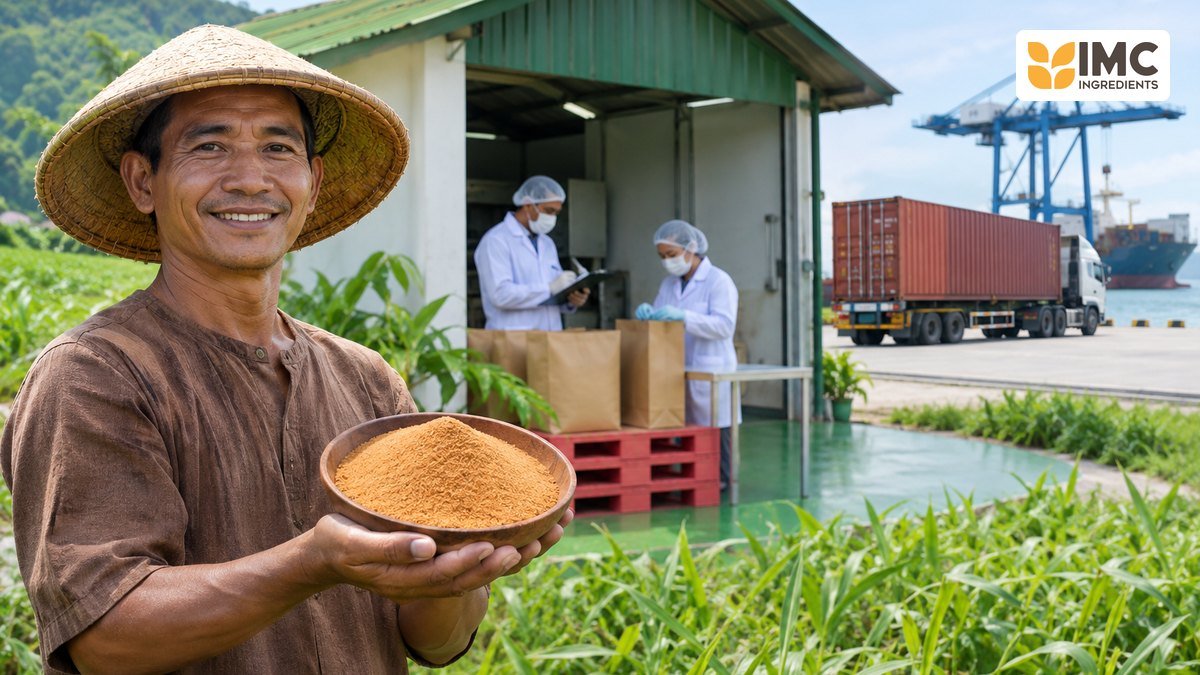
Quick answer: Organic integrity means the product stays truly organic at every step from farm to buyer. For coconut sugar, this requires certified farms, separate collection, clean processing, clearly labelled storage, clean containers and documents that match the goods. A weak link anywhere can put the organic status at risk.
Key takeaways – Integrity must be protected at every step. – Separation and labelling prevent mix-ups. – Clean equipment and containers prevent contamination. – Documents must match the physical goods.
Why integrity matters
Organic buyers pay for a product produced under strict rules. If organic and non-organic products are mixed, or if contamination occurs, the buyer’s own certification and reputation are at risk. Integrity is the basis of trust in organic trade.
Risk points along the chain
| Stage | Risk | Control |
|---|---|---|
| Farm | Prohibited inputs, drift | Training, buffer zones |
| Collection | Mixing with non-organic sugar | Separate collection, records |
| Processing | Residues from cleaning or equipment | Cleaning, line clearance |
| Packing | Wrong labels | Label checks |
| Storage | Mixing, fumigation | Separate areas, no prohibited treatments |
| Container | Residues from previous cargo | Inspection and cleaning |
| Documents | Mismatched data | Checks before shipment |
Separation in practice
Organic products should be stored in clearly marked areas. If a factory handles both organic and non-organic sugar, organic batches are usually processed first after cleaning, and records show line clearance.
Fumigation and pest control
Some pest control treatments are not allowed for organic products. Factories must choose pest control methods that are compatible with organic rules and document them.
Container checks
- Inspect for cleanliness and odour.
- Check for residues of previous cargo.
- Use clean liners where required.
- Record the inspection.
- Seal and record the seal number.
Documents
The organic certificate, transaction documents and import documents must match the lot codes and weights on the bags. Even small errors can delay release at destination.
Training staff
Everyone who handles organic product, from farmers to warehouse staff, should understand the basic rules. Simple training and clear signs help prevent accidental mistakes.
Investigating a problem
If a residue is found or a mix-up is suspected, the operation must isolate the affected product, inform the control body and investigate. Clear records make it possible to find the cause and protect other lots.
Where does IMC fit?
PT Integral Mulia Cipta (IMC Group) has produced coconut sugar in Central Java, Indonesia, since 2012. IMC supplies organic coconut sugar in mesh 14 and mesh 50, packed in paper bags with a food-grade PE liner and documented by lot.
FAQ
What is organic integrity? Keeping a product truly organic through every step.
Where are the main risks? Collection, processing, storage, containers and documents.
Can organic and non-organic be processed on the same line? Only with cleaning, clearance and records.
Why check containers? To avoid contamination from previous cargo.
PT Integral Mulia Cipta (IMC Group) has produced organic coconut sugar in Central Java, Indonesia, since 2012. For specifications or samples, email info@organic-coconut-sugar.com or WhatsApp +62 821 1348 5564.