
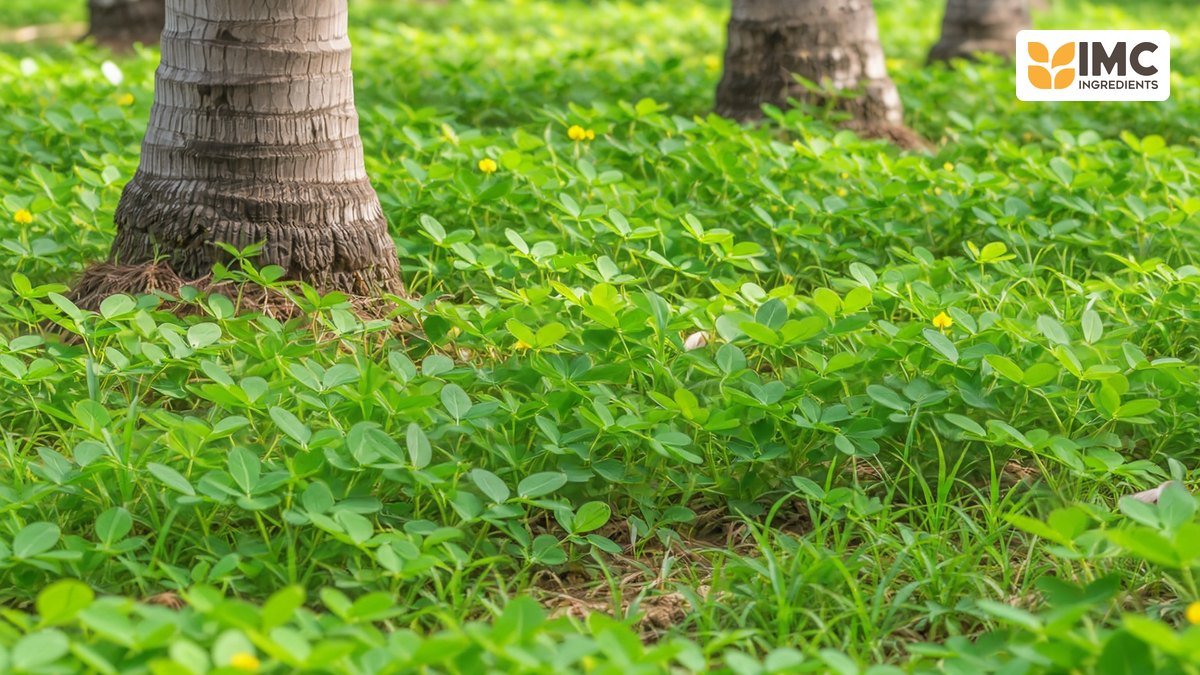
Quick answer: Cover crops are low plants grown on the ground between trees to protect and improve the soil. In organic coconut gardens, they help reduce erosion, keep moisture, suppress weeds and, in the case of legumes, add nitrogen. They need to be chosen and managed so they do not compete too strongly with the main crop.
Key takeaways – Cover crops protect soil between trees. – They reduce weeds and erosion. – Legumes can add nitrogen to the soil. – Management keeps competition low.
Why cover crops suit organic gardens
Organic farmers cannot use herbicides or synthetic fertilisers. Cover crops offer a natural way to keep soil covered, reduce weed growth and feed the soil. In a tropical climate with heavy rain, bare soil can wash away quickly. Ground cover helps hold it in place.
Benefits
| Benefit | How it works |
|---|---|
| Erosion control | Roots and leaves protect soil from rain |
| Weed suppression | Ground cover shades out weeds |
| Soil moisture | Reduces evaporation |
| Soil fertility | Legumes fix nitrogen; residues add organic matter |
| Soil life | Supports earthworms and microbes |
Choosing cover crops
Farmers often choose legumes because they fix nitrogen from the air. Local plants that grow low and do not climb trees are preferred. The choice depends on shade, rainfall, soil type and labour available. Local agricultural advisers can suggest suitable species.
Managing cover crops
- Prepare the ground and sow at the start of the rainy season.
- Keep a clear circle around each tree trunk.
- Cut back cover crops when they grow too tall.
- Leave cuttings as mulch.
- Check that seeds and planting material are allowed under organic rules.
Possible challenges
Cover crops can compete with trees for water in dry months. Some species spread too much. Farmers may need time to learn which plants work best. Starting with a small area helps.
Links to certification
Organic inspectors look at soil management practices. Cover crops and mulching are good examples of practices that support organic principles. Records of seed sources and activities are useful.
Combining with other practices
Cover crops work well with compost, mulching and intercropping. Together, they build healthier soil over time.
Learning from other farmers
Farmer groups can set up small demonstration plots where members see cover crops in action. Sharing results at group meetings helps others decide whether to try them. Simple notes on growth, weeds and labour make the comparison useful.
Where does IMC fit?
PT Integral Mulia Cipta (IMC Group) has produced coconut sugar in Central Java, Indonesia, since 2012. IMC supplies organic coconut sugar in mesh 14 and mesh 50, and its CSR work with farmer groups includes training under a GIZ develoPPP partnership since 2025.
FAQ
What is a cover crop? A low plant grown to protect and improve soil.
Why use legumes? They can add nitrogen to the soil.
Do cover crops compete with trees? They can; keep a clear circle around trunks.
Are cover crops required for organic? Not always, but they support organic soil management.
PT Integral Mulia Cipta (IMC Group) has produced organic coconut sugar in Central Java, Indonesia, since 2012. For specifications or samples, email info@organic-coconut-sugar.com or WhatsApp +62 821 1348 5564.