
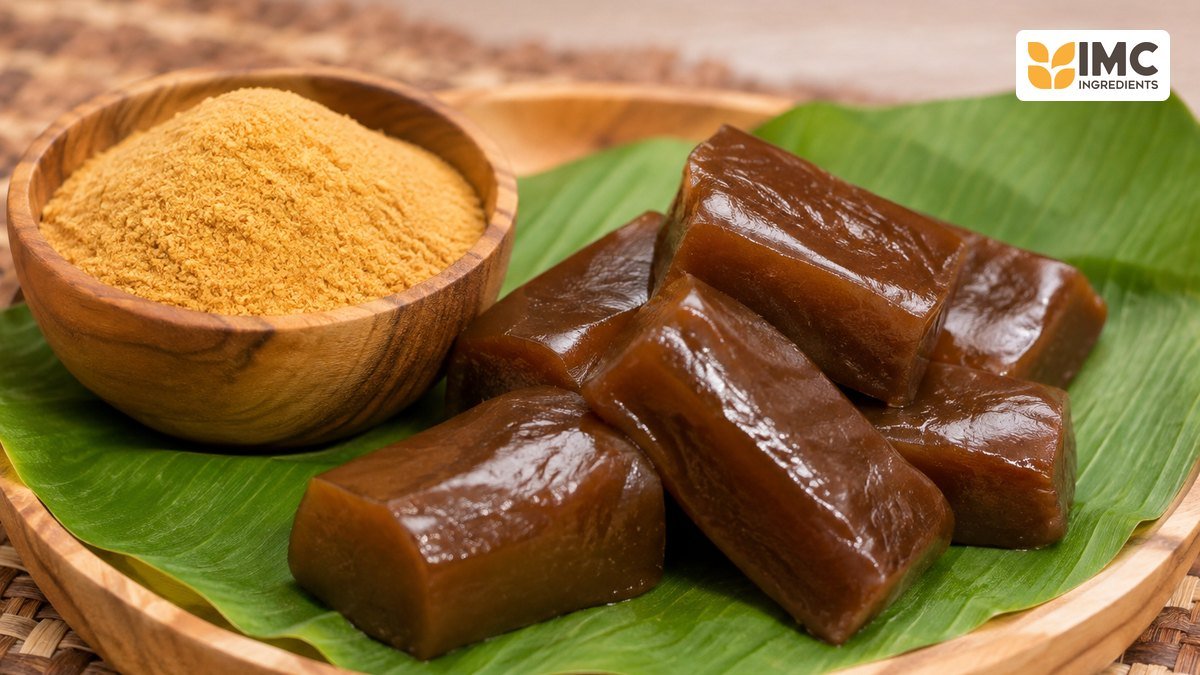
Quick answer: Dodol is a traditional sticky sweet from Indonesia and nearby countries, made by cooking glutinous rice flour, coconut milk and coconut sugar for a long time until thick and glossy. Coconut sugar gives dodol its dark colour and caramel taste. Constant stirring and patient cooking are key to the right texture.
Key takeaways – Coconut sugar is a core ingredient in dodol. – Long cooking and constant stirring are needed. – It gives dodol its dark colour and caramel flavour. – Packaging protects texture and shelf life.
About dodol
Dodol is often made for festivals and family celebrations. It is cooked in large pans, traditionally stirred for hours by several people taking turns. The result is a chewy, sweet, fudge-like sweet that is cut and wrapped in pieces.
Main ingredients
| Ingredient | Role |
|---|---|
| Glutinous rice flour | Chewy structure |
| Coconut milk | Richness and fat |
| Coconut sugar | Sweetness, colour, flavour |
| Salt | Balance |
| Pandan or durian (optional) | Flavour variations |
Cooking stages
- Dissolve coconut sugar in some of the coconut milk.
- Mix rice flour with the remaining coconut milk.
- Combine in a large pan over moderate heat.
- Stir constantly to prevent sticking and burning.
- Continue cooking until the mixture is thick and pulls away from the pan.
- Look for an oily, glossy surface.
- Pour into trays, cool and cut.
Texture tips
If dodol is too soft, it needs more cooking. If it is too hard, it was cooked too long or with too high heat. Experienced makers judge doneness by colour, gloss and how the mass moves in the pan.
Packaging
Dodol is often wrapped in small pieces in food-safe plastic or paper. Good wrapping prevents pieces from sticking and protects them from moisture and air.
Shelf life
Dodol’s low water content helps it keep, but coconut milk fat can turn rancid over time. Producers should test shelf life under real storage conditions and label best before dates accordingly.
For producers
Mechanical stirring kettles make larger batches easier. Record cooking times, temperatures and batch weights for consistency.
Organic dodol
Organic dodol needs organic rice flour, organic coconut milk and organic coconut sugar, with certified processing.
Gift and export markets
Dodol is popular as a gift and travel souvenir. For export, check labelling rules, allergen declarations and shelf life requirements in the destination country. Attractive, well-sealed packaging helps the product travel well.
Where does IMC fit?
PT Integral Mulia Cipta (IMC Group) has produced coconut sugar in Central Java, Indonesia, since 2012. IMC supplies organic and conventional coconut sugar in mesh 50 and mesh 14 to confectionery and traditional sweet producers.
FAQ
What is dodol? A sticky sweet made from rice flour, coconut milk and coconut sugar.
Why must it be stirred constantly? To prevent sticking and burning.
How do I know it is done? It is thick, glossy and pulls away from the pan.
How long does dodol keep? Test shelf life; coconut milk fat can turn rancid.
Looking for a reliable coconut sugar partner? Contact PT Integral Mulia Cipta (IMC Group) in Central Java, Indonesia: info@organic-coconut-sugar.com or WhatsApp +62 821 1348 5564.