
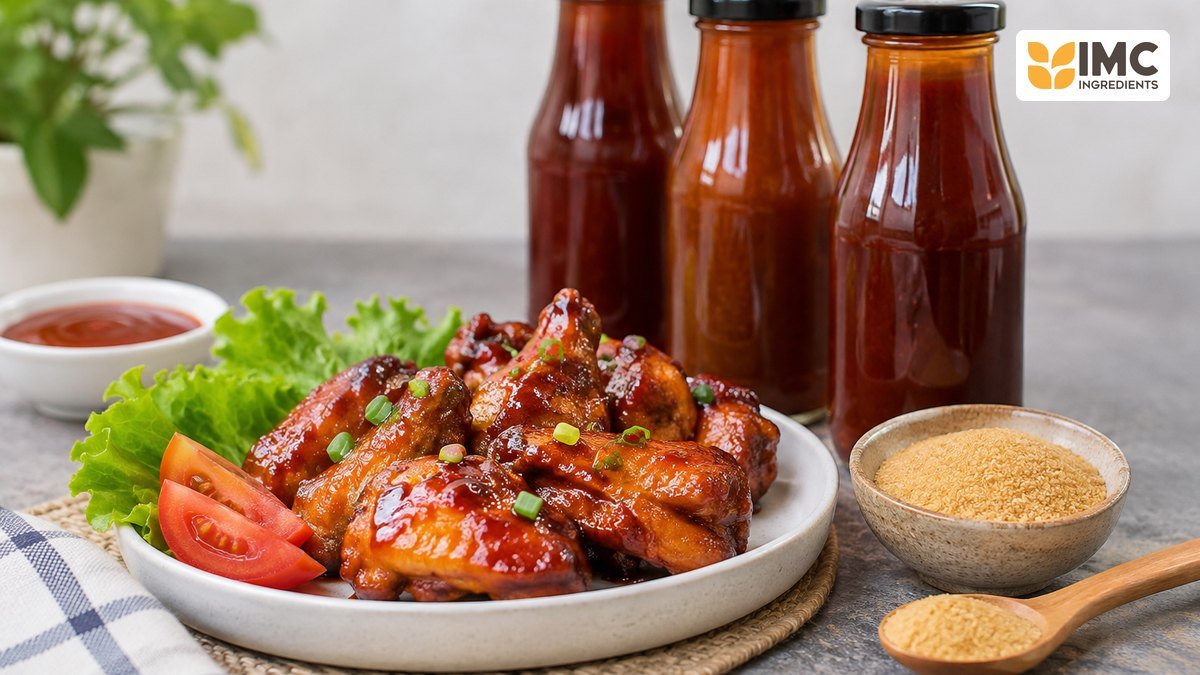
Quick answer: Coconut sugar works in many bottled sauces, including barbecue, teriyaki-style, peanut, chilli and stir-fry sauces. It adds sweetness, caramel notes and colour. For retail, sauce makers must control Brix, pH, viscosity and heat treatment, and test shelf life to make sure the sauce stays safe and consistent.
Key takeaways – Coconut sugar suits many savoury and sweet sauces. – Measure Brix, pH and viscosity for every batch. – Heat treatment can deepen colour. – Validate shelf life before launch.
Why sauce brands choose coconut sugar
Coconut sugar gives a distinctive caramel depth that suits Asian and barbecue-style sauces. Some brands highlight it on the label as part of a less refined ingredient story. As with any sugar, claims should stay factual.
Formulation points
| Parameter | Why it matters |
|---|---|
| Brix | Sweetness and consistency |
| pH | Safety and shelf stability |
| Viscosity | Pourability and mouthfeel |
| Colour | Consumer expectation |
| Salt | Taste balance |
Dissolving and mixing
Use mesh 50 coconut sugar for fast dissolving. Add it to the liquid phase early in heating. Stir until fully dissolved before adding thickeners.
Heat treatment and colour
Hot filling, pasteurisation or retorting can darken sauces made with coconut sugar. Run trials at the real process conditions and check colour after processing and during storage.
Shelf life testing
- Define storage conditions and target shelf life.
- Store samples at normal and accelerated conditions.
- Check taste, colour, viscosity and microbiology at set intervals.
- Confirm that pH and other safety factors stay in range.
- Record results and set the best before date.
Labelling
Name coconut sugar in the ingredient list. Declare allergens such as soy, sesame, peanut or fish where present. Count coconut sugar as added sugar where rules require it.
Organic sauces
Organic sauces need certified organic ingredients, including coconut sugar, and certified production. Keep lot records for traceability.
Scaling from kitchen to factory
Recipes developed in a kitchen often need adjustments in a factory, because large kettles heat and cool differently. Run pilot batches and compare them with the kitchen standard for taste, colour and thickness before full production.
Working with co-packers
Many sauce brands use co-packers to produce their sauces. Share a clear specification for coconut sugar, including grade, organic status and approved suppliers. Ask the co-packer to record lot numbers so every batch of sauce can be traced back to its ingredients.
Where does IMC fit?
PT Integral Mulia Cipta (IMC Group) has produced coconut sugar in Central Java, Indonesia, since 2012. IMC supplies organic and conventional coconut sugar in mesh 50 and mesh 14 to sauce and condiment manufacturers.
FAQ
Which sauces suit coconut sugar? Barbecue, teriyaki-style, peanut, chilli and stir-fry sauces.
Why measure pH? It is key to safety and shelf stability.
Will heat treatment change the colour? It can deepen it; test under real conditions.
Is coconut sugar added sugar? In many markets, yes.
PT Integral Mulia Cipta (IMC Group) has produced organic coconut sugar in Central Java, Indonesia, since 2012. For specifications or samples, email info@organic-coconut-sugar.com or WhatsApp +62 821 1348 5564.