
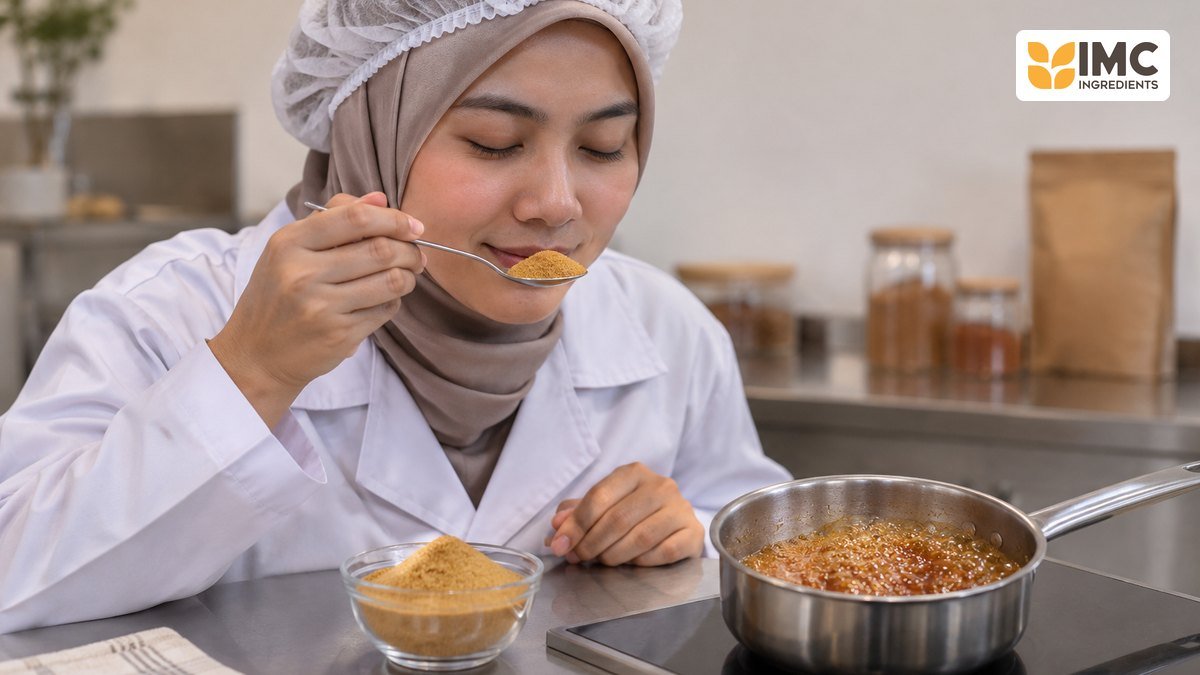
Quick answer: Coconut sugar smells like caramel because its sap is cooked in open pans. Heat triggers browning reactions between sugars and small amounts of amino acids, creating aroma compounds similar to those in caramel and toffee. The scent varies with cooking time, heat and sap quality, and it can fade if the sugar is stored open.
Key takeaways – The aroma comes from cooking the sap. – Browning reactions create caramel-like compounds. – Cooking time and heat change the intensity. – Sealed storage protects the aroma.
From sap to aroma
Fresh coconut blossom sap is a sweet, almost clear liquid. It has little caramel smell. During cooking, water evaporates, sugars become concentrated and the temperature rises. This is when the aroma develops.
The browning reactions
| Reaction | What happens | Aroma result |
|---|---|---|
| Caramelisation | Sugars break down under heat | Caramel, toffee notes |
| Maillard reaction | Sugars react with amino acids | Roasted, nutty, bready notes |
Coconut sap contains small amounts of amino acids and reducing sugars, so both reactions can take place. Together they give coconut sugar its typical aroma.
What changes the aroma
- Longer cooking gives deeper, darker notes.
- Higher heat can add roasted or slightly bitter notes.
- Fresh sap gives a cleaner aroma.
- Drying and storage conditions affect how long the aroma lasts.
Why it does not smell of coconut
Many people expect coconut sugar to smell like coconut flesh or coconut milk. It does not, because it comes from the sap of the flower stalk, not the nut. The aroma is closer to caramel or light molasses.
Aroma in finished products
In baking, coconut sugar’s aroma blends with butter, vanilla and spices. In coffee drinks it adds a caramel note. In savoury sauces it supports roasted and umami flavours.
Protecting the aroma
Store coconut sugar sealed and away from strong smells, such as spices or cleaning products. Sugar can absorb odours. Open bags lose aroma over time and can pick up off-notes.
Smelling as a quality check
Food buyers often smell samples as part of incoming checks. A clean caramel aroma is expected. Burnt, sour or musty smells may point to problems in processing or storage and should be reported.
Describing the aroma
When writing product descriptions, use simple, accurate words such as caramel, toffee or light molasses. Avoid exaggerated descriptions that buyers or shoppers may not recognise when they open the pack.
Where does IMC fit?
PT Integral Mulia Cipta (IMC Group) has produced coconut sugar in Central Java, Indonesia, since 2012. IMC supplies organic and conventional coconut sugar in mesh 50 and mesh 14, packed in paper bags with a food-grade PE liner that helps protect aroma.
FAQ
Why does coconut sugar smell like caramel? Cooking the sap creates caramel-like aroma compounds.
Does it smell like coconut? No, it comes from sap, not the nut.
Can the aroma fade? Yes, if stored open or near strong smells.
What smells are a warning sign? Burnt, sour or musty notes.
Looking for a reliable coconut sugar partner? Contact PT Integral Mulia Cipta (IMC Group) in Central Java, Indonesia: info@organic-coconut-sugar.com or WhatsApp +62 821 1348 5564.