
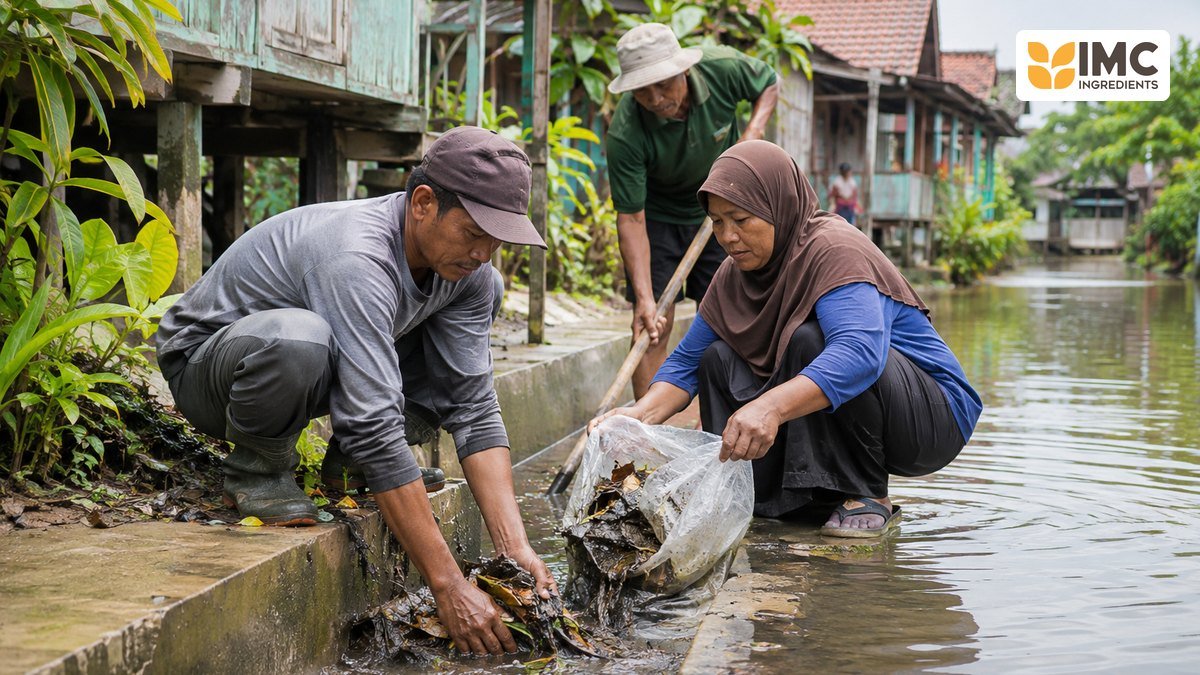
Quick answer: Lowland villages near rivers and coasts can face floods during heavy rain. Floods damage homes, crops, roads and stored goods, and can interrupt daily work such as sap collection and sugar cooking. Preparation, including drainage, safe storage, early warning and community plans, reduces losses and helps villages recover faster.
Key takeaways – Heavy rain and poor drainage cause floods. – Floods affect homes, farms, roads and stock. – Preparation reduces damage and recovery time. – Farmer groups and suppliers can support plans.
Why lowland villages are at risk
Lowland areas collect water from higher ground. When rivers overflow or drainage is blocked, water spreads into fields and homes. Changes in rainfall patterns can increase the frequency of heavy rain events in some areas.
Effects of flooding
| Area | Possible effect |
|---|---|
| Homes | Damage, displacement |
| Farms | Crop loss, soil damage |
| Roads | Blocked access to markets |
| Stored goods | Wet sugar, spoiled supplies |
| Health | Risks from dirty water |
Preparing households
- Store sugar and tools on raised shelves.
- Keep important documents in waterproof bags.
- Know the safe route to higher ground.
- Keep basic supplies ready.
- Follow local warnings.
Village and group actions
Villages can clear drainage channels regularly, keep riverbanks planted and agree on community warning systems. Farmer groups can plan how to protect stored product and how to communicate with buyers if collection is delayed.
Impact on coconut sugar supply
Floods can stop sap collection for days and block roads to collection points. Wet conditions also raise moisture risks for stored sugar. Suppliers should keep buyers informed and check quality of any product stored during floods.
Recovery
After a flood, clean and dry tools and storage areas before restarting production. Check sugar for moisture damage. Support from local authorities and partners can help families recover.
Role of suppliers
Suppliers can include flood preparation in farmer training, help with safe storage equipment and keep flexible schedules after events. CSR communication should describe such support factually.
Learning after each event
After a flood, farmer groups can meet to discuss what worked and what did not. Simple notes on water levels, damaged areas and response times help improve the plan for next time.
Protecting stored sugar
Sugar absorbs moisture quickly, so flood preparation should include safe storage. Keep sugar in sealed containers on raised platforms, away from walls and floors, and move stock to higher ground when warnings are issued.
Where does IMC fit?
PT Integral Mulia Cipta (IMC Group) has produced coconut sugar in Central Java, Indonesia, since 2012. IMC works with farmer communities and supplies organic and conventional coconut sugar in mesh 14 and mesh 50.
FAQ
Why do lowland villages flood? Water collects from higher ground and drainage can overflow.
How can households prepare? Raise stored goods and plan safe routes.
How do floods affect supply? They can stop collection and damage stored sugar.
What should be done after a flood? Clean, dry and check tools, storage and product.
PT Integral Mulia Cipta (IMC Group) has produced organic coconut sugar in Central Java, Indonesia, since 2012. For specifications or samples, email info@organic-coconut-sugar.com or WhatsApp +62 821 1348 5564.