
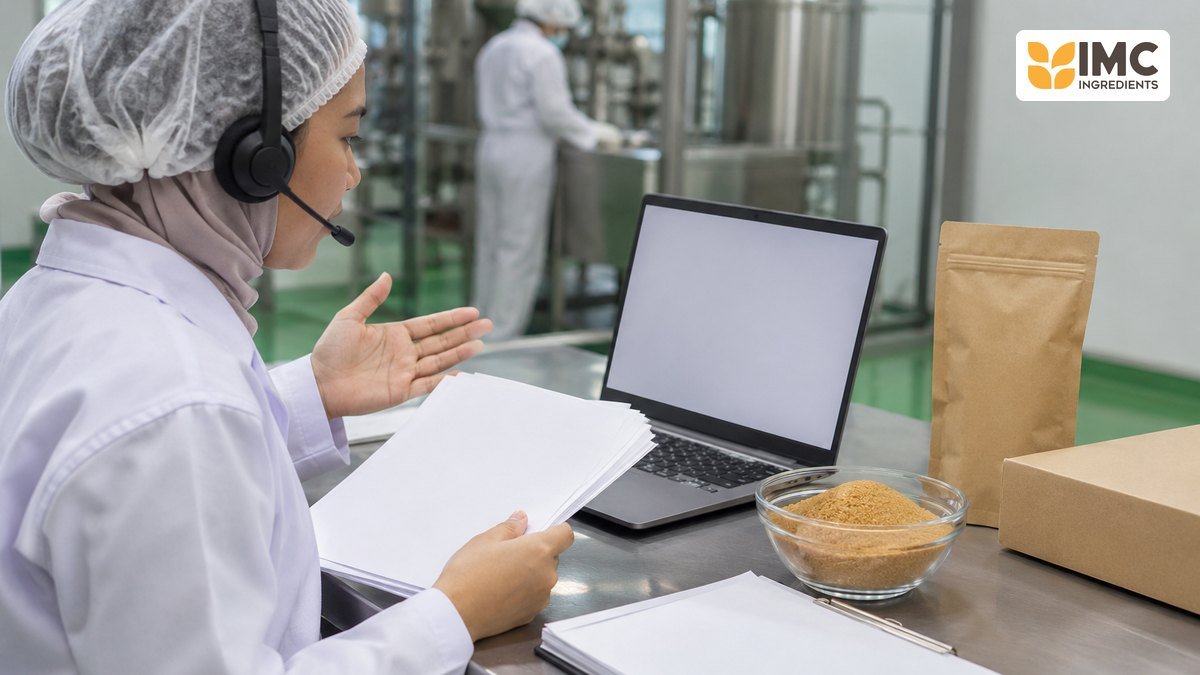
Quick answer: A remote audit is an audit carried out by video call and document sharing instead of a site visit. Buyers and certification bodies use them when travel is difficult or for follow-up checks. Good preparation, stable internet, organised documents and a planned video tour make remote audits effective, though they cannot fully replace on-site visits.
Key takeaways – Remote audits use video and shared documents. – Preparation and organised files are essential. – Video tours show key areas live. – On-site audits remain important for full assurance.
When remote audits are used
Remote audits are useful for first assessments, follow-ups on corrective actions, or when travel is restricted. Some certification schemes allow remote parts of an audit under specific rules.
Typical structure
| Part | Activity |
|---|---|
| Opening meeting | Agenda, participants, scope |
| Document review | Procedures, records, certificates |
| Live video tour | Production, packing, storage |
| Interviews | Staff responsible for key tasks |
| Closing meeting | Findings and next steps |
Preparing documents
- Ask the auditor for a document list in advance.
- Organise files in clearly named folders.
- Scan paper records in readable quality.
- Check that versions are current.
- Assign one person to share files during the call.
The video tour
Plan a route through the site. Test the connection in each area beforehand. Use a phone or tablet with a stable holder. Let the auditor guide what they want to see, such as handwashing stations, sieve screens or storage areas.
Interviews
Auditors may speak with operators to check understanding of procedures. Make sure translation is available if needed.
Limits
Video cannot show everything. Smells, small details and the general feel of a site are harder to judge. Auditors may follow up with an on-site visit later.
Data security
Share documents through secure channels. Avoid sending personal data that is not needed. Agree how files will be stored and deleted after the audit.
After the audit
The auditor shares findings in writing. Agree corrective actions and deadlines, and send evidence of completion, such as photos or updated records. Keep the audit file with your other supplier documents.
Technical checks before the call
Test the video platform, camera and microphone a day before. Charge devices fully and have a backup phone ready. Agree a time zone and a contact number in case the connection fails.
Where does IMC fit?
PT Integral Mulia Cipta (IMC Group) has produced coconut sugar in Central Java, Indonesia, since 2012. IMC supplies organic and conventional coconut sugar in mesh 14 and mesh 50 and can support buyer document reviews on request.
FAQ
What is a remote audit? An audit done through video and document sharing.
Can it replace an on-site audit? Not fully; it has limits.
How should documents be prepared? Organised, current and easy to share.
What does the video tour show? Key production, packing and storage areas.
Looking for a reliable coconut sugar partner? Contact PT Integral Mulia Cipta (IMC Group) in Central Java, Indonesia: info@organic-coconut-sugar.com or WhatsApp +62 821 1348 5564.