
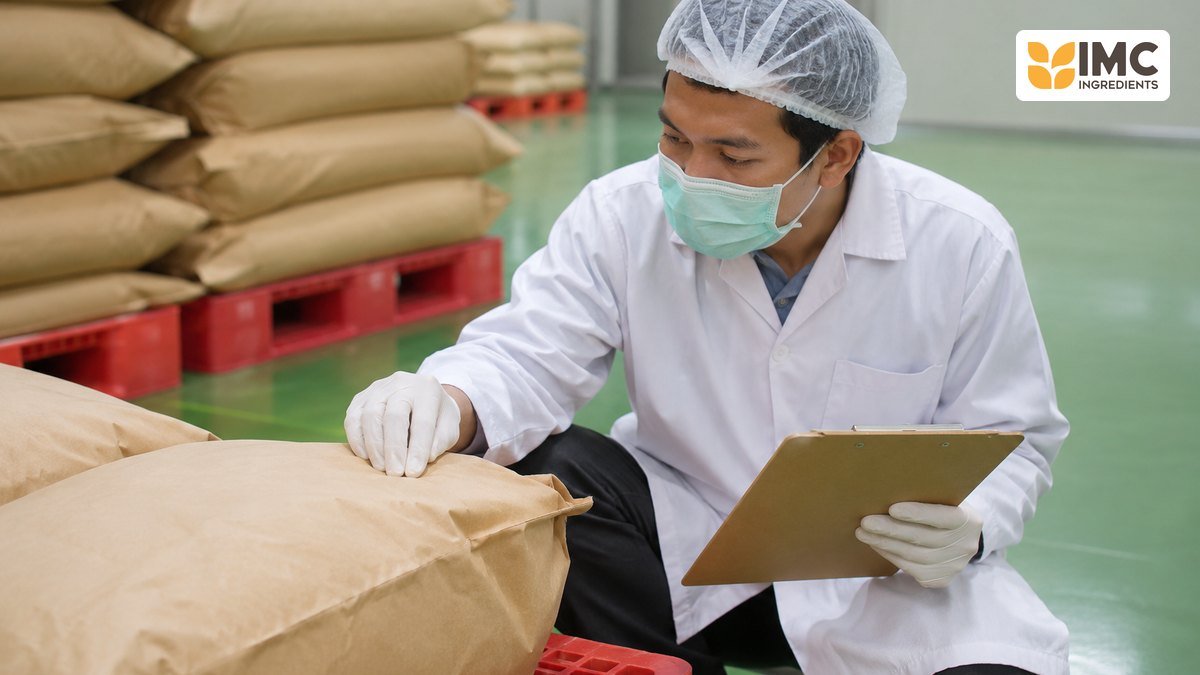
Quick answer: Returned goods are products sent back by a customer or brought back from a distributor. They must be kept separate, inspected and documented before any decision is made. Depending on the reason and condition, they may be reworked, reused for another purpose, or disposed of. Every return should also lead to a review to prevent repeats.
Key takeaways – Keep returned goods separate and clearly labelled. – Inspect and record condition before deciding. – Never mix returns with normal stock without approval. – Use returns to improve processes.
Why returns need control
Returned goods have been outside the supplier’s control. They may have been stored in unknown conditions or damaged in transport. Without proper handling, they could re-enter the supply chain with hidden problems.
Common reasons for returns
| Reason | Example |
|---|---|
| Damage in transit | Torn bags, wet cartons |
| Wrong product or grade | Mesh 14 delivered instead of mesh 50 |
| Quality complaint | Clumping, colour outside range |
| Documentation error | Lot codes not matching |
| Order changes | Customer cancels part of order |
Handling steps
- Agree the return in writing with the customer.
- Receive goods into a separate, labelled area.
- Record quantity, lot codes and condition.
- Inspect and test if needed.
- Decide on rework, reuse or disposal.
- Record the decision and approval.
- Update stock records.
Organic returns
Organic goods must keep their organic integrity. If organic status cannot be confirmed, the goods should not be sold as organic. Inform the control body if required by the standard.
Disposal
Disposal should be documented, including method and quantity. Products should not be disposed of in a way that allows them to re-enter food chains without control.
Learning from returns
Review each return with the team. Was the cause in packing, loading, transport or communication? Small changes, such as better loading checks or clearer order confirmations, can prevent future returns.
Communication with customers
Keep the customer informed about the inspection and decision. A clear, polite explanation protects the relationship, even when the return was caused by conditions outside the supplier’s control.
Cost and insurance
Returns cost money for transport, storage and handling. Check whether transport insurance covers damage, and keep photos and documents that support any claim. Clear records make claims faster and fairer.
Where does IMC fit?
PT Integral Mulia Cipta (IMC Group) has produced coconut sugar in Central Java, Indonesia, since 2012. IMC supplies organic and conventional coconut sugar in mesh 14 and mesh 50 with lot coding that supports investigation of any return.
FAQ
Can returned goods be resold? Only after inspection and approval.
Where should returns be stored? In a separate, clearly labelled area.
What about organic returns? Their organic status must be confirmed before resale as organic.
Why review returns? To find causes and prevent repeats.
Questions about coconut sugar for your products? PT Integral Mulia Cipta (IMC Group), a Central Java producer since 2012, is happy to help. Email info@organic-coconut-sugar.com or WhatsApp +62 821 1348 5564.